Showing posts with label Spur Cross Conservation Area. Show all posts

Saturday, July 12, 2014

Spur Cross Conservation Area - Part 9 - Fruits of the Desert


At the time I went on this hike I had been wanting to hike it for quite some time and although I was having a bit of a rough time at the end of it due to the heat, I’m so glad I went.  I tasted a lot of different “desert foods” and even harvested my own fruit from a Saguaro using a tool much like the ones the Hohokams of this area used long ago. 

It was a small group that I hiked with which was actually good given the nature of the hike, and we saw so many interesting things, including a glimpse of a rattler. 

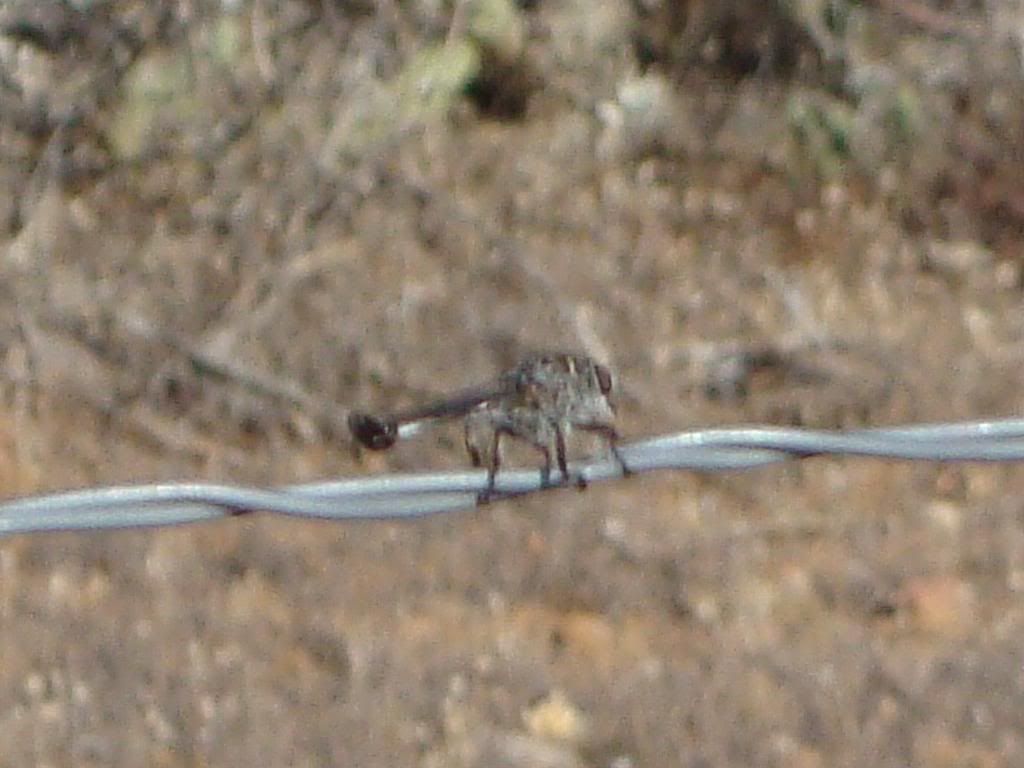
We began by going down the old Spur Cross Road which, I believe, was once a stagecoach path, where we saw a jojoba plant.  It is the female jojoba plant that produces fruit, and they taste a bit like a strong, bitter coffee.  In fact, the seeds can be ground into a powder to produce a coffee-like drink.  It was around here that we also saw an odd looking fly sitting on the barbed-wire fence.  I would learn on a later hike that they make a sound not unlike a bunch of people talking in the distance.  We would see another one later on in the hike.

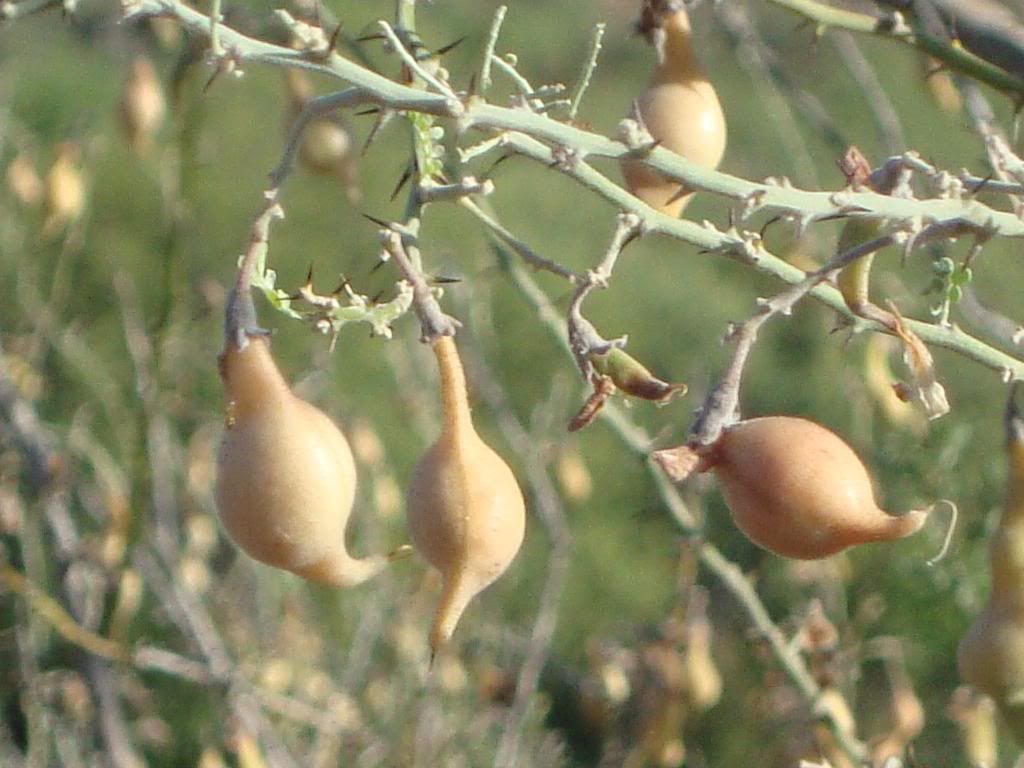
I believe it was also here that we saw a rattler.  One of the hikers in our group saw it off to the right of the trail, but the rest of us only got a glimpse of it as it went into the brush.  Next, we came to what I believe was an Ironwood tree, which is found only in the Sonoran desert.  The two-inch pods contain one to four seeds, and are eaten by many animals.  The seeds had a nutty, pea-like taste. 

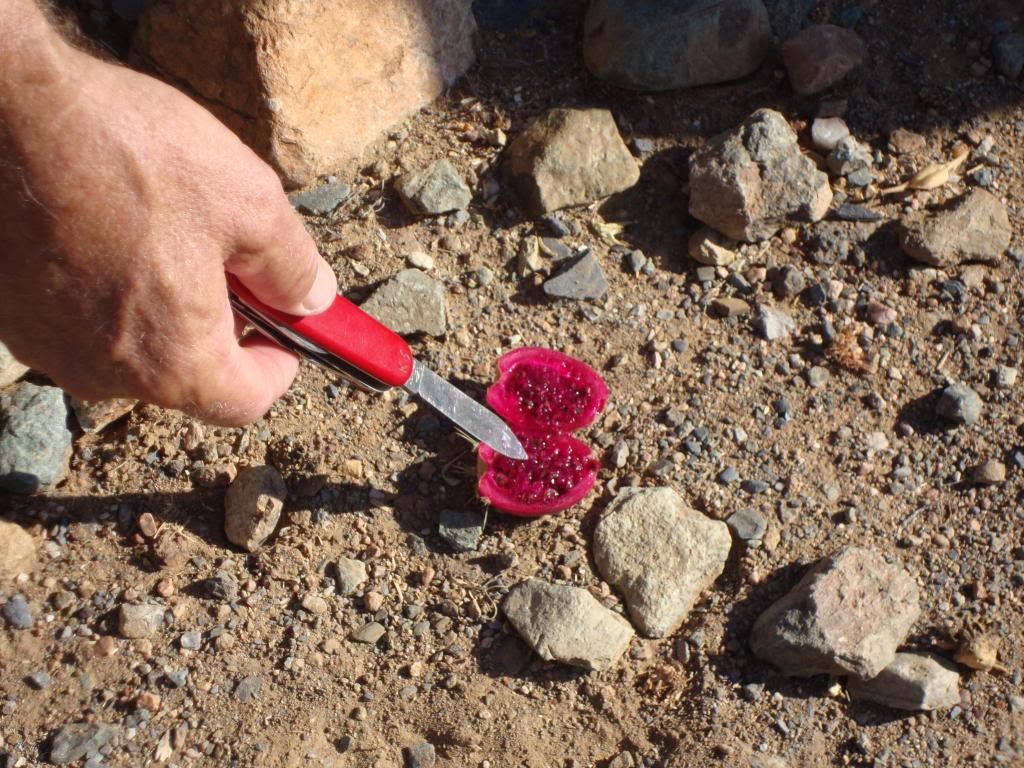
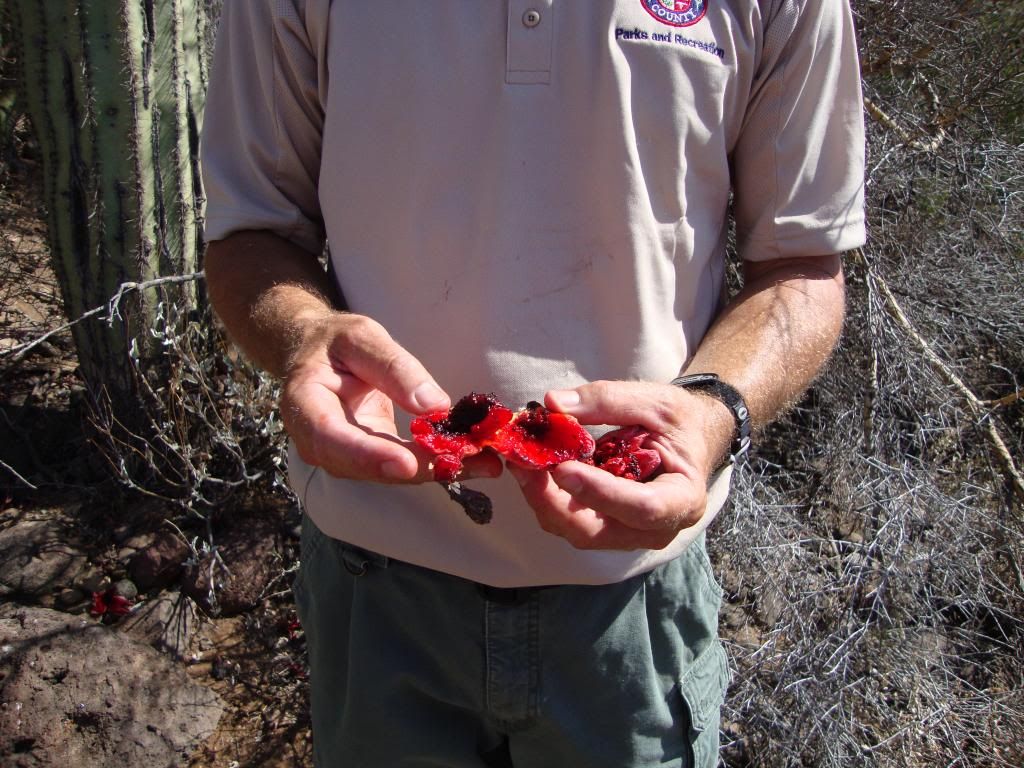
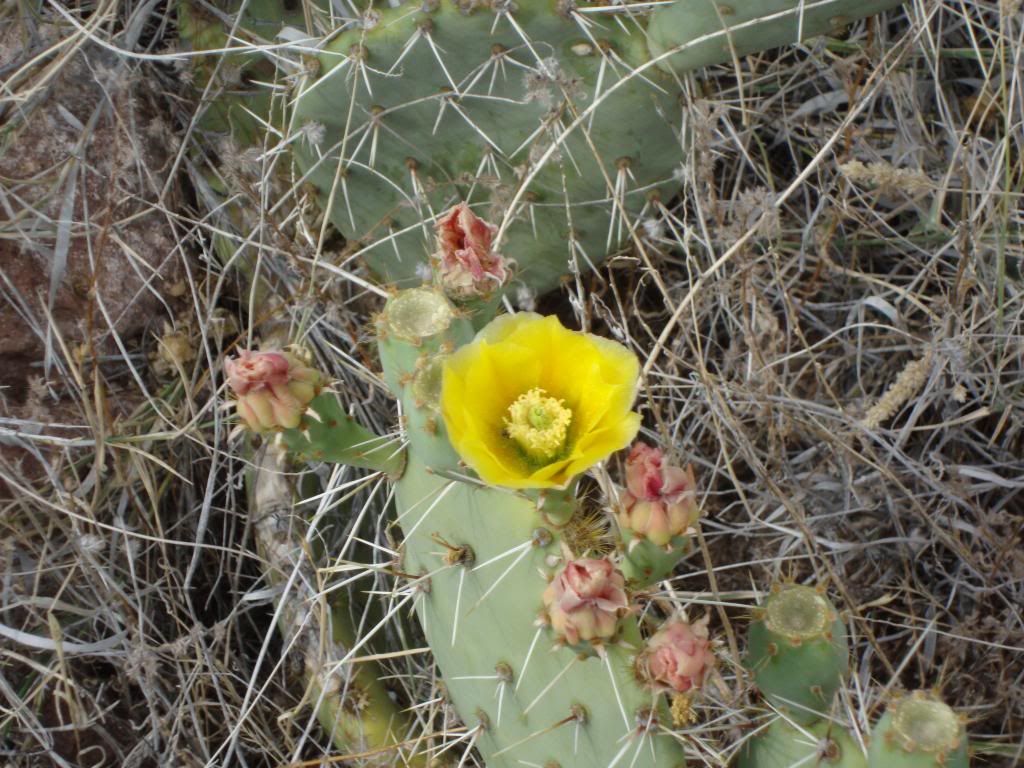
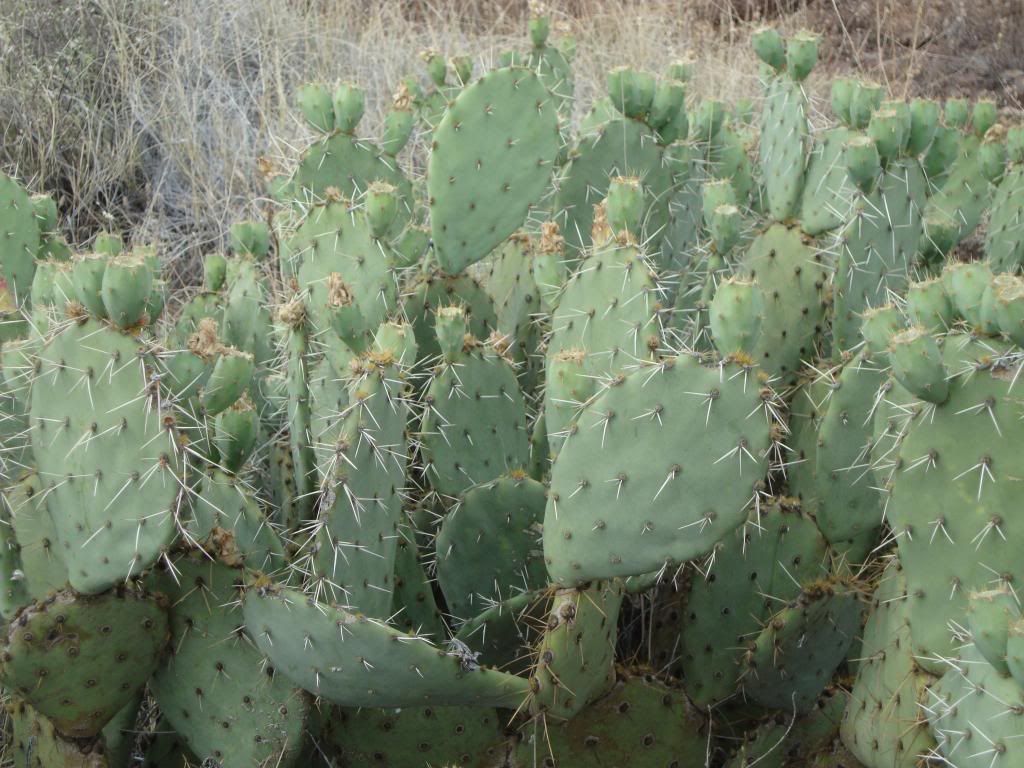
A little further down the trail we came to a prickly pear cactus, which are found in all of the deserts of the Southwest.  The prickly pear cactus is used to make everything from juices to candy to jellies.  Ranger Kevin cut one of the fruits open for us and you can see a good shot of it in one of the photographs below. 

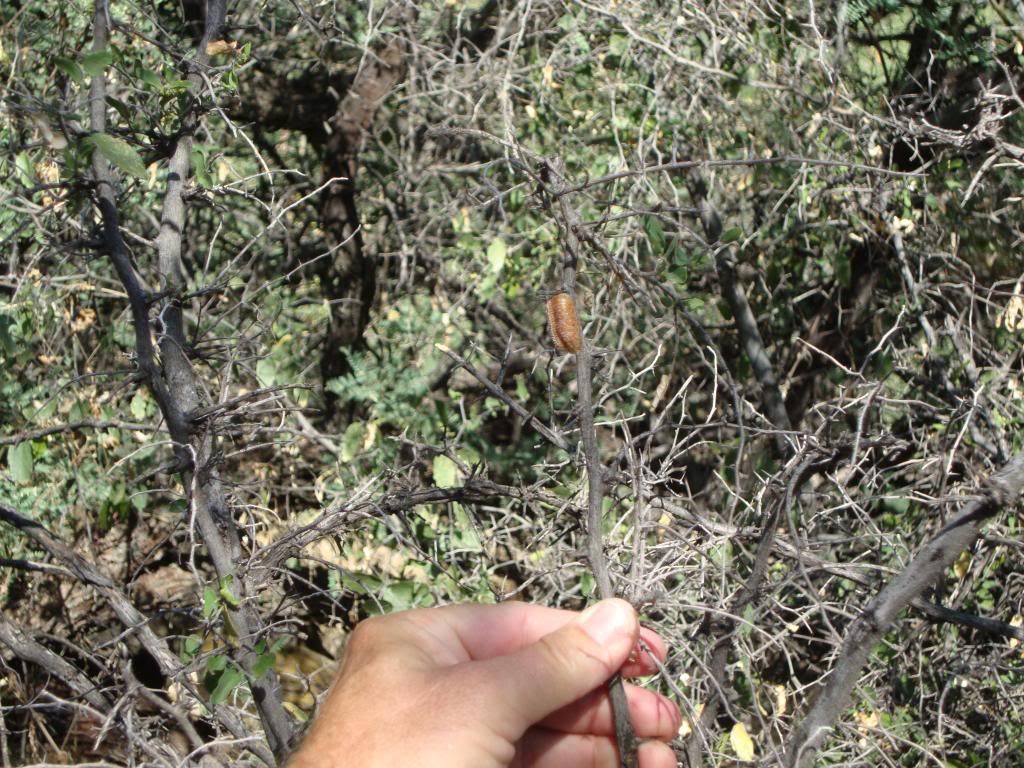
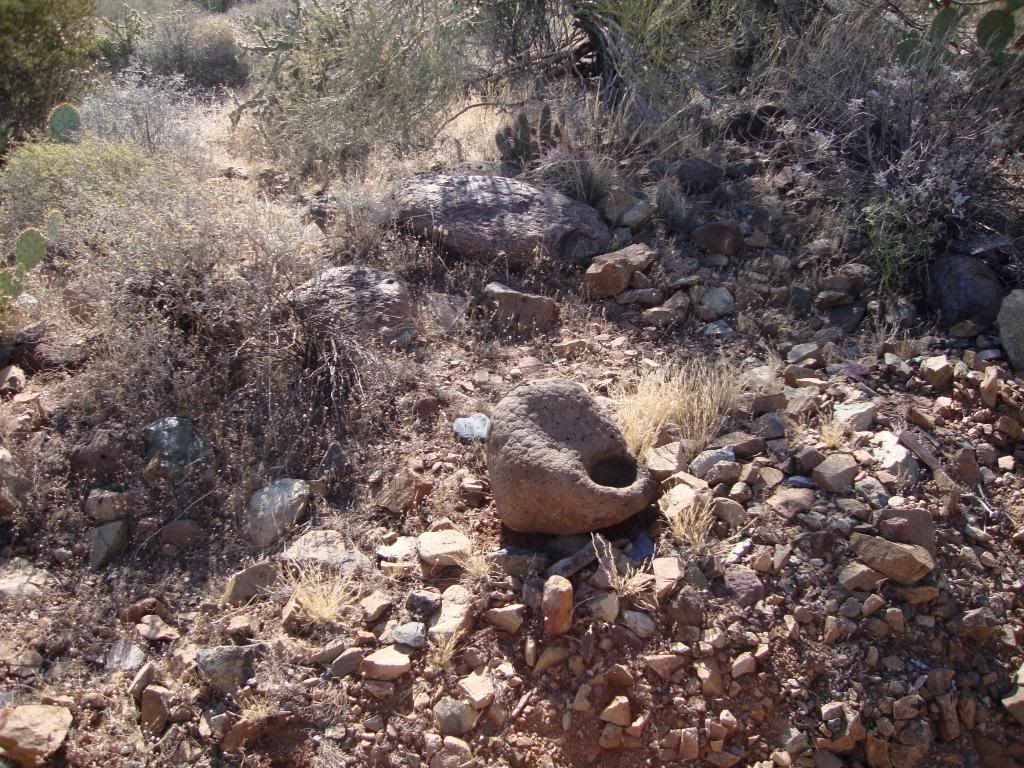
We soon came to a metate, which was used over 1,000 years ago to grind grain and seeds.  We were now on the Metate Trail, and I’ve seen this particular metate a number of times before while hiking out here.  We also saw something really interesting here, something I had never seen before.  It was a praying mantis egg case, which will hatch 100 – 200 tiny mantises, all at once. 

In the Spur Cross Conservation area one can see the inside of a very large cactus lying on its side.  The wood is completely exposed.  When we came to it, we saw a lizard on one end of it, and a butterfly on the other.  We watched for awhile, and although it looked as though the lizard was going to make a meal of the butterfly, I’m happy to say the butterfly eventually flew away. 

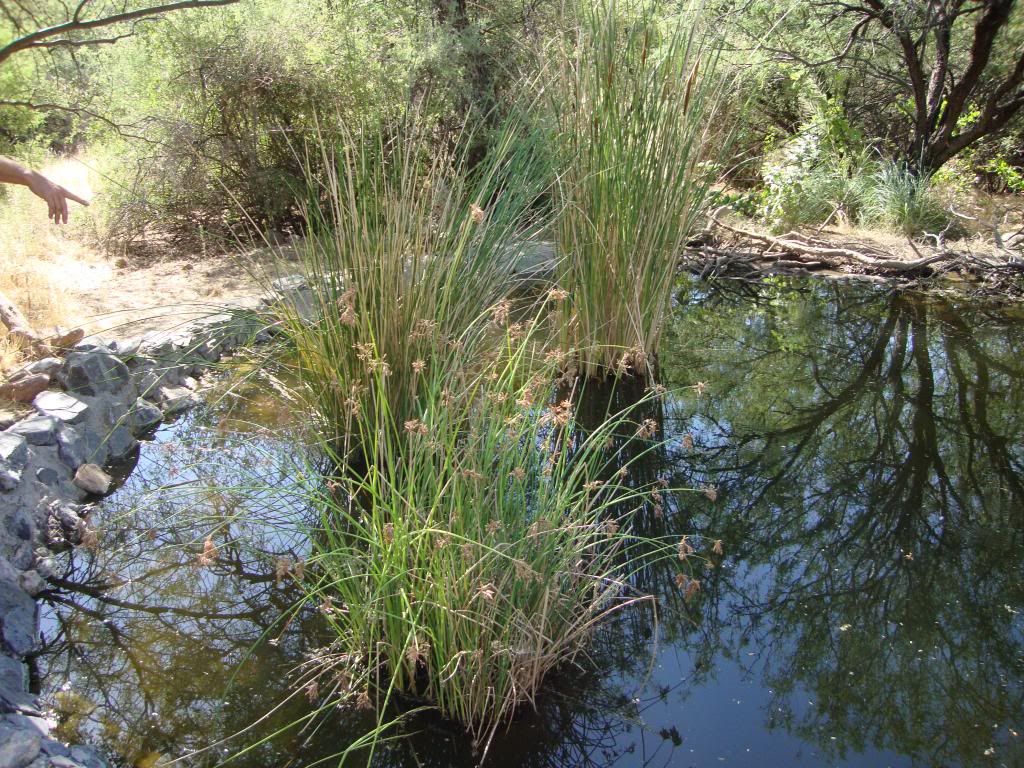
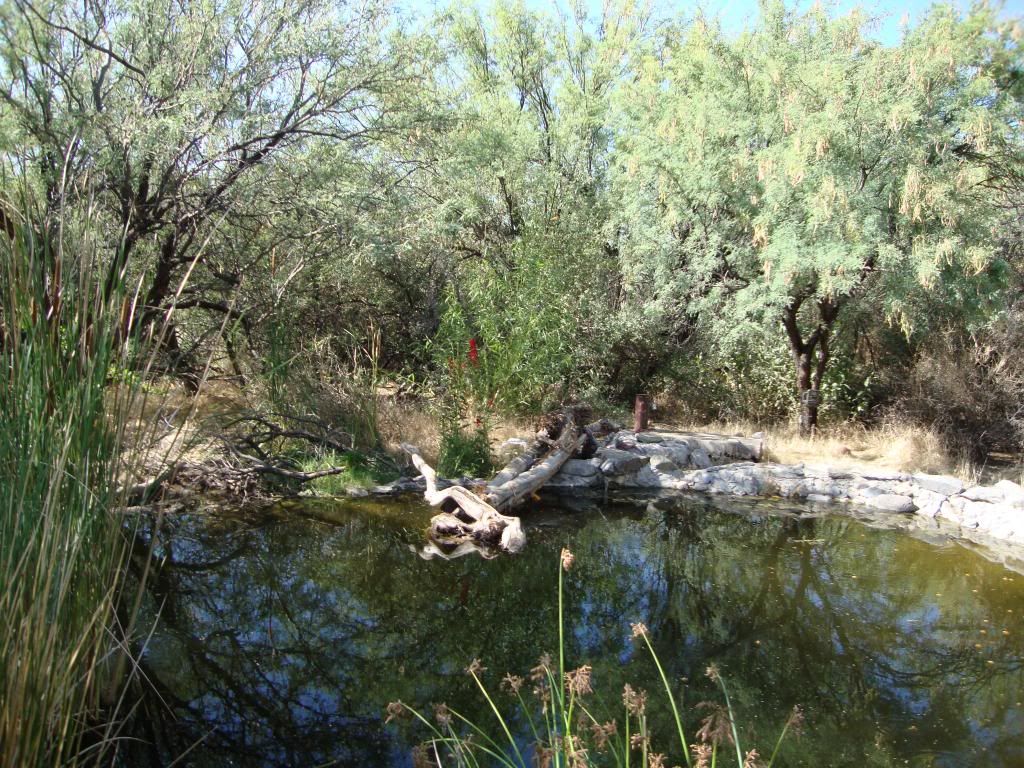
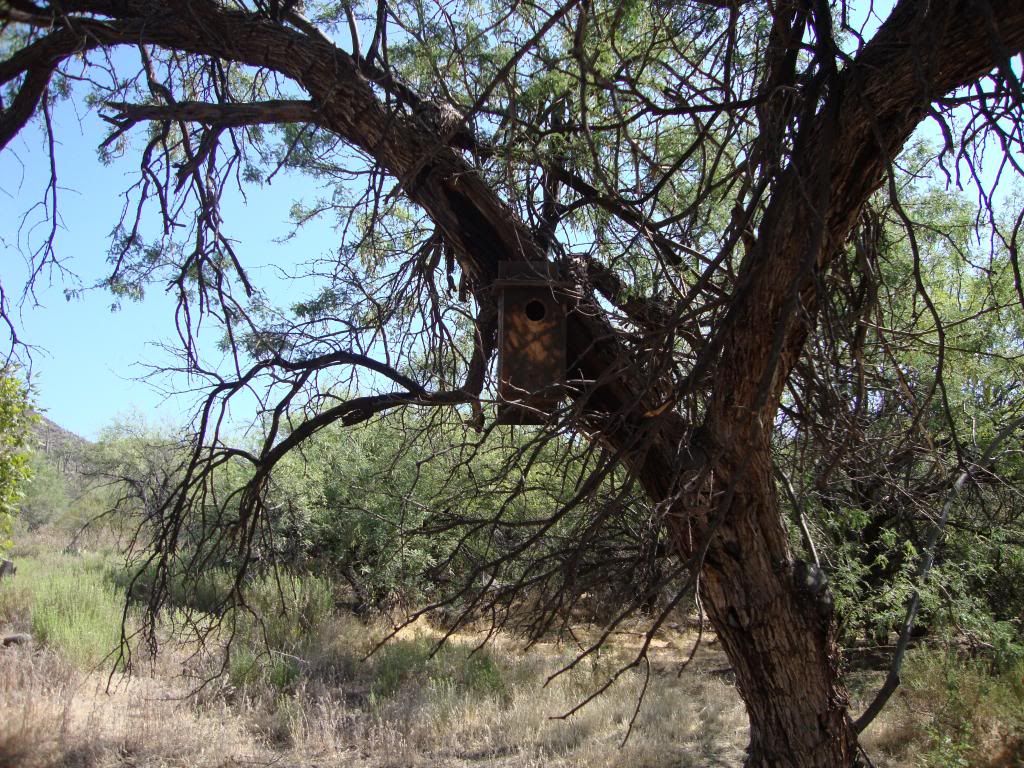
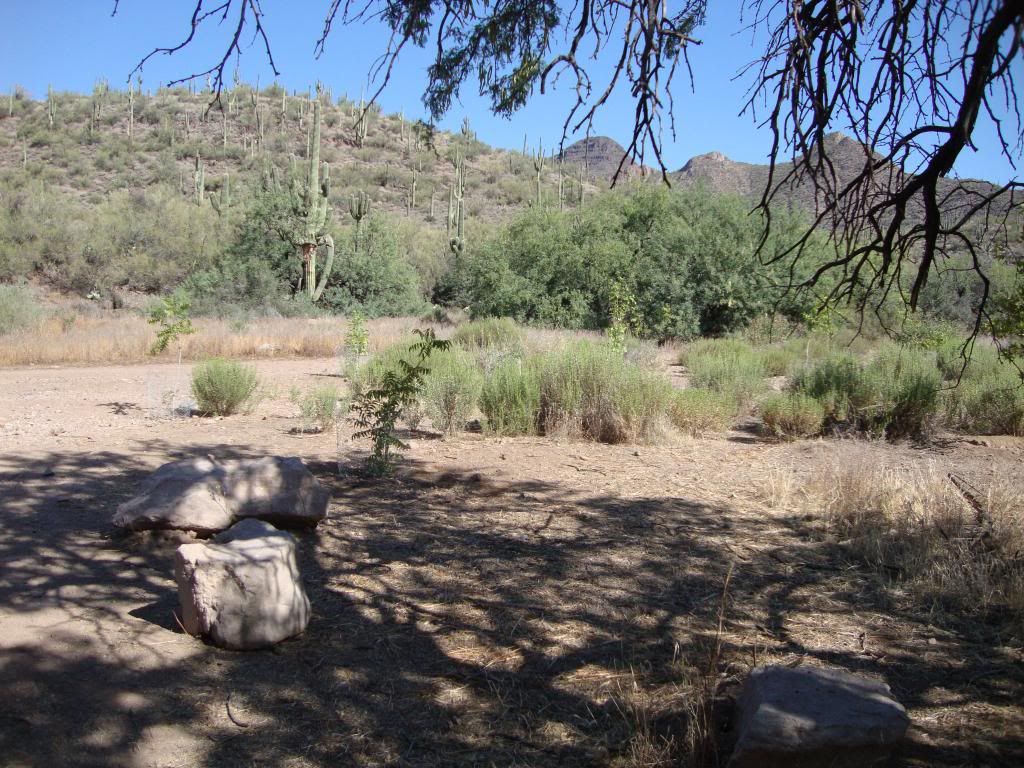
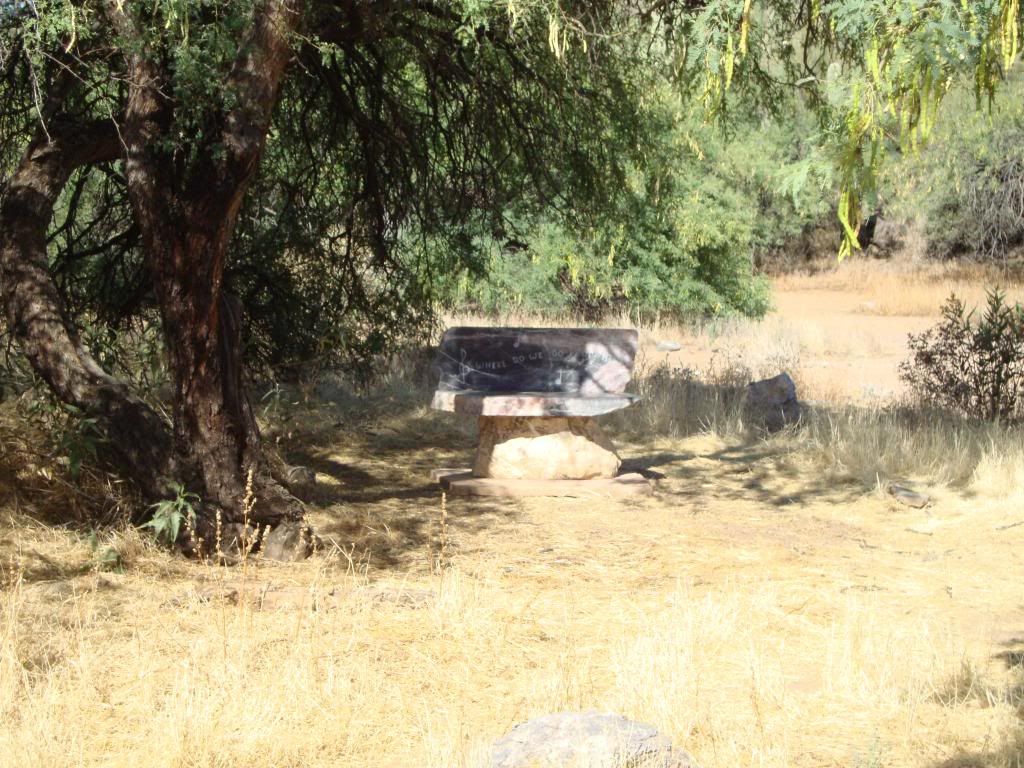
We then came to a man-made pond in a beautiful area of the conservation area.  It’s a very tranquil area, and a wonderful place in which to see wildlife.  There is a camera attached to one of the trees in this area, and on another hike out here Ranger Kevin showed us some pictures of the wildlife that come to this area at night.  There’s also a bench out there on which one can sit while enjoying this amazing area. 

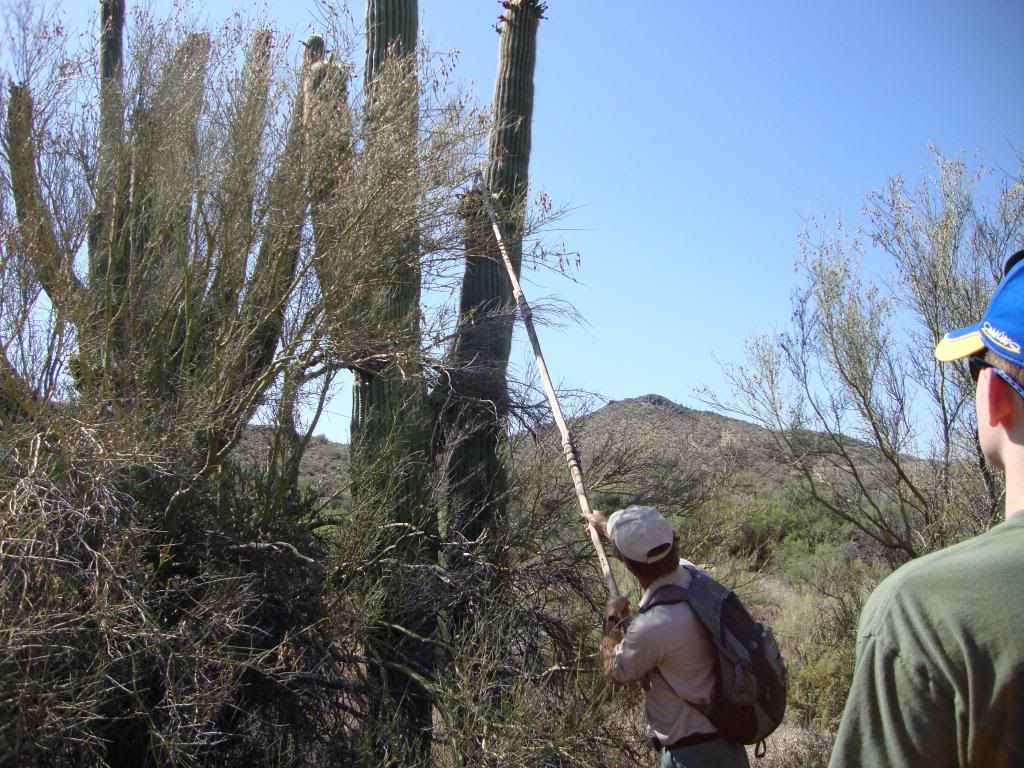
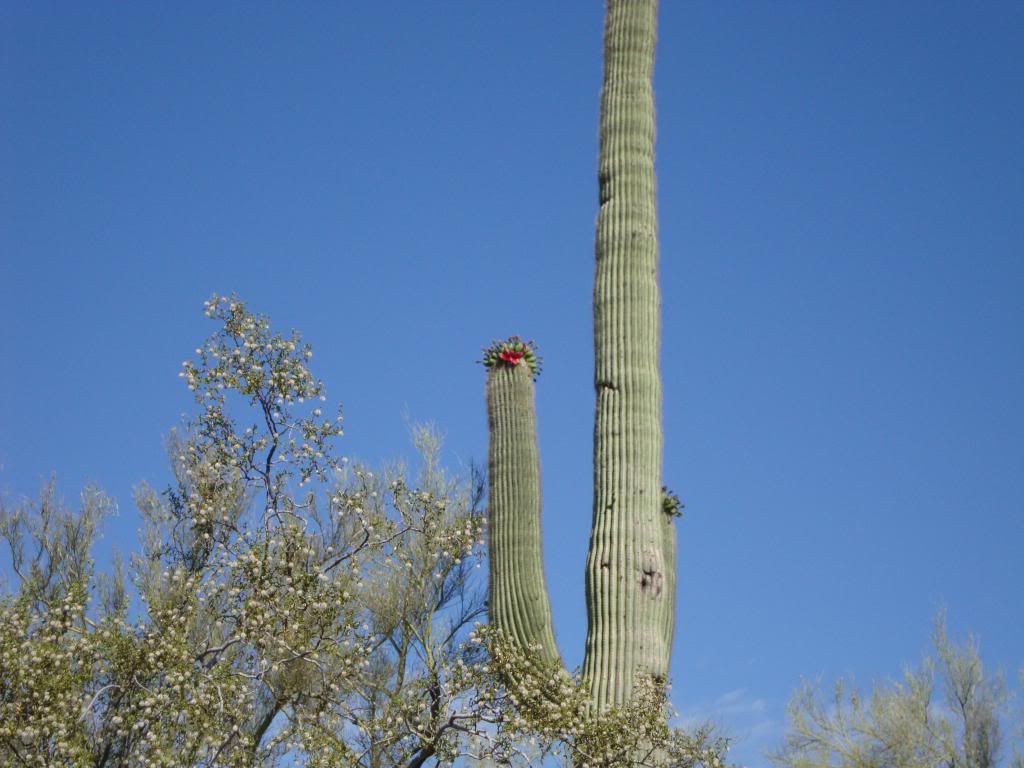
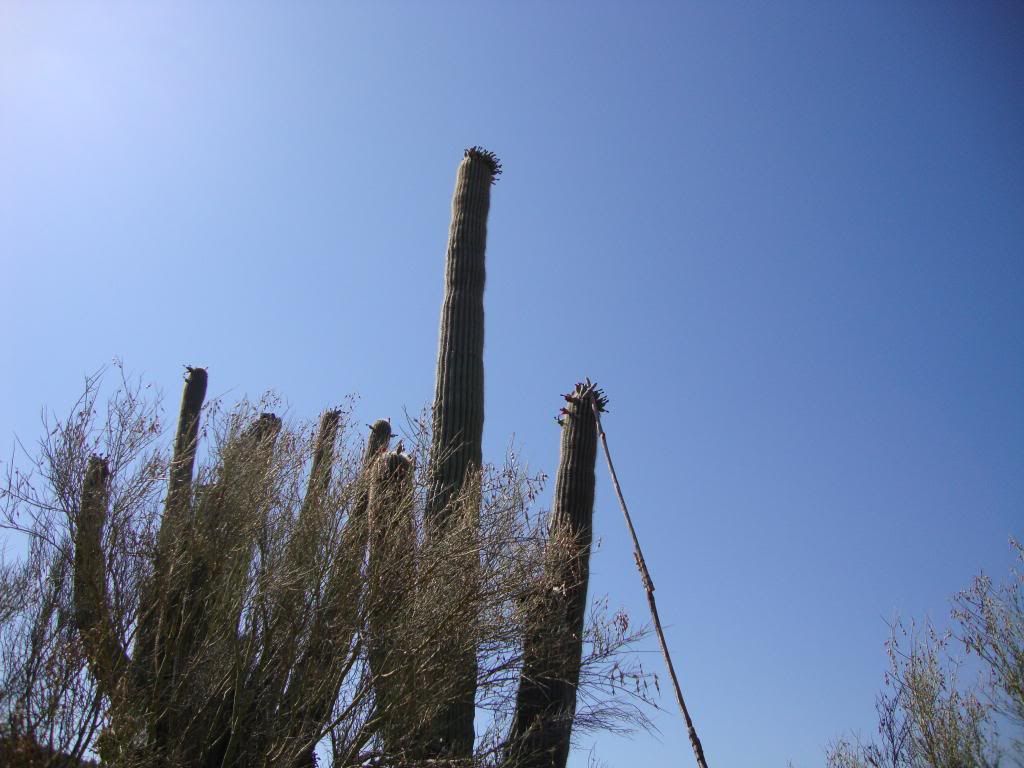
Toward the end of the hike is when we got the opportunity to harvest our own fruit from the Saguaro cactus.  The Hohokam would put together a pole of sorts which they would use to pull the fruit down from the cactus, and Kevin had made one similar to the ones the Hohokam used.  The Hohokam’s made the poles so that they could either pull the fruit down from the top, or poke it underneath until it fell.  I was able to pull a fruit down and taste it on the hike as well as bring one home for later.  Needless to say, this was an amazing hike!  
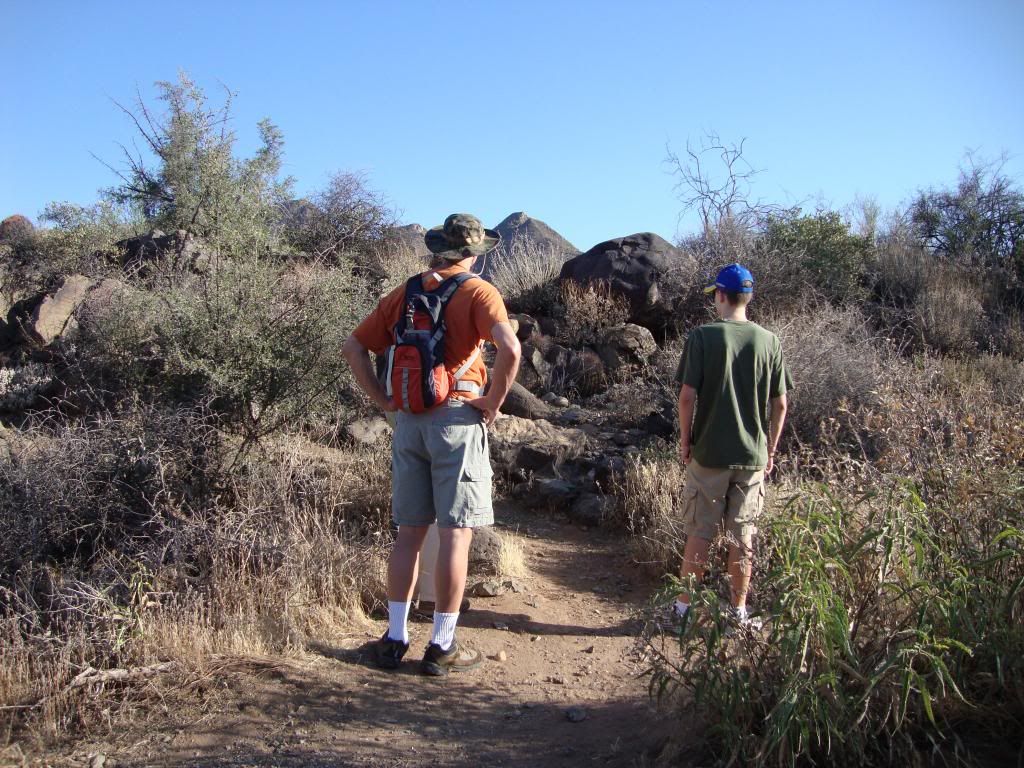
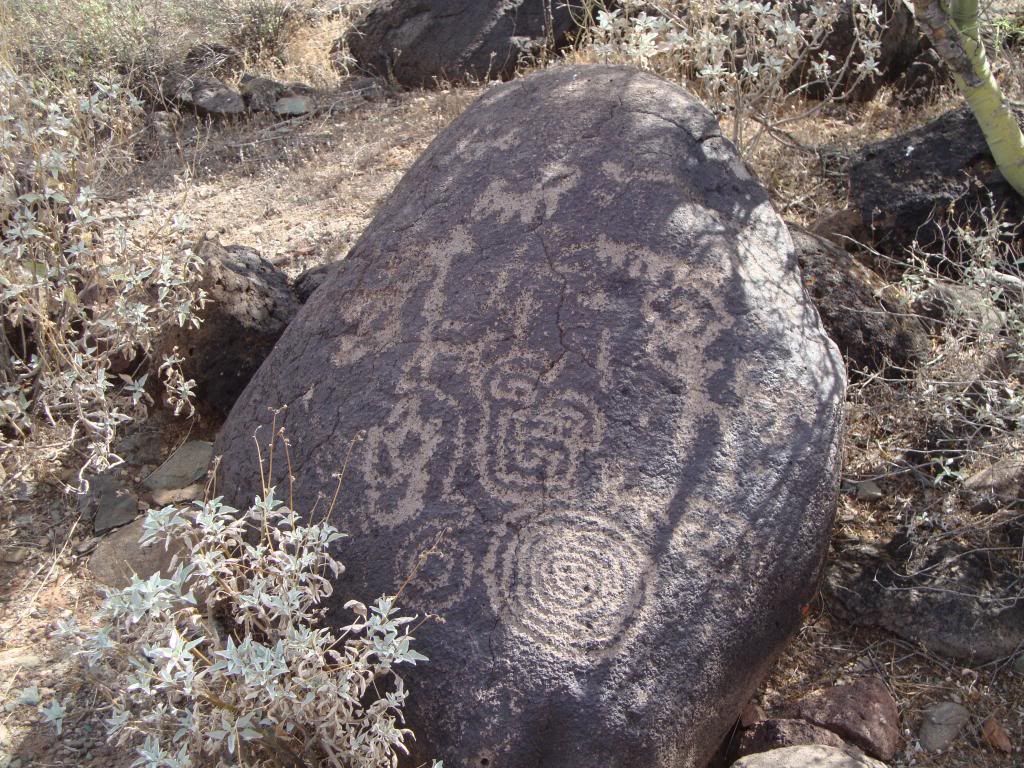
 I think this is where we saw some petroglyphs off the trail. 
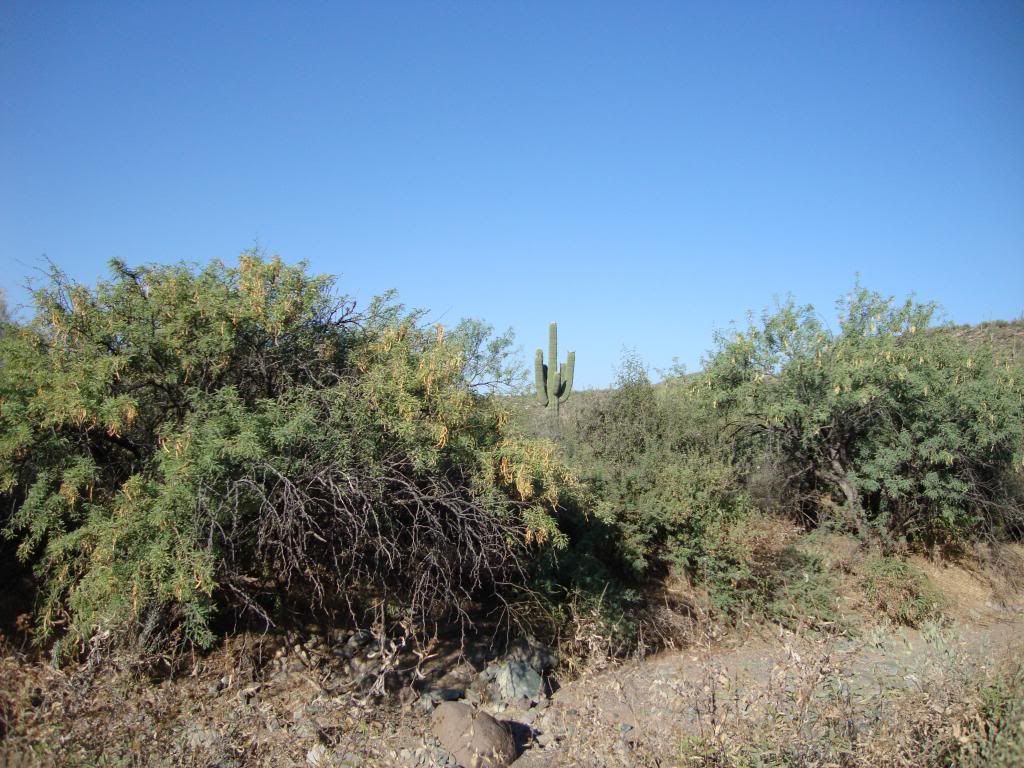


I believe this is the Jojoba Plant.


It's a little tough to see, but this is that odd-looking fly sitting on the barbed-wire fence.
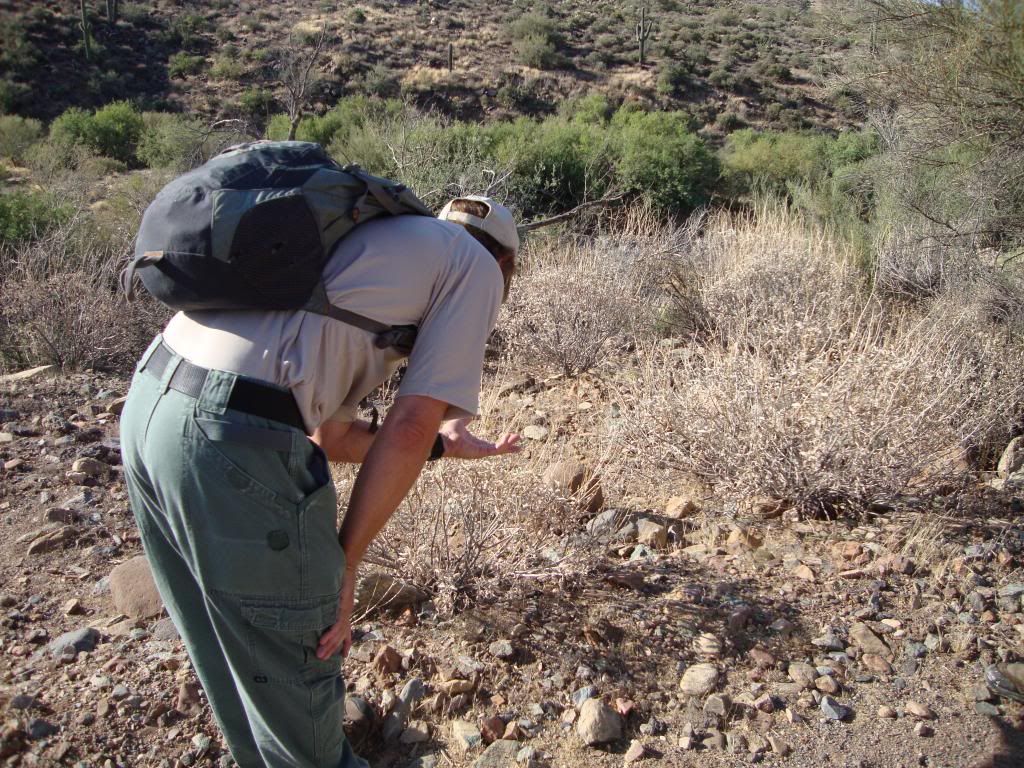

Ranger Kevin
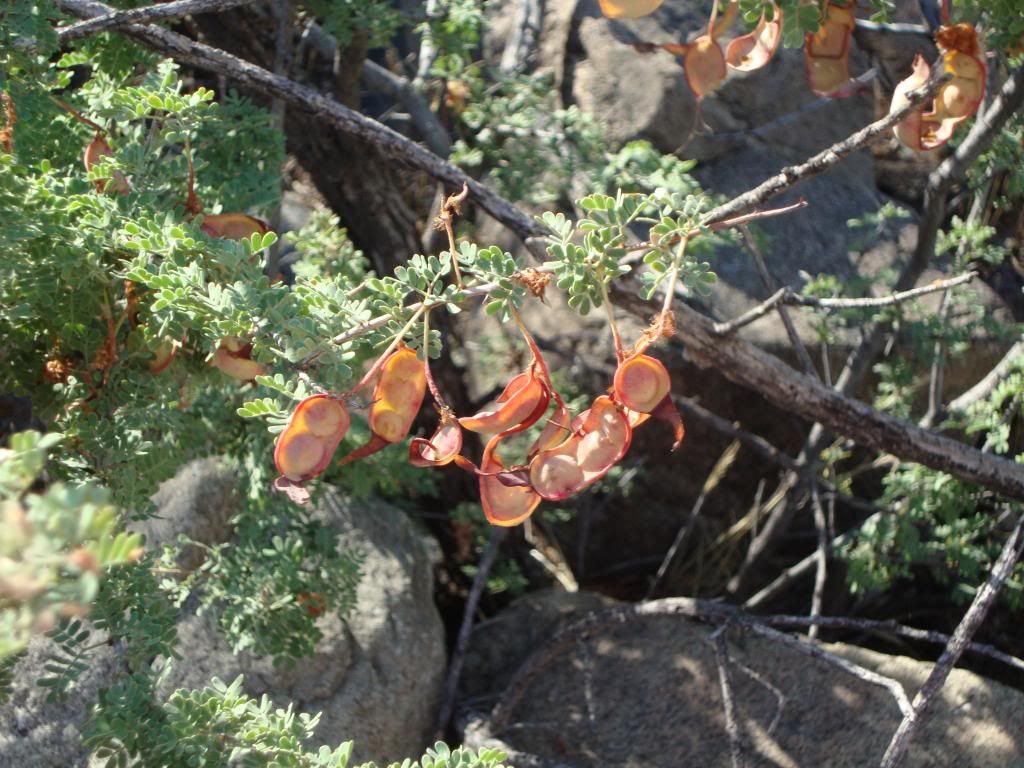

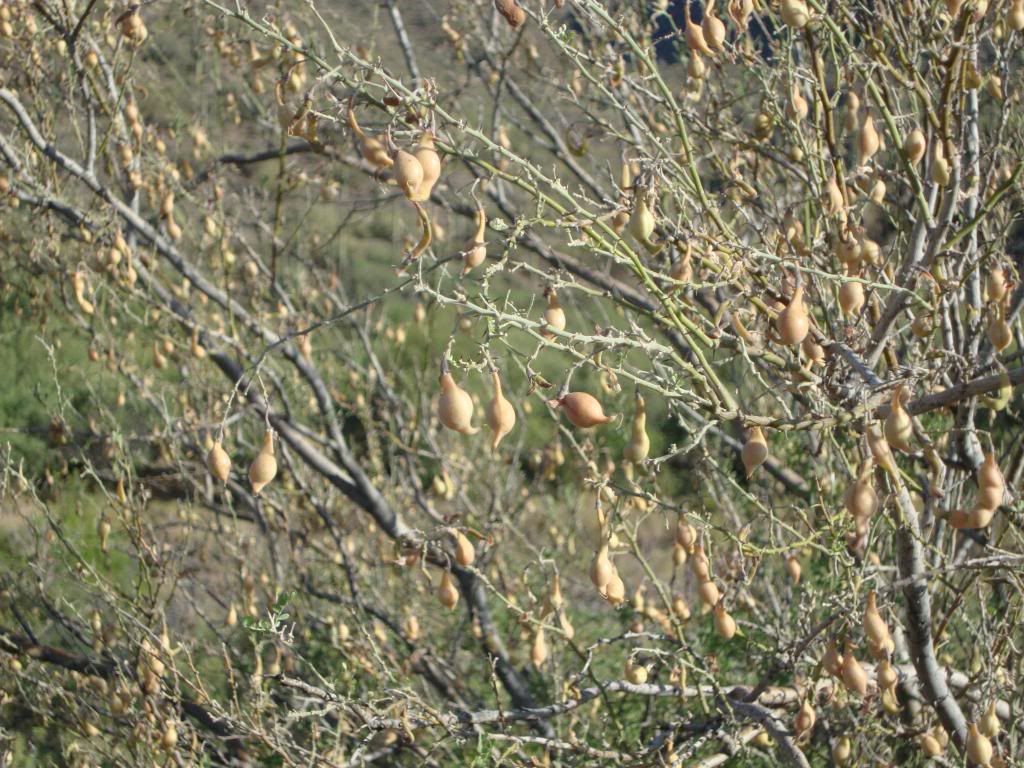
I believe these are the seeds of the Ironwood Tree.
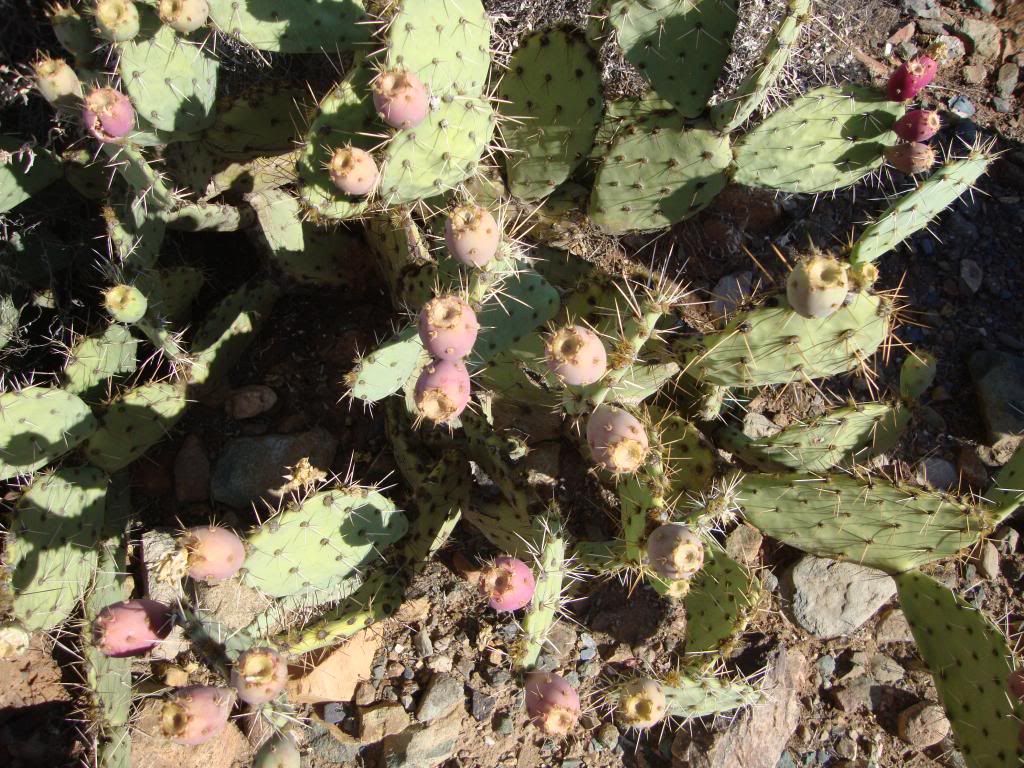

Prickly Pear Cactus
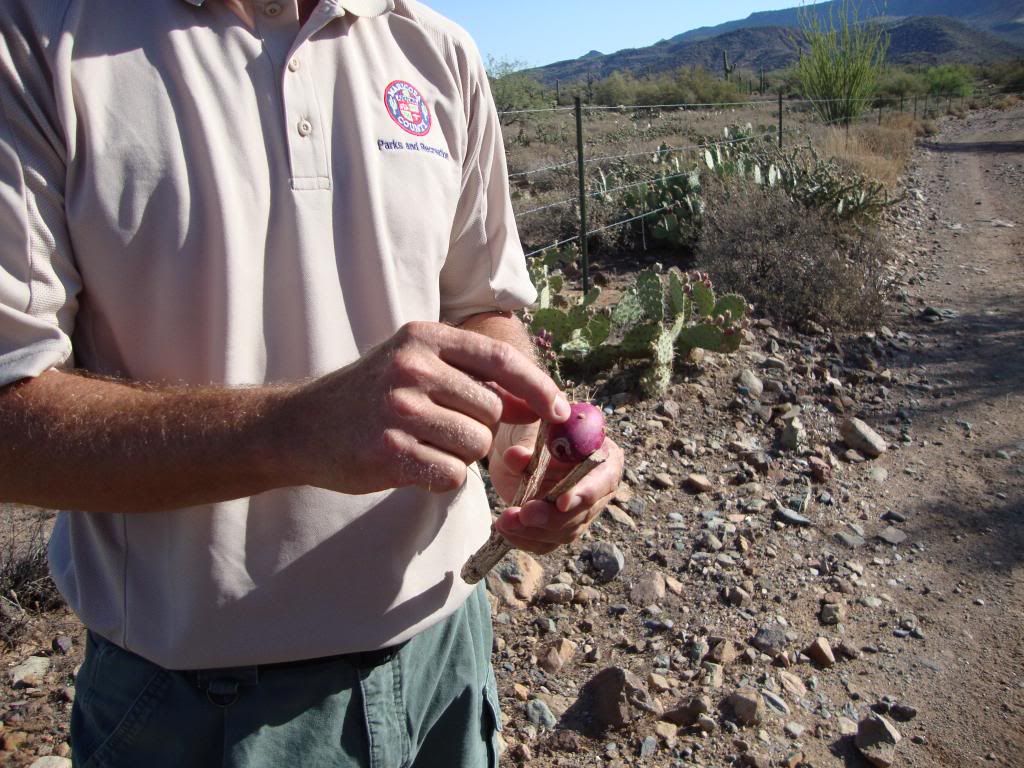


This is the fruit of the Prickly Pear Cactus.
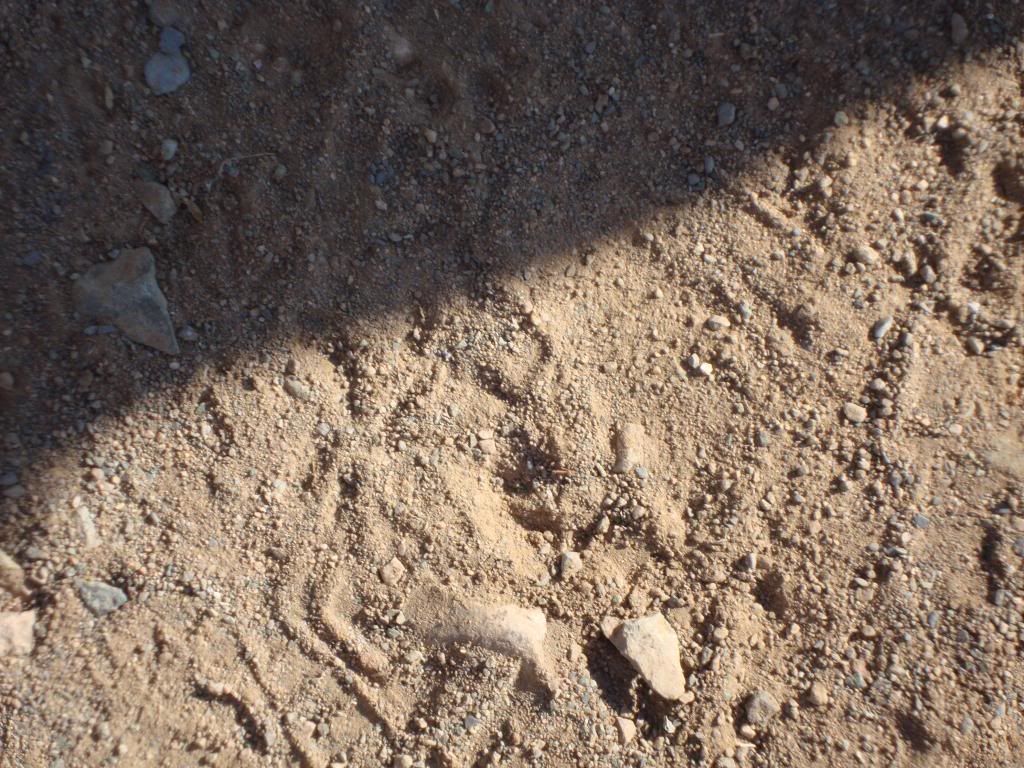

Prints that an animal left behind.
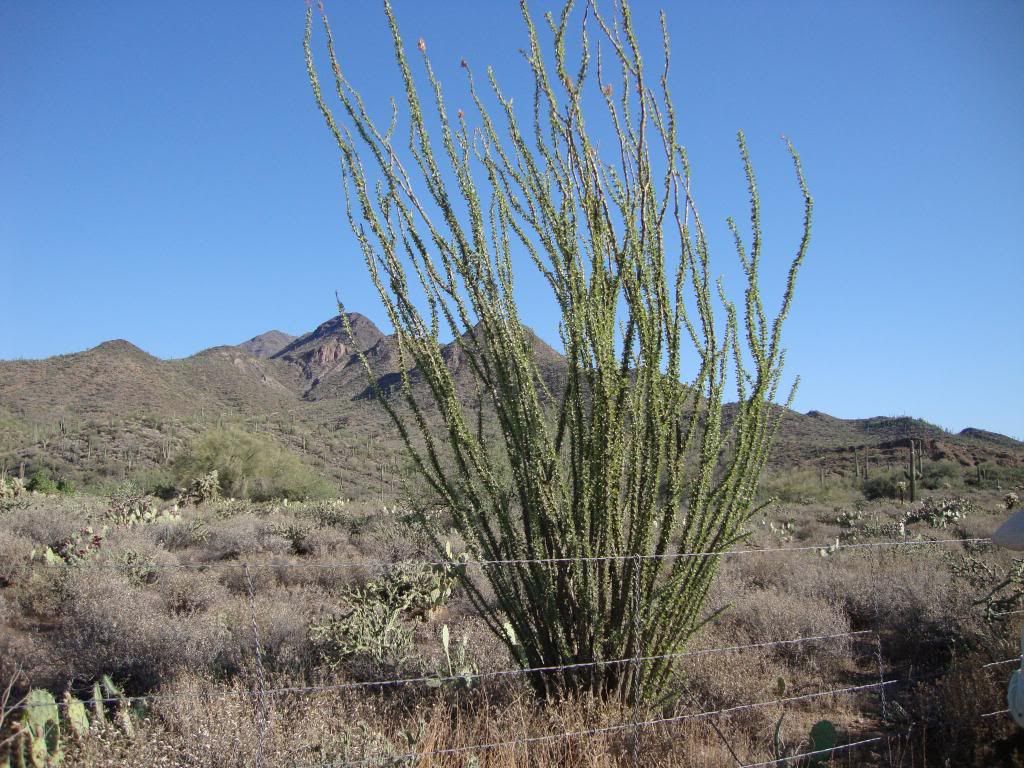

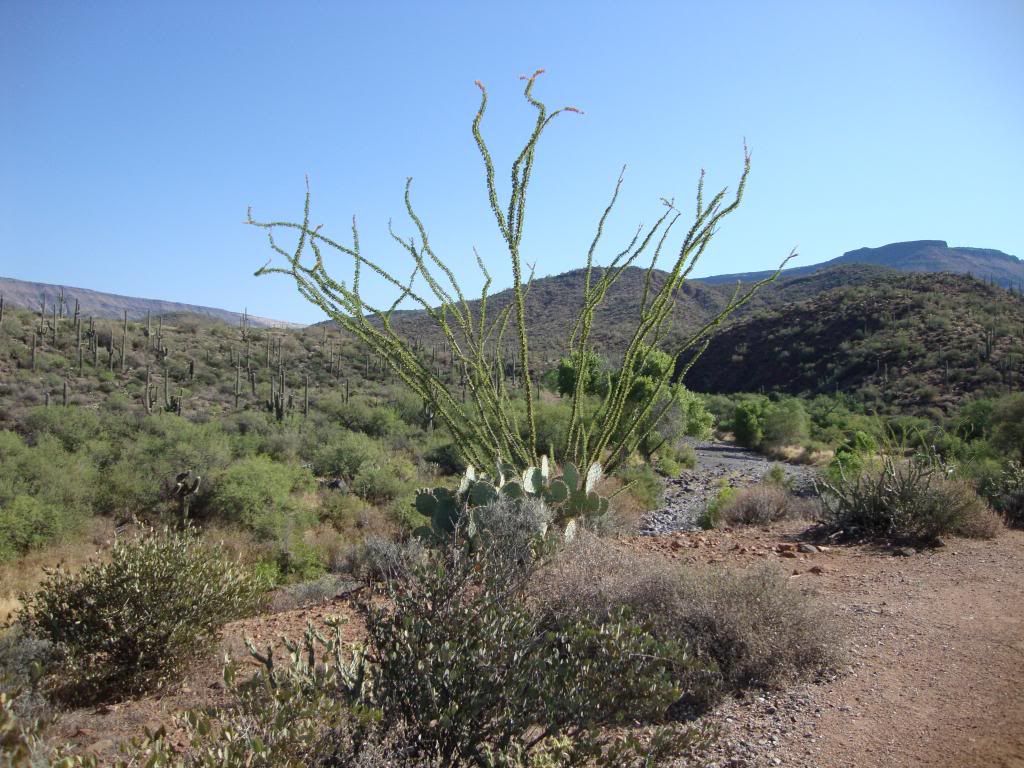
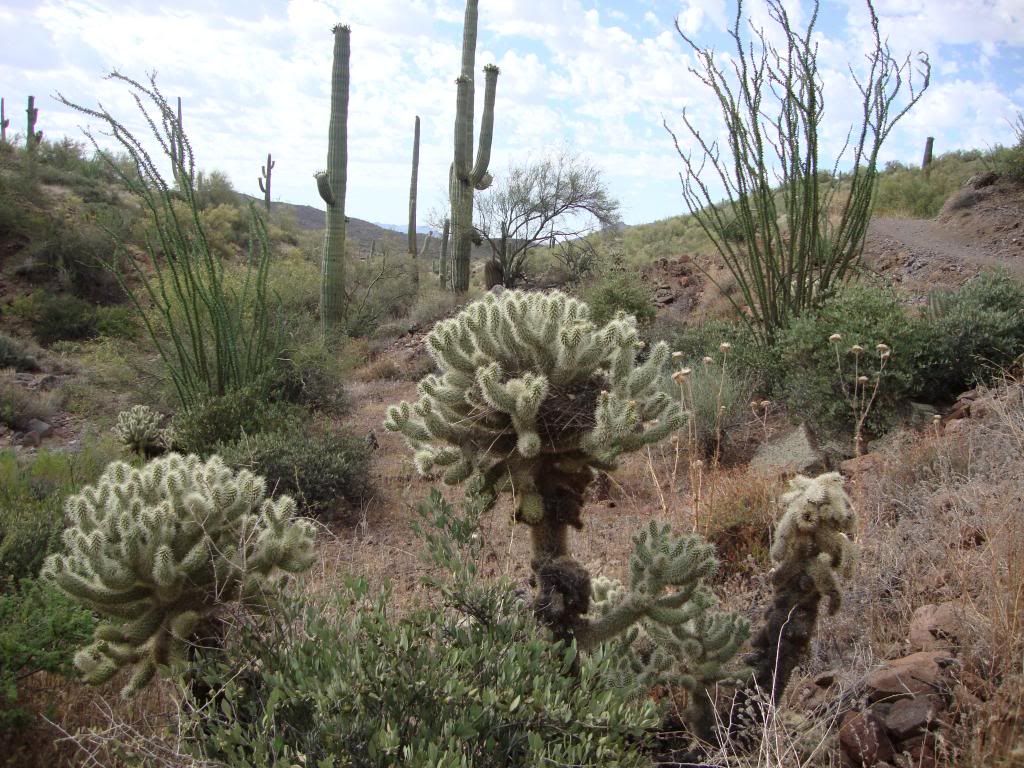
Ocotillo Cactus
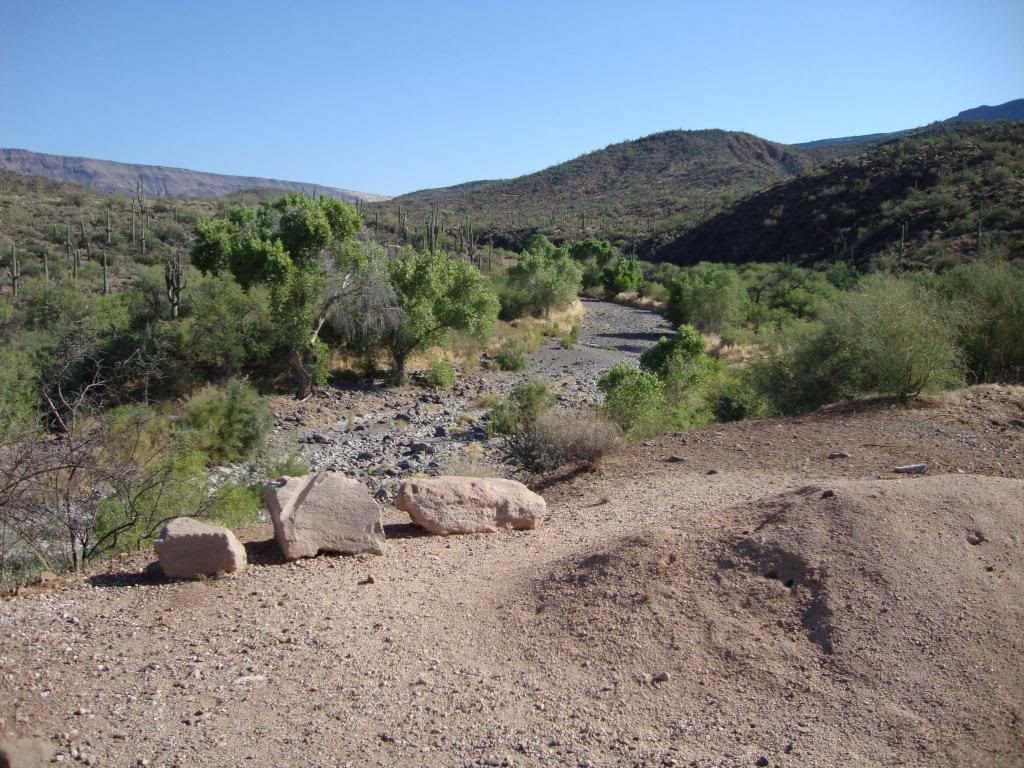


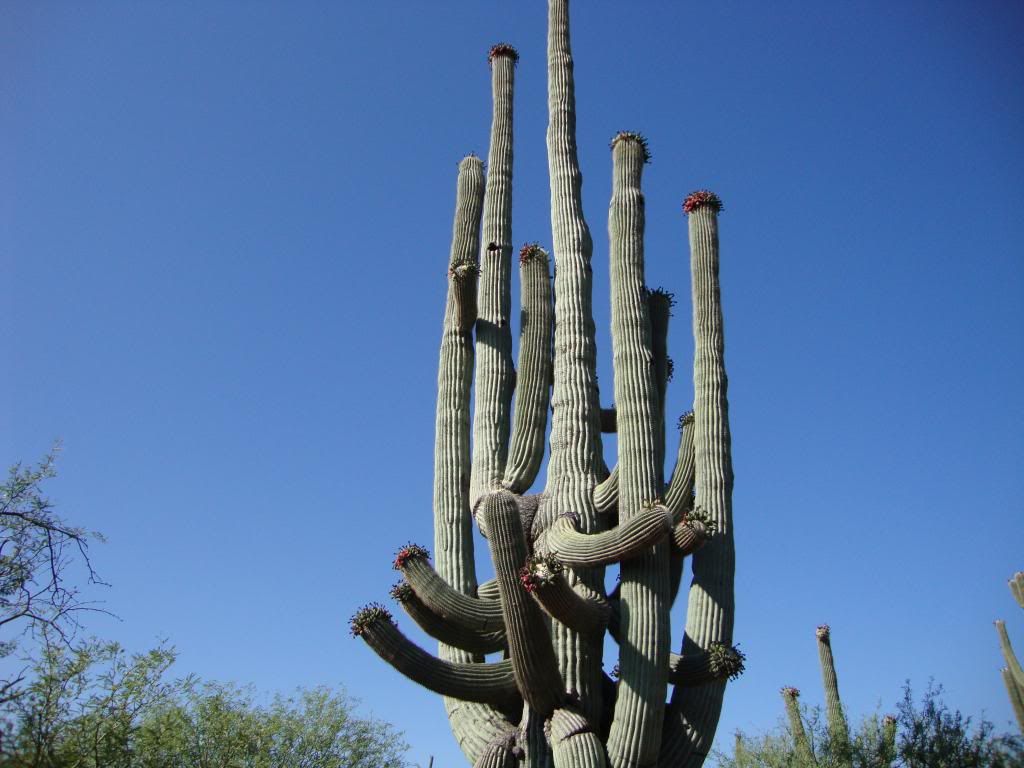
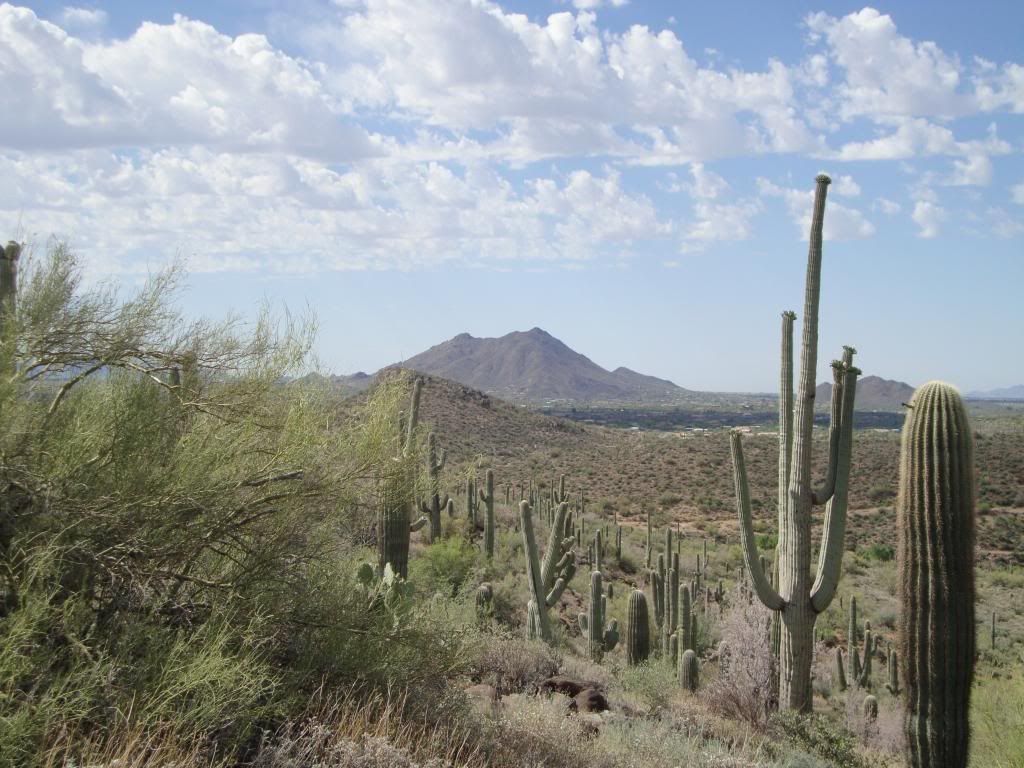
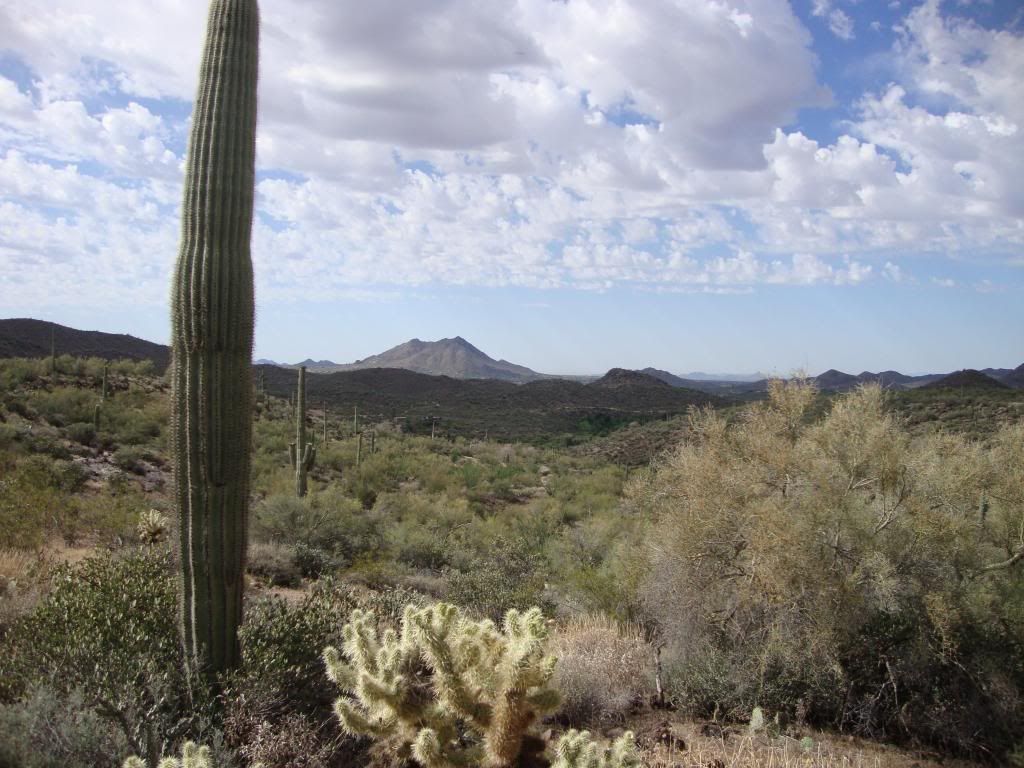
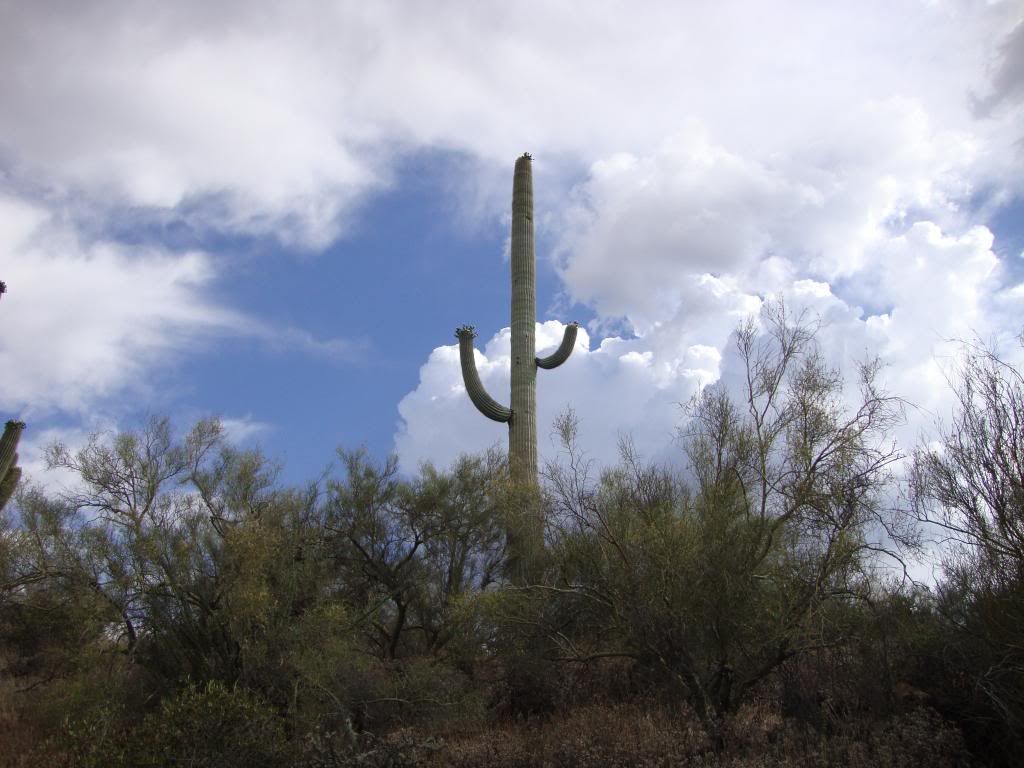
Some of the cactus out here are huge.
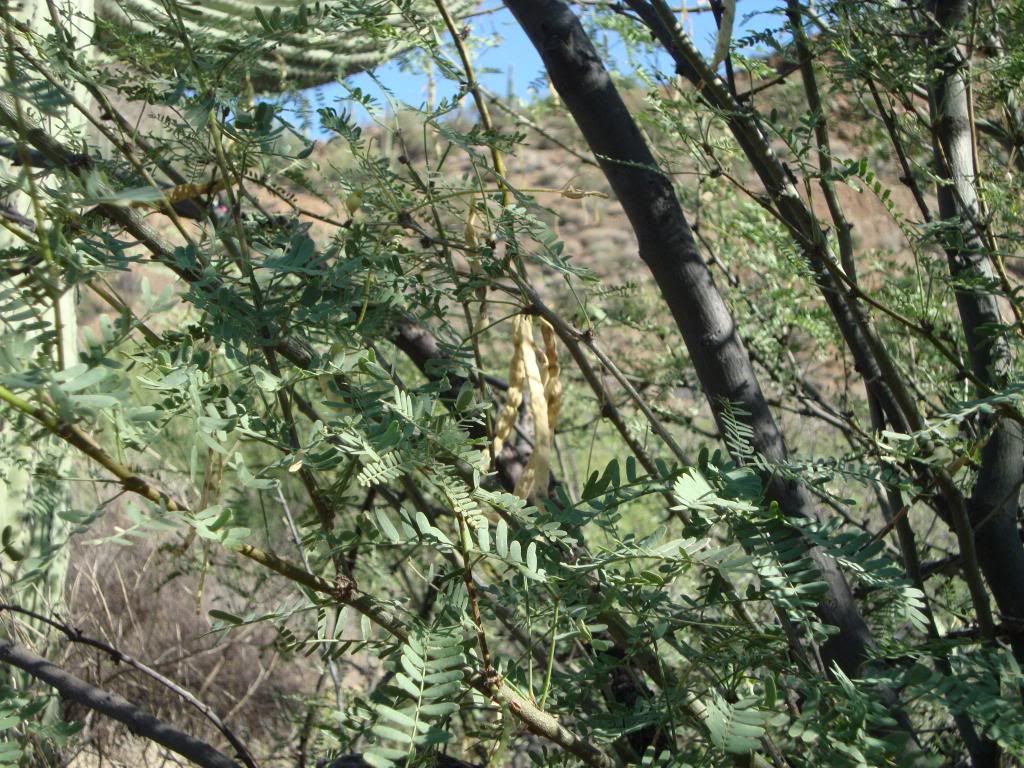


The praying mantis egg case.
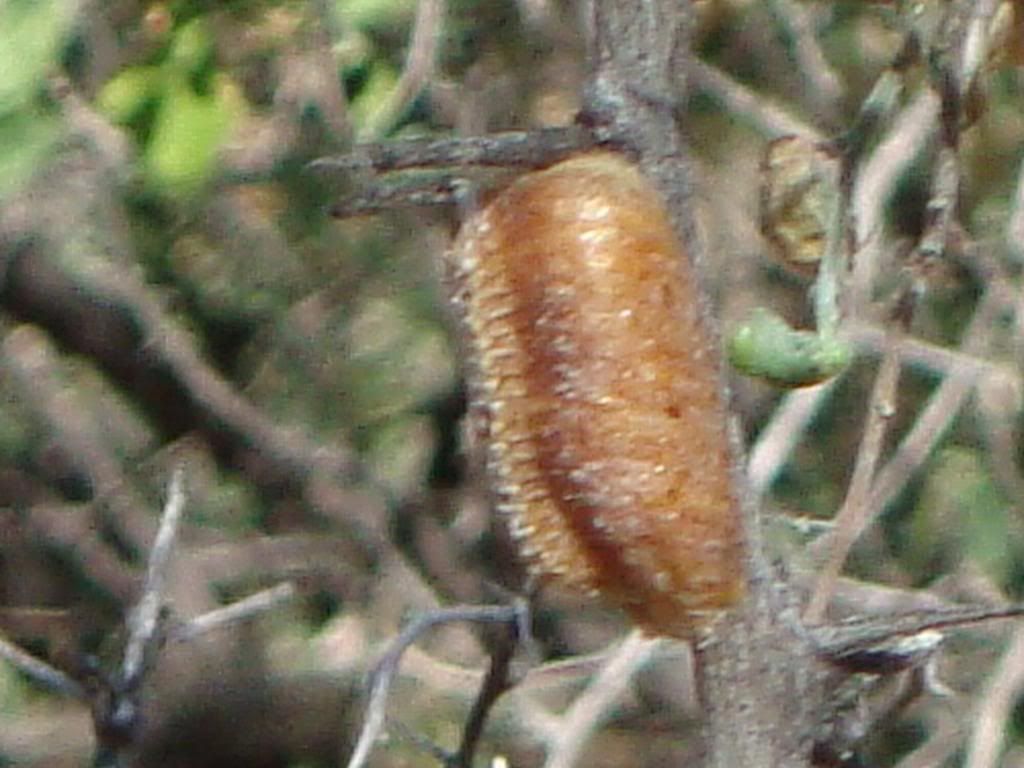

This is the praying mantis egg case up close.  *shudder*
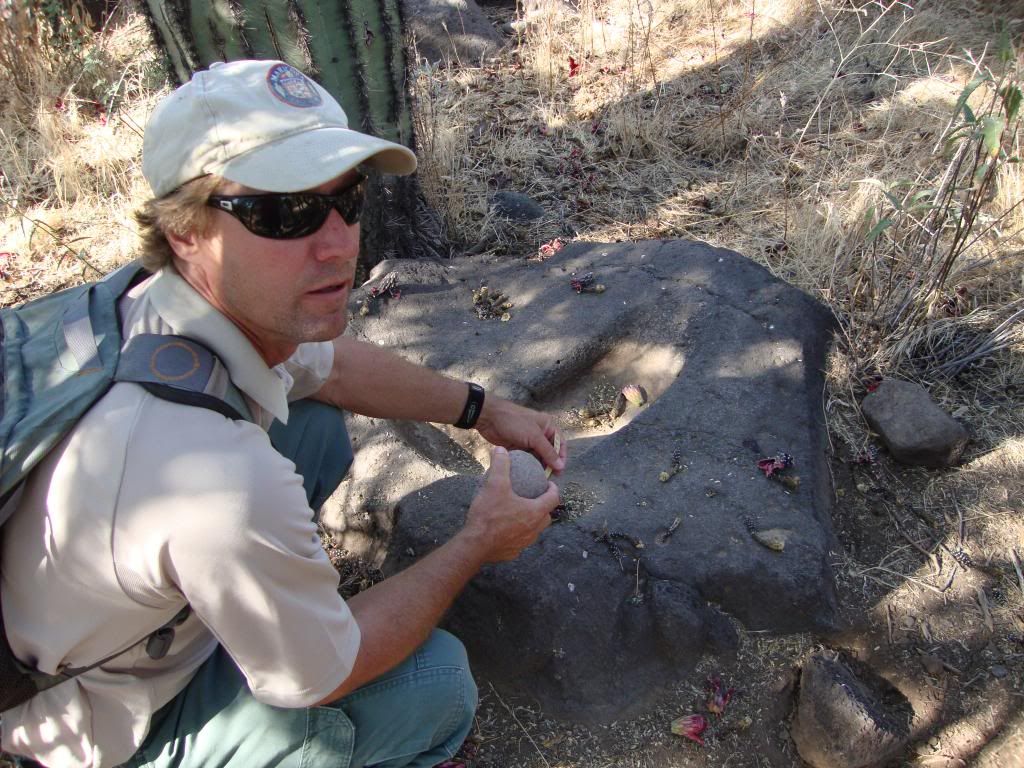
This is a metate, which was used to grind grain and seeds.
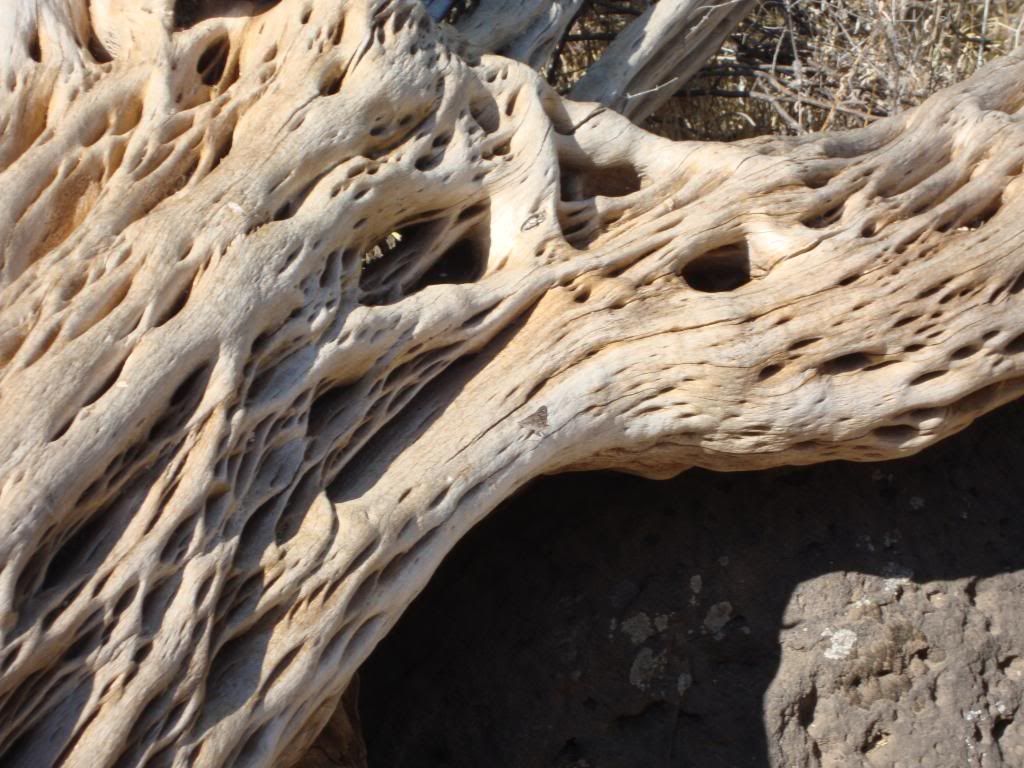

The wood of a very large cactus.
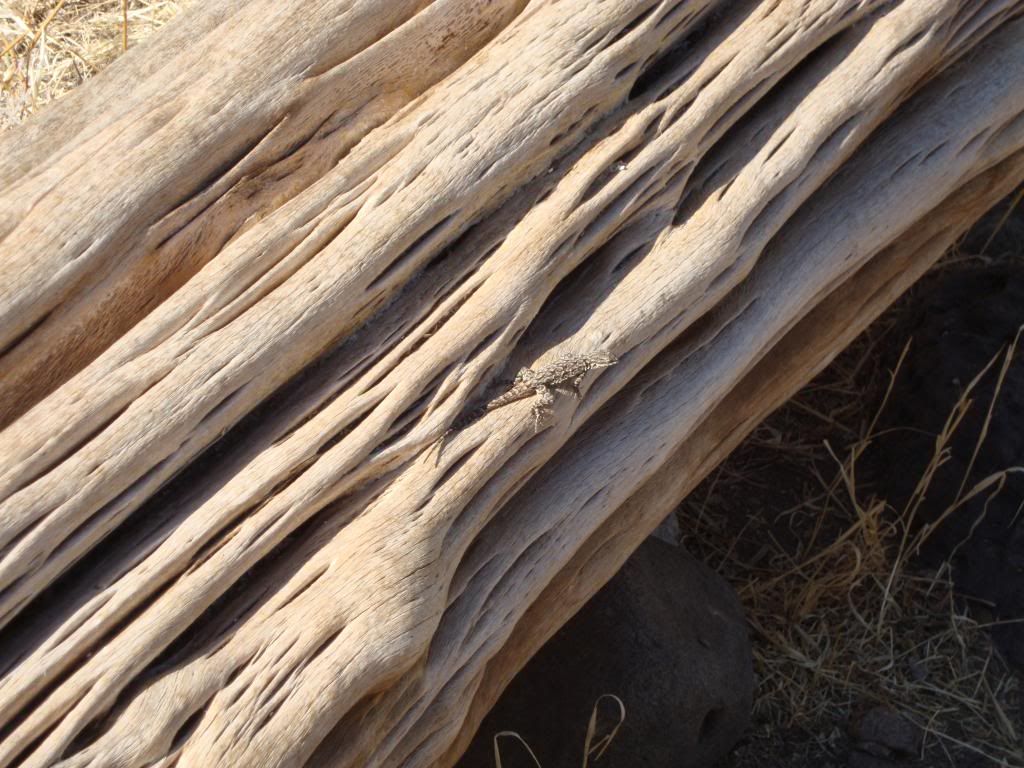

He's tough to see in this picture, but there's a little lizard sitting on the cactus wood.  It's so interesting how well all these little creatures blend into their surroundings.  Isn't nature amazing?
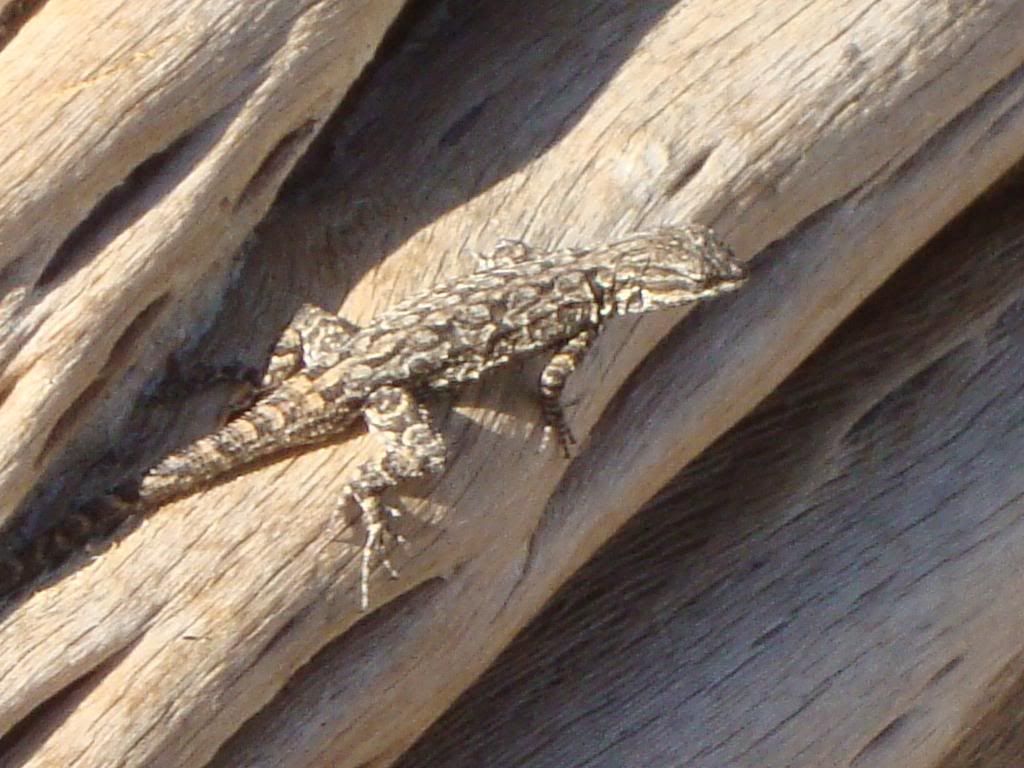

This is a close up of the little guy in the previous picture.
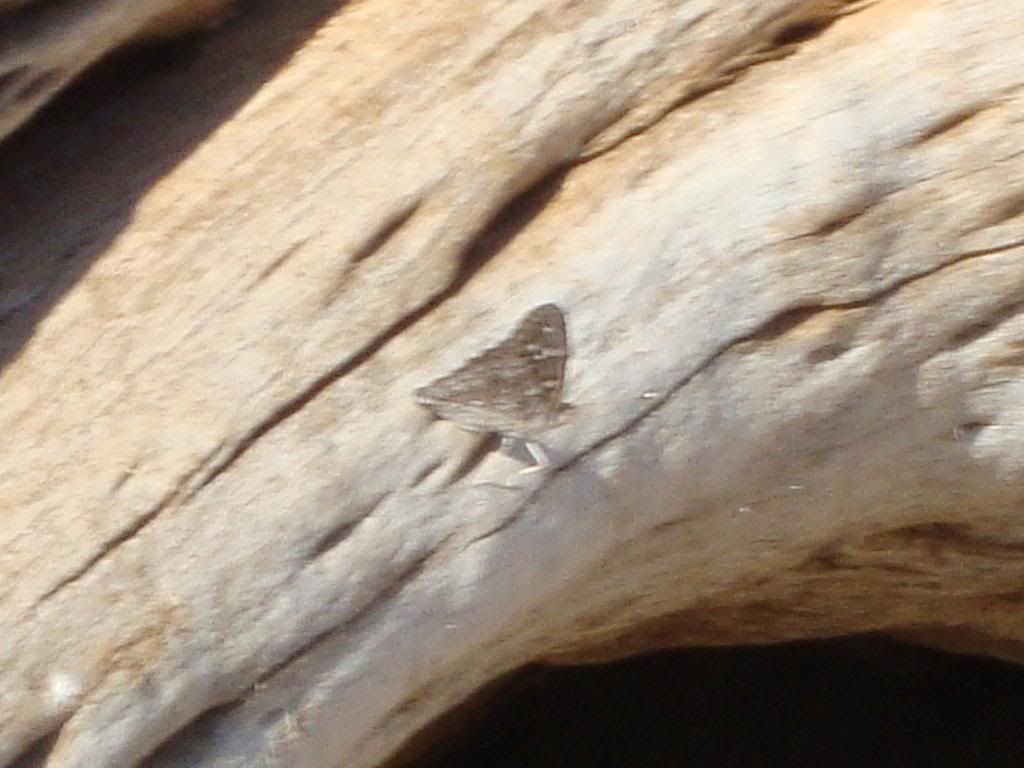

This is a picture of a butterfly sitting on the cactus wood.
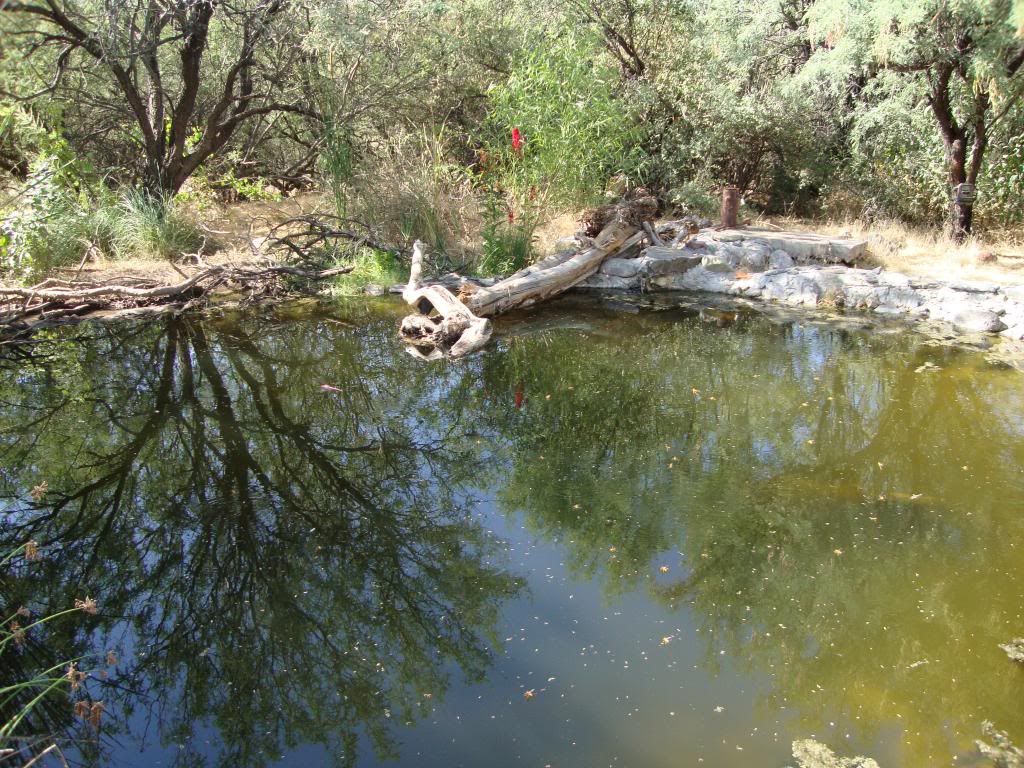

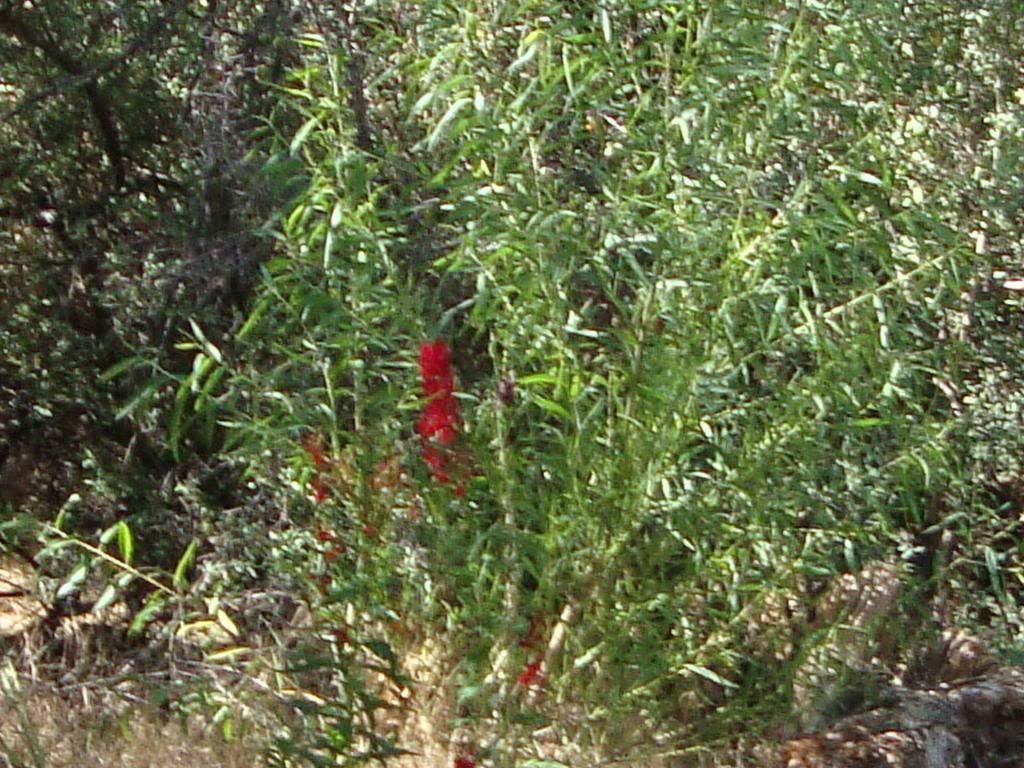
This is the man-made pond.  The following six pictures are of the same area.


Ranger Kevin pulling fruit down from a Saguaro.


Fruit from the Saguaro.


Saturday, October 12, 2013

Spur Cross Conservation Area - Part 8 - Ruins of Spur Cross - Hohokam Dwellings

This was a really interesting hike that Cathy and I went on some time ago out at the Spur Cross Conservation Area.  After hiking up to one of the mesa compounds, we saw what was left of a prehistoric Hohokam dwelling.  It was about a 2 ½ mile hike with plenty of uphill climbing, so we got a nice workout. 

A short ways into the hike, we went off the trail to look at some petroglyphs on what is called Apprentice Rock.  Kevin explained to us that the basaltic rock is actually a light grey in color, but appeared to be brown due to what is referred to as “desert varnish” covering it.  I first heard of this while on the moonlight hike out at the White Tanks.  Through the years, dirt and sediment are “baked” onto the rocks, giving them their brown appearance.  To “draw” their petroglyphs, the Hohokam’s would pick through this desert varnish.  He told us the difference between petroglyphs, which are images made by removing part of the rock surface by chiseling or pecking, and pictographs, which are images drawn or painted on a rock surface.  We also learned the difference between direct percussion, which creates “fuzzy looking” petroglyphs by using a stone, and indirect percussion, which creates a more clear petroglyph by using a chisel.  What are mostly seen in Spur Cross are petroglyphs made using the indirect percussion method. 

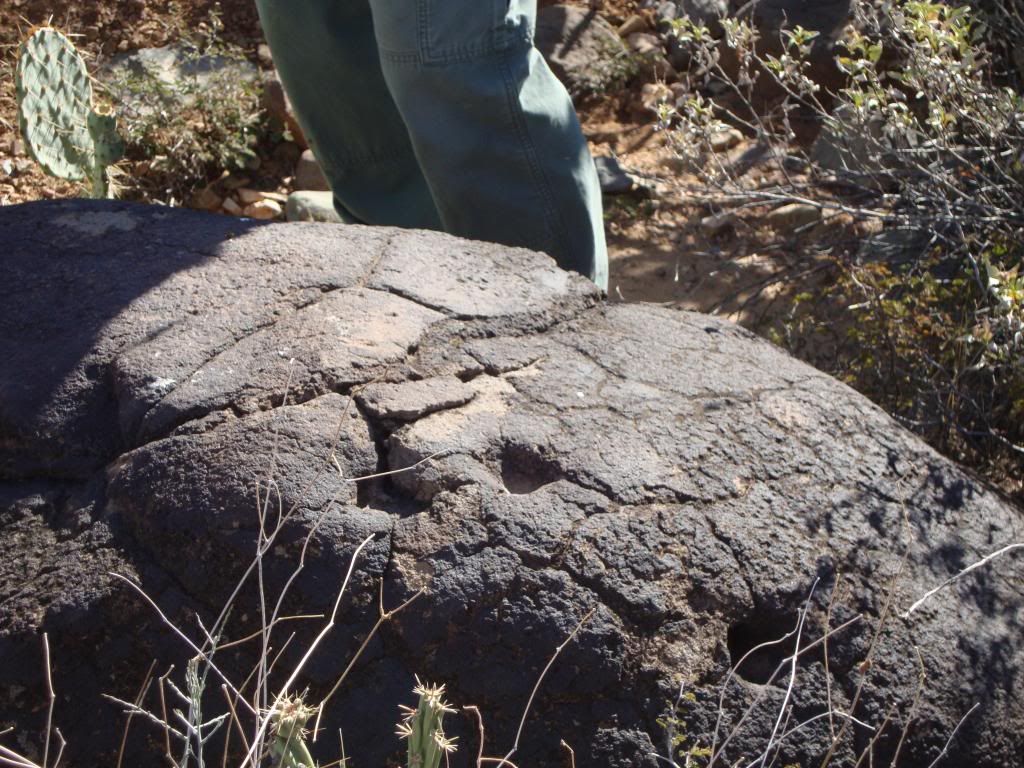
The rock we were looking at is called Apprentice Rock because it is thought that a man and his daughter were working on it together.  We also saw a large rock with holes in it while by the Apprentice Rock.  It is thought that the holes were possibly used to hold some sort of dye.  We also saw some prickly pear and buckhorn cholla cactus in this area. 

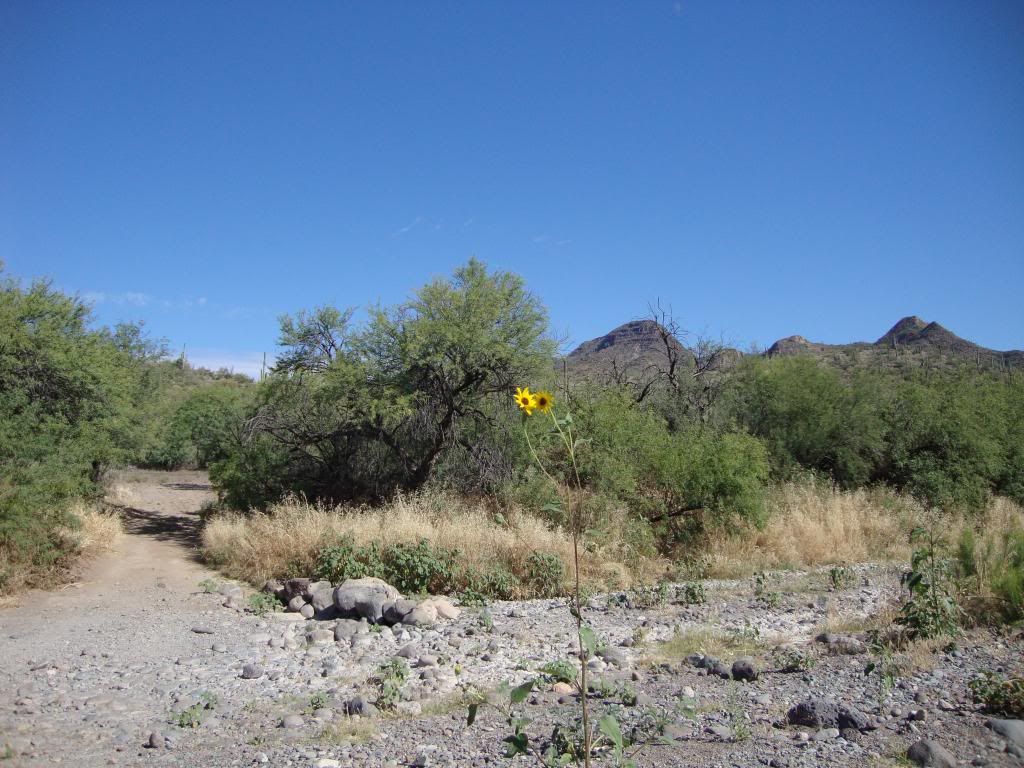
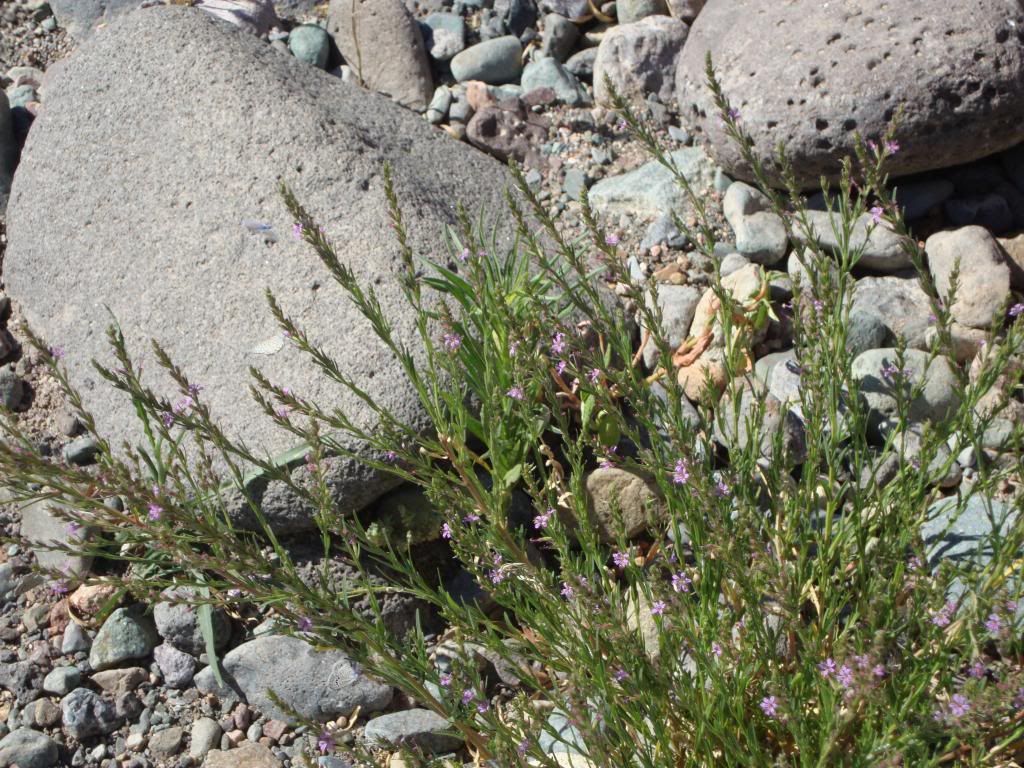
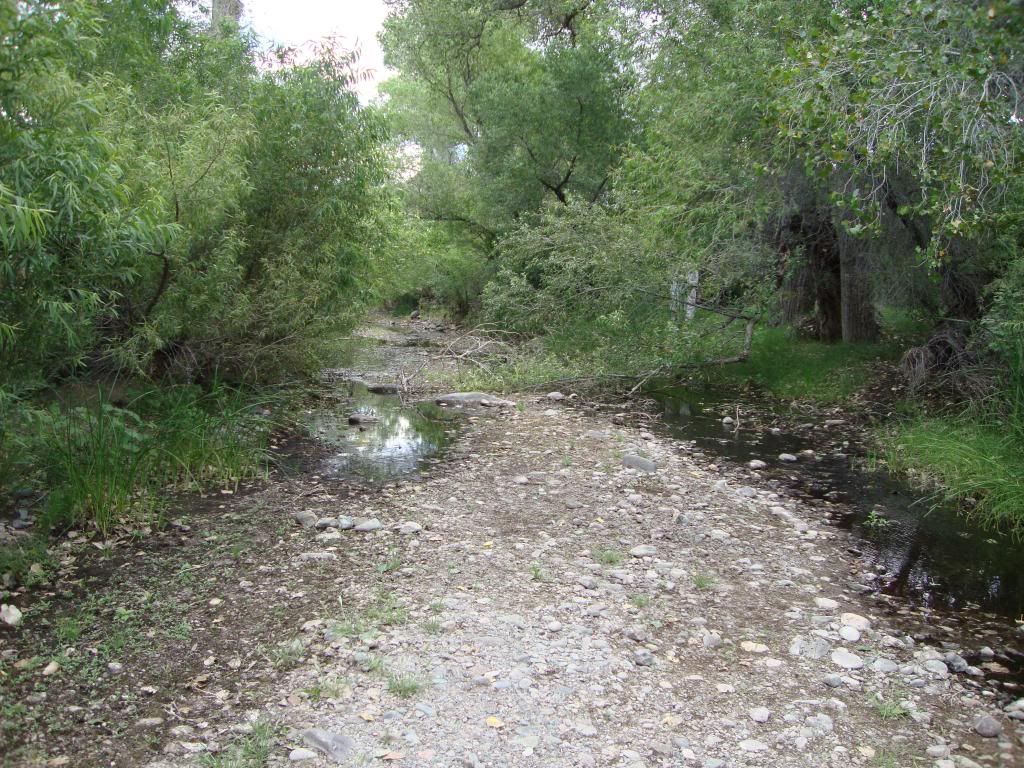
We then entered the creek – it was dry this time of year – where we saw some sunflowers as well as other wildflowers.  We talked a little bit about flash floods and how quickly they can happen. 

A little bit after coming out of the creek, we came upon the site of the barn and corral that was once part of the old Spur Cross Ranch.  We also saw a feeding trough and the Spur Cross brand in the concrete.  At the top of the Tortuga Trail, a bit after coming to the intersection with the Spur Cross trail, we saw some teddy bear and chain-fruit cholla. 

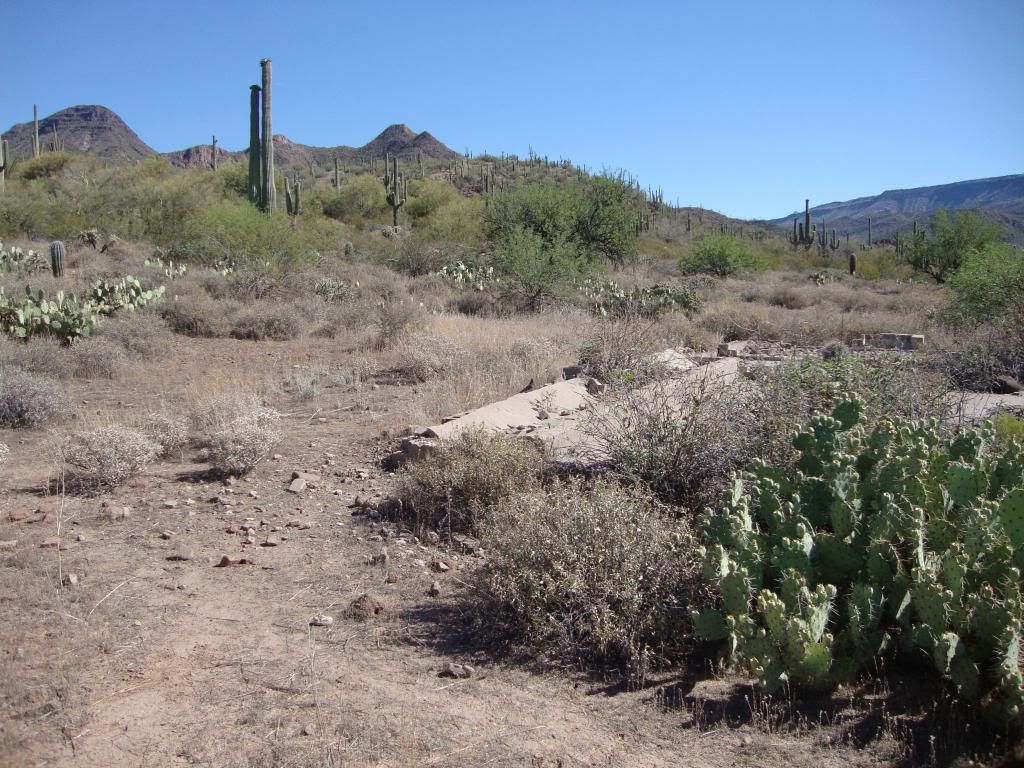
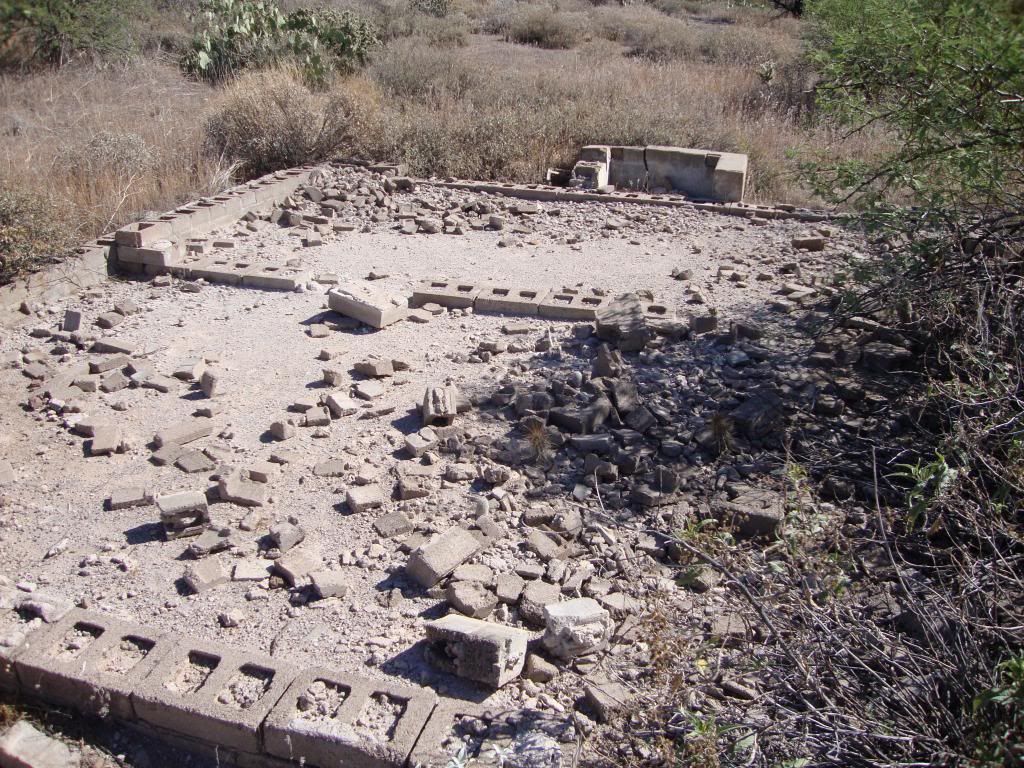
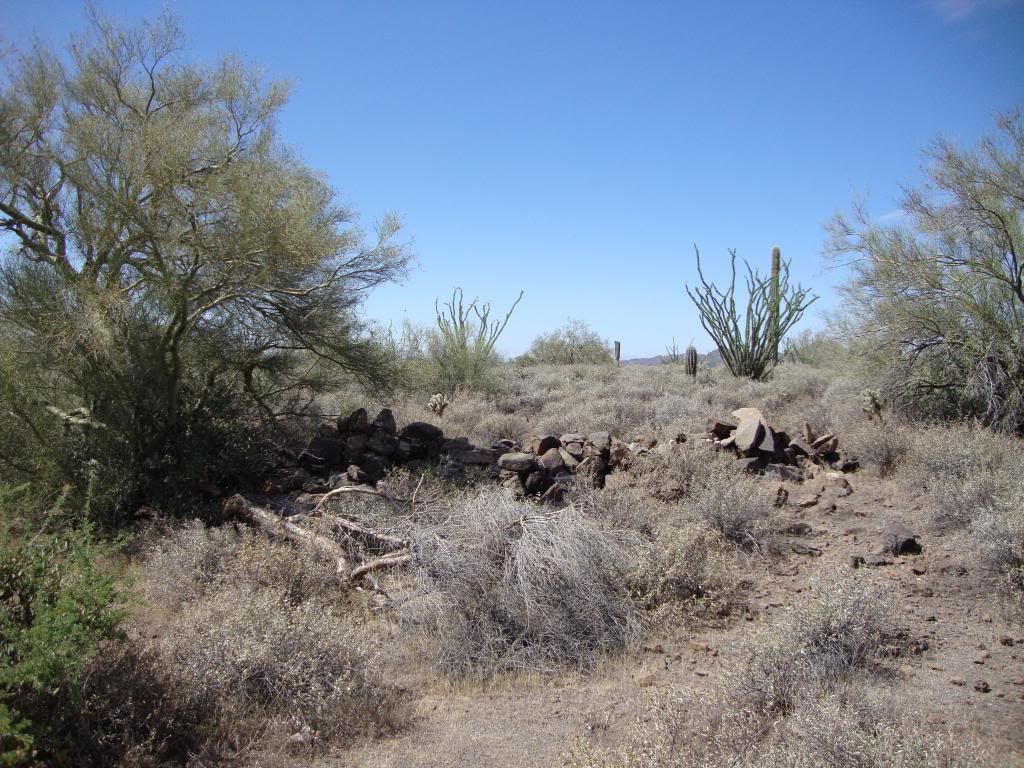
We had to go off the trail a bit to get to the ruins.  It was kind of eerie standing there knowing that people once lived there over eight hundred years ago.  There isn’t much left of the dwellings, but one is able to make out where the rooms once were.  There were approximately twenty-five rooms, and the walls were four or five feet high.  The Hohokam’s lived in a series of compounds.  Kevin told us about the fortress on Elephant Mountain and how the lookouts would warn each other from one hill to the next of intruders.  It was a really interesting hike and I got a nice workout too.


Petroglyphs on Apprentice Rock


It is thought that the holes in this rock were possibly used to hold some sort of dye.


This cactus is blooming.


This is what remains of a feeding trough that was on the old Spur Cross Ranch.


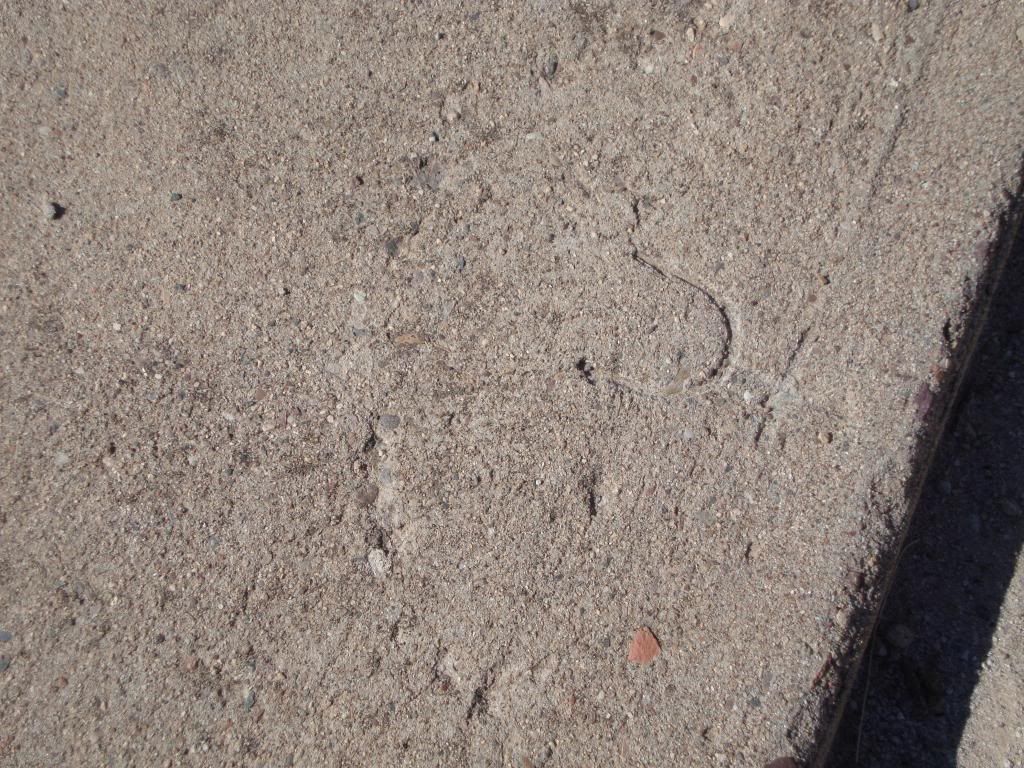
It's a little tough to see, but there is the Spur Cross brand in the concrete. 


The site of the barn and corral that was once part of the old Spur Cross Ranch.

This is the area where the dwellings are.


  There isn't much left of the dwellings, but once up there one can see where the rooms once were.

More pictures from this hike can be found here.


Spur Cross Conservation Area - Part 7 - Dragonfly Trail


This turned out to be a really interesting hike.  Elaine McGuire, who is a docent out at Spur Cross, led the hike.  The heat was getting to me a bit by the time we got done, but it was well worth it as we saw a lot of interesting things and got a good workout.


At the time I hiked this trail, it was a new one in the Spur Cross area, and part of it actually crosses into the Jewel of the Creek riparian area, which is maintained by the Desert Foothills Land Trust.  (I’m not sure if the Jewel of the Creek Trail itself is part of the Dragonfly Trail.)  The trail begins on the old Tortuga Trail so we got a bit of a workout right away as the beginning of that trail is an uphill climb. 

From the Tortuga Trail, we went onto the Spur Cross Trail where, fairly early into the hike, we saw some yellow and purple wildflowers, as well as some Mexican Poppies.  In addition, we saw some beautiful views of Elephant Mountain and the Hohokam fortress.  We also saw a lizard on the rocks, but he was hiding behind some plants and was camouflaged really well, so it’s hard to see him in the pictures.


After about 1 ½ miles into the hike, we came to an intersection of three trails.  This is where we would get off the Spur Cross Trail and go left onto the Dragonfly Trail.  If we went to the right, we’d go back onto the Tortuga Trail.  I believe Elaine said that if we continued straight ahead (on the Spur Cross Trail) we’d be on what will some day be a portion of the Regional Trail, but I could be wrong on that. 


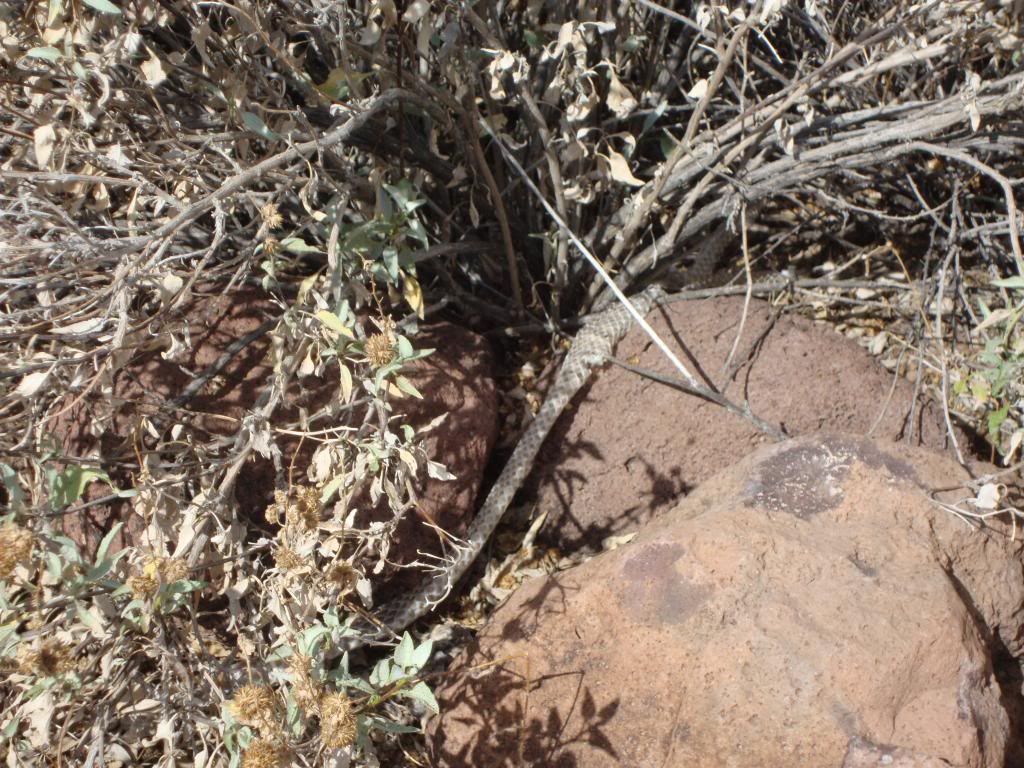
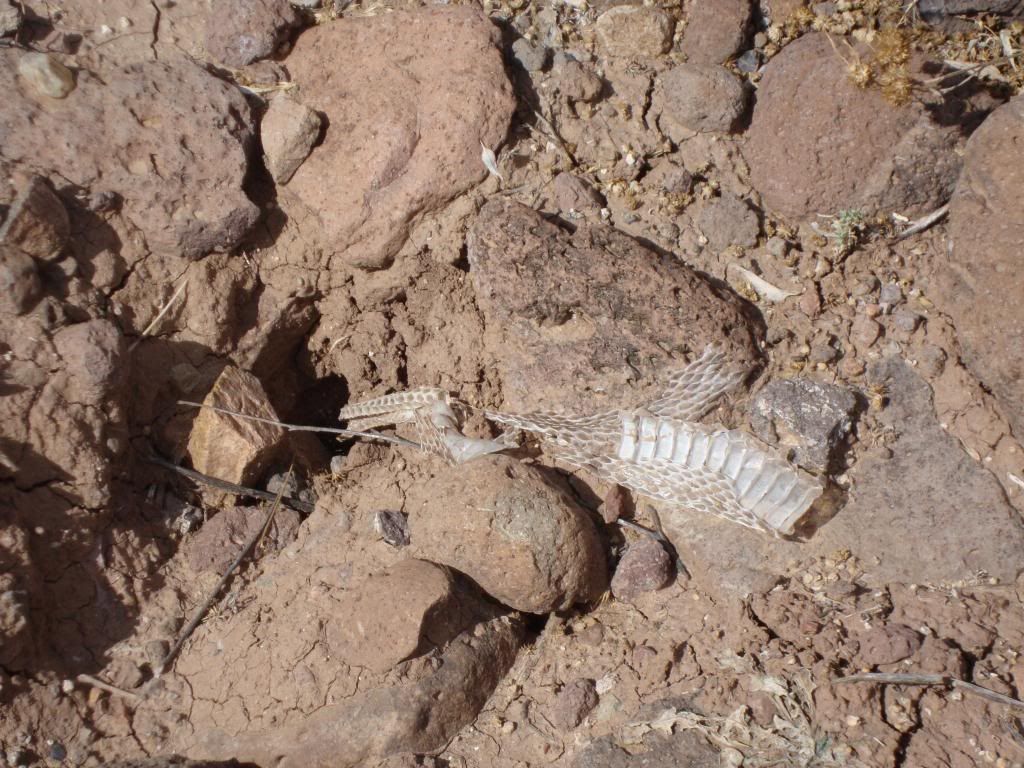
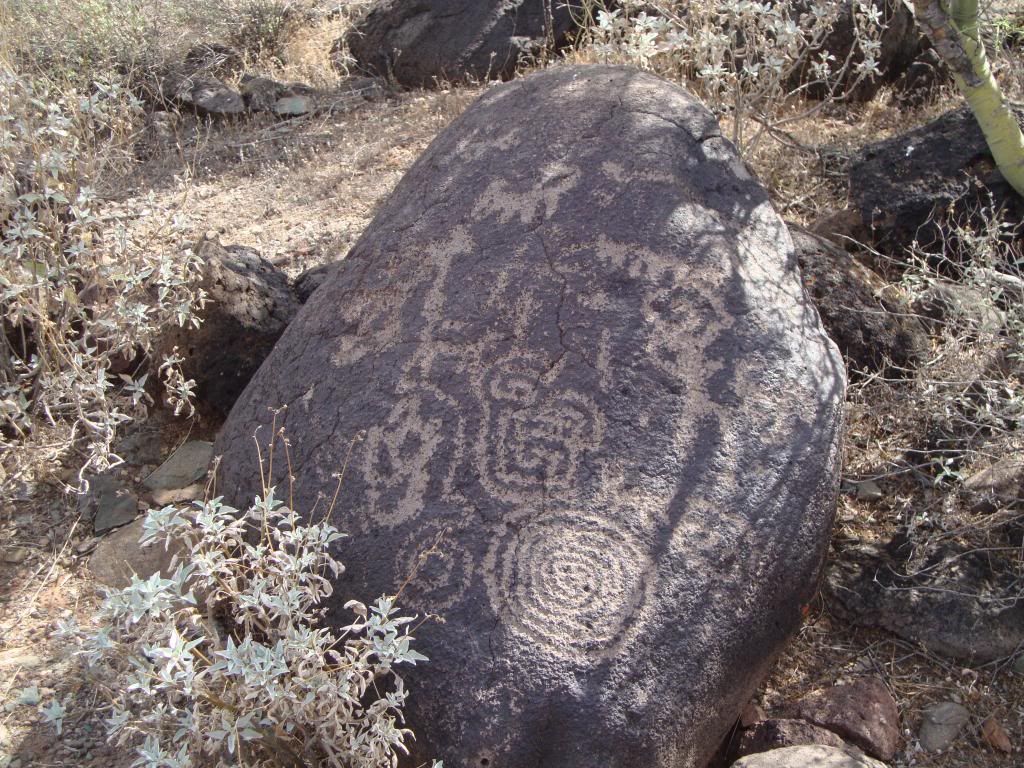
Soon after turning onto the Dragonfly Trail, we saw something that I had never seen before on any trail.  There was a hole in the ground off to the side of the trail and, coming out of that hole, was a rather long piece of snake skin.  Snakes will sometimes go into holes so that the sides of the hole will pull off their skin as they are entering it.  I’m glad he was long gone by the time we got there!  A little further along on the Dragonfly Trail, we went off the trail to some petroglyphs.  In addition to the interesting petroglyphs we saw, we enjoyed some beautiful views of the surrounding area. 


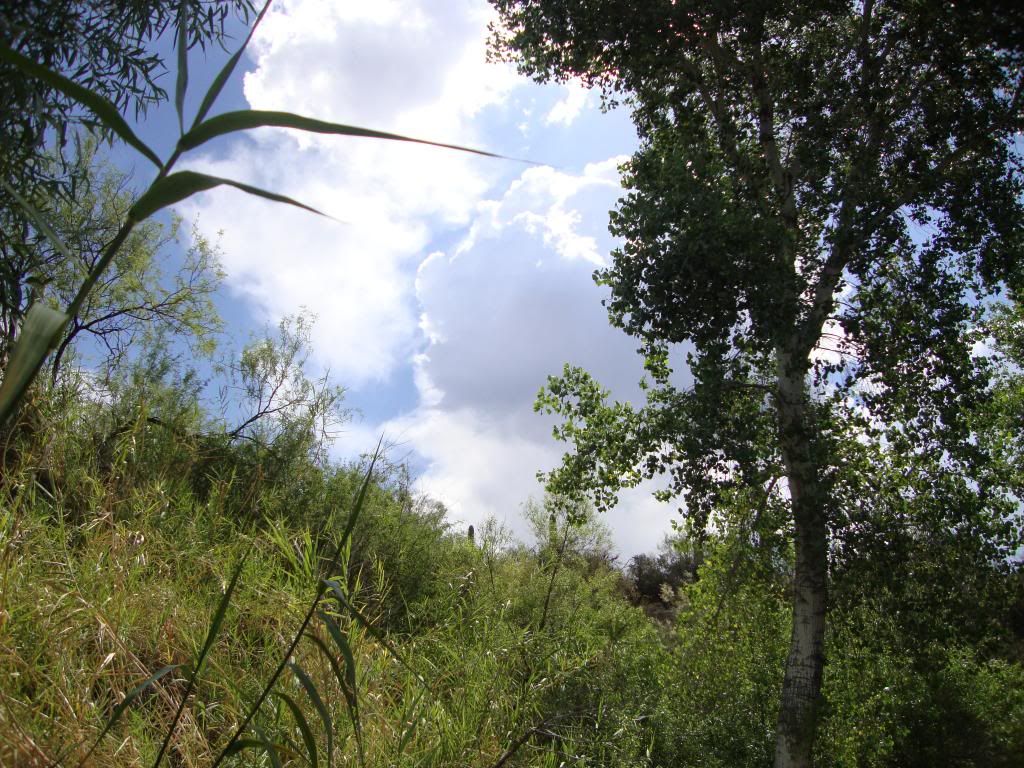
It seemed like one minute we were surrounded by teddy bear cholla, saguaro, and ocotillo, and the next we were down in the beautiful riparian area of the Jewel of the Creek.  It also seemed to be a bit cooler down there.  I had been down in this area before with the folks from the Desert Foothills Land Trust.  


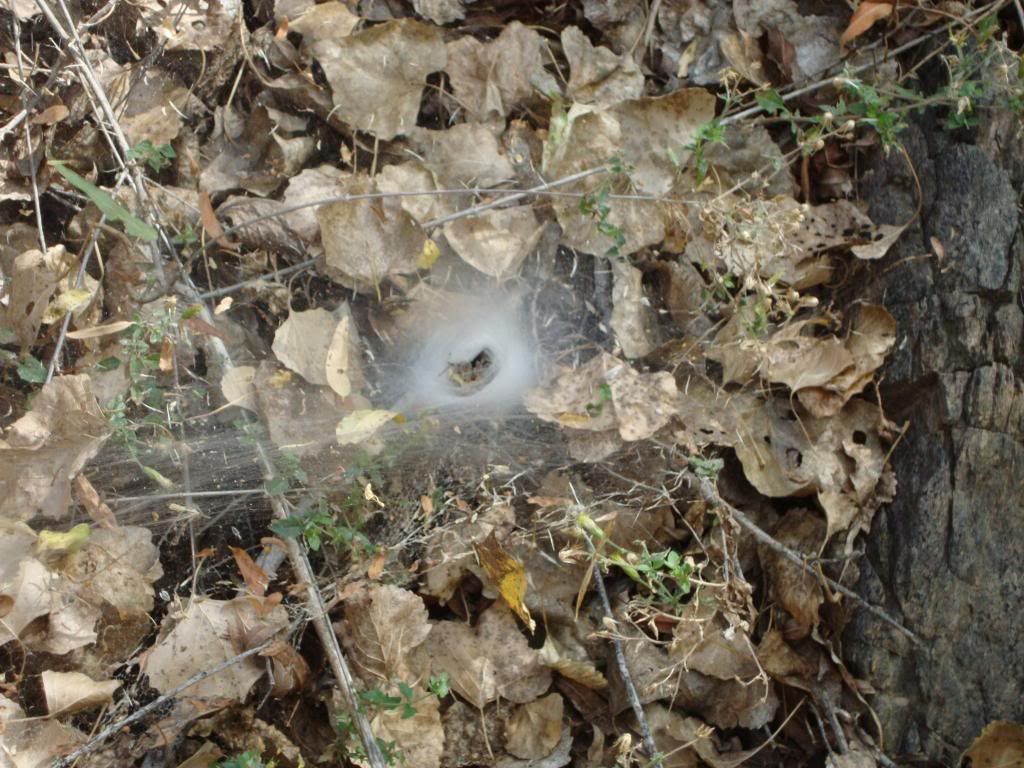
We saw a lot of interesting things while down in the Jewel of the Creek riparian area – a strange-looking bug of some sort that blended in very well with the grey rock, a very small cave, and a beautiful spider’s web.  A camera placed down there has captured a mountain lion on film.  It was very lush and green so it was nice to hike through that area.  


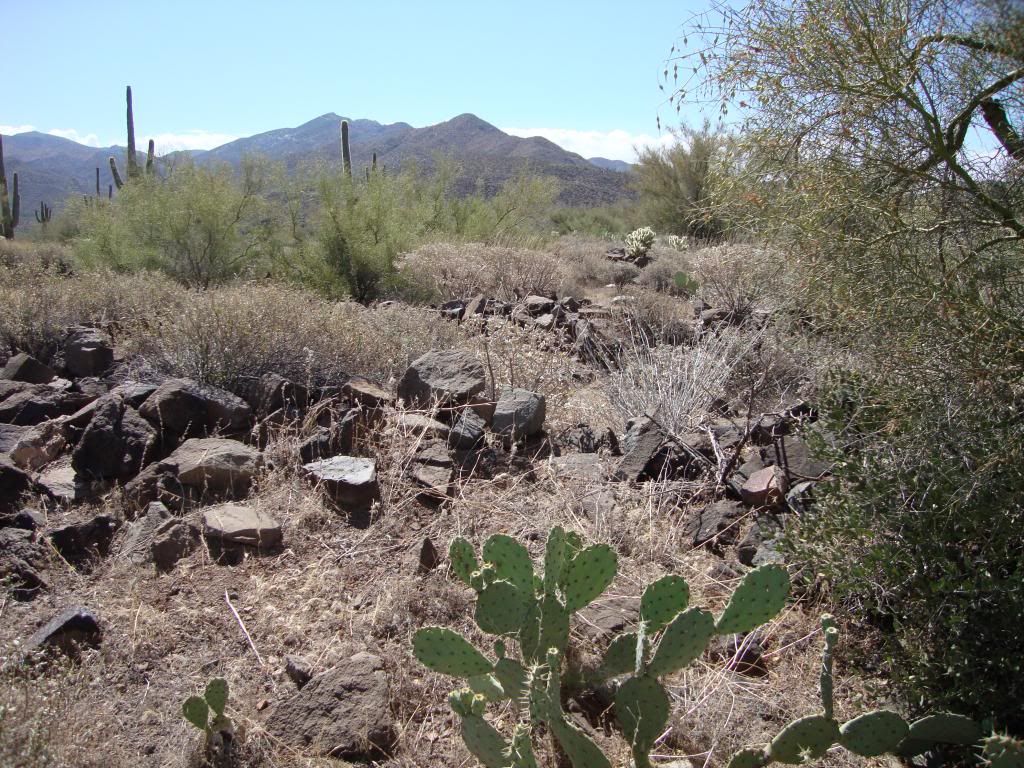
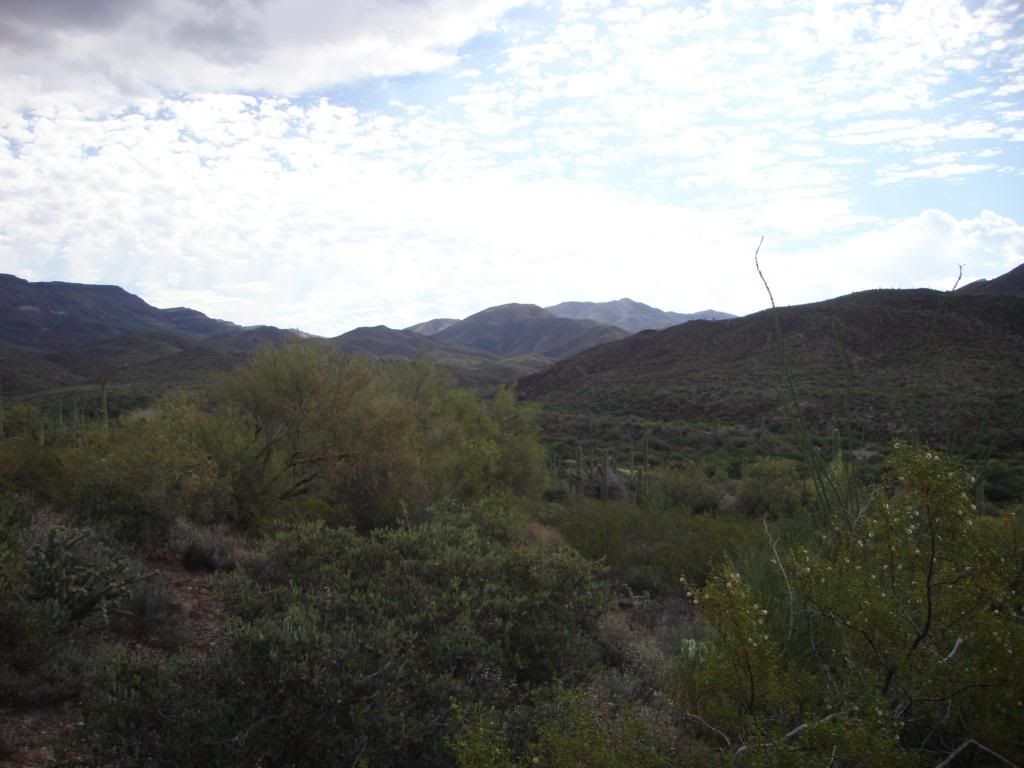
This was toward the beginning of the hike and just one of many beautiful views we would enjoy. 


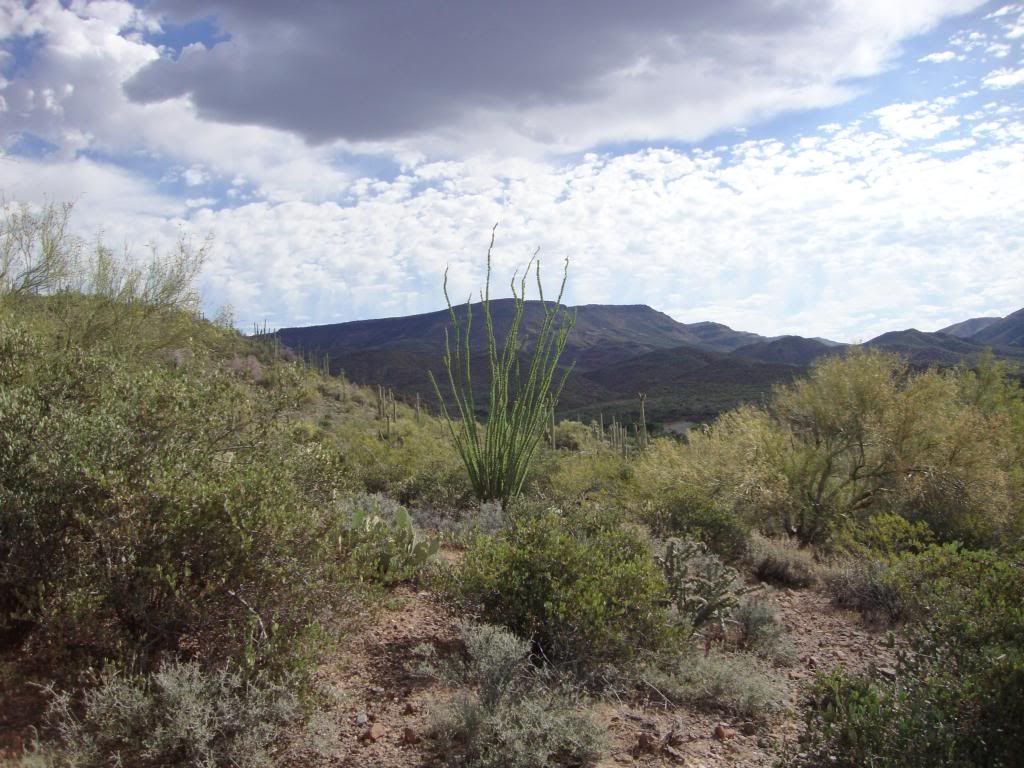
Ocotillo Cactus


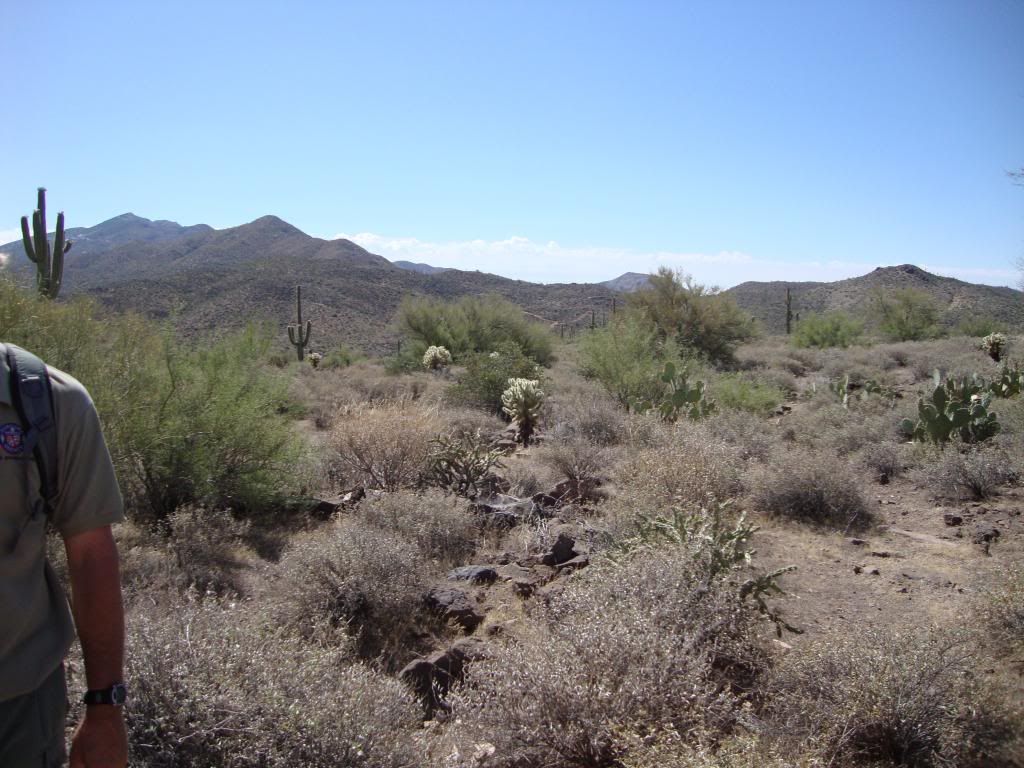
Another nice view


Elephant Mountain


Cholla Cactus


 Mexican Poppy


 Snake Skin *shudder*


More snake skin *more shuddering*  You can see that the snake skin appears to be coming out of a hole.  They will occasionally go into holes to shed their skin. 


Petroglyphs

 I took this from the riparian area of the Jewel of the Creek.


I'm not even sure how I managed to see this little guy; he blends in so well with the rock.


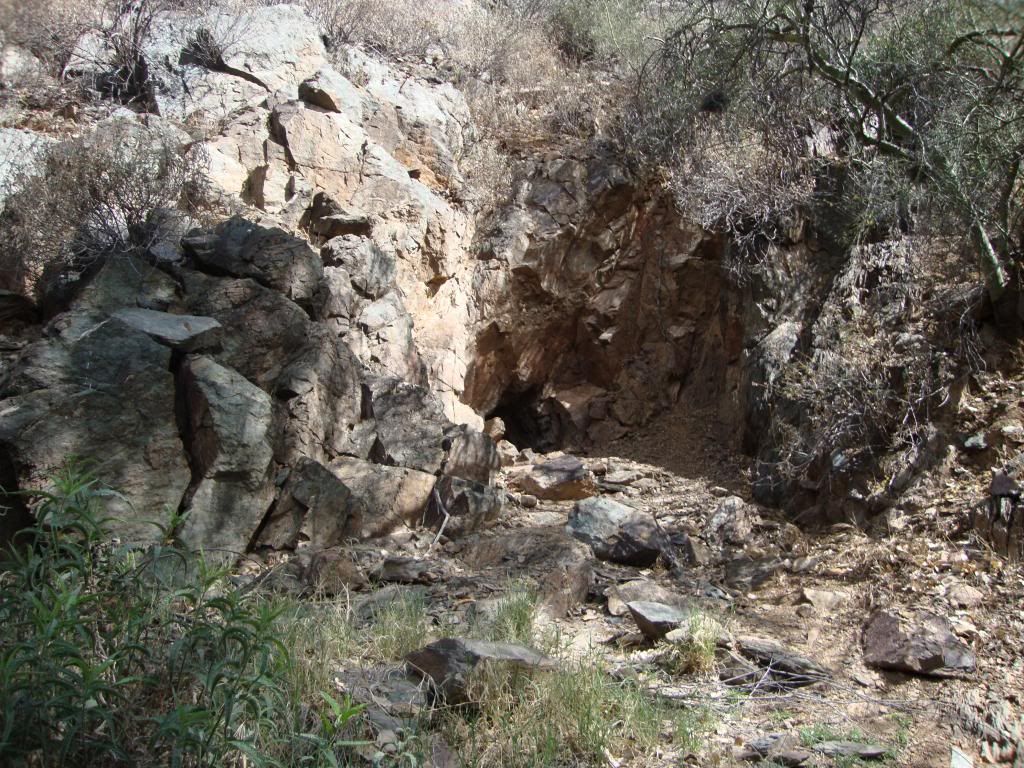
A little cave


Spider web


More photos of this hike can be found here.