Showing posts with label World History. Show all posts

Friday, May 2, 2014

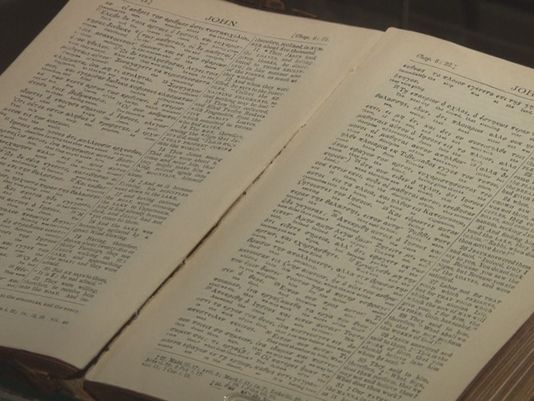
Titanic Bible on Display in Pigeon Forge, Tennessee

These types of items that show up so many years after the sinking are always of interest to me.  Photo and story credit - WBIR.com.


wbir.com


Bible That Survived Titanic Sinking Now on Display in Pigeon Forge
 
A Bible that survived the sinking of the Titanic is now on display in East Tennessee, and it has ties to our area.

You can see the book for a limited time at the Titanic Musuem Attraction in Pigeon Forge.

The Bible's owner was Reverend Robert J. Bateman. He was born in Bristol, England, in 1860. He came to Knoxville in the 1890's, where he founded the People's Tabernacle Church on Clinch Avenue.

After living in Knoxville, he moved to Florida.

Then in 1912, Bateman was back in England for a couple of months. He booked his passage back to America on the Titanic.

"Bateman on the night the ship sank handed the Bible over to his sister-in-law, Ada Ball, who he placed on a life boat and then she returned it to her sister, his wife Emily. On her death bed she gave it to Dr. Harry Upperman from the Baxter Seminary here in Baxter, Tennessee," said Bob Thone, the actor portraying Rev. Robert Bateman at the Titanic Museum.

The Upper Room Museum in Nashville now owns the Bible. It's on display in Pigeon Forge through the end of the year.


Saturday, April 26, 2014

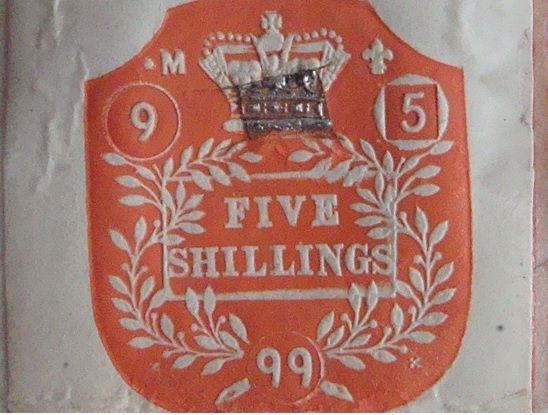
Original Deed from England - Dated May 8, 1899

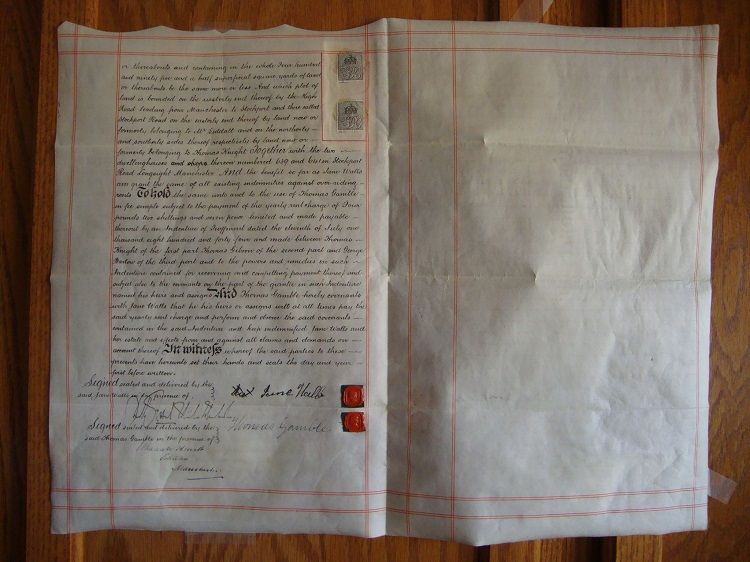
My Dad has, on occasion, traveled to England to engage in metal detecting.  On one of his trips, he acquired an original deed dated May 8, 1899.  Due to his knowledge of my interest in history, and my occupation as an attorney who works with these types of documents, he sent it to me.  I don't know much about it, but it will be an interesting research project as, I began to review the document, a number of questions were raised.  When I first saw it, my immediate thoughts were of the process of recording deeds in England and how it has evolved over time.   As of May 8th of this year, this document will be one hundred and fifteen years old, and I'm surprised how well it has stood the test of time.  I find it quite interesting and it has become one of my prized possessions. 


It appears the land that is subject to this deed was given to Mr. Thomas Gamble under the terms of a will executed by Mr. Thomas Walls.


Given the reference to "Pounds" and "Schillings," I have to reasonably conclude this was the fee to record a document such as this in England in 1899.  I could be wrong but, if that is indeed the case, it will be interesting to learn what the fee is now to record such a document.


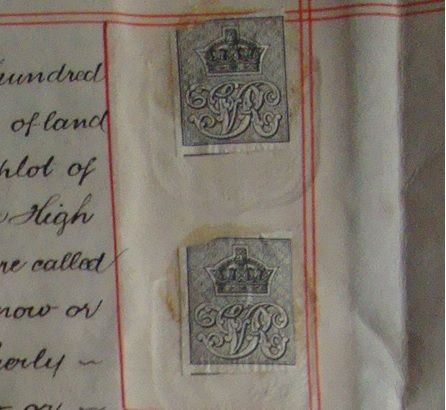
 I have no idea the significance of these stamps, but I'm looking forward to learning of it.

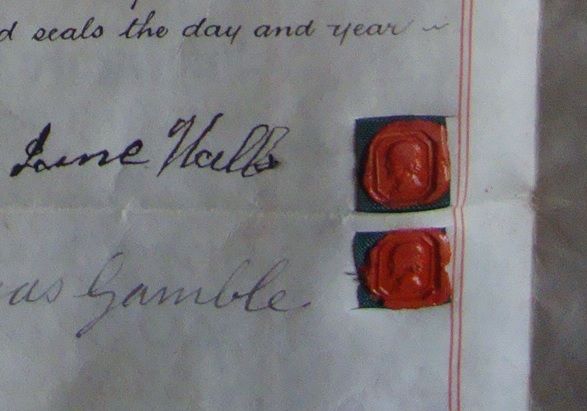
I was surprised to see the notary stamps have remained intact.  For some reason, I was always of the impression they were made of wax, but they clearly aren't as, whatever substance was used is quite hard, unlike wax.  It makes sense, as wax wouldn't have likely held up over time.  Today, a simple stamp is used to notarize documents.  I wonder what type of instrument was used to create the stamp.  It would be interesting to see what it looks like.  And then there's the process itself or, more specifically, how one was granted the authority to notarize documents in England one-hundred and fifteen years ago.  In Arizona, the Secretary of State is the government entity that grants one the authority to notarize documents and, pursuant to statute, there are some fairly strict requirements one must follow.  So I can't help but wonder what government entity in England granted one with that authority one-hundred and fifteen years ago and is it the same one today?  Did the notaries charge a fee back then?  If so, how much?  What do notaries in England customarily charge today to notarize documents?  Were they required to adhere to, pursuant to law, strict requirements and, if so, how have those laws evolved over time? 

Who is the person depicted on the stamp?  More questions!
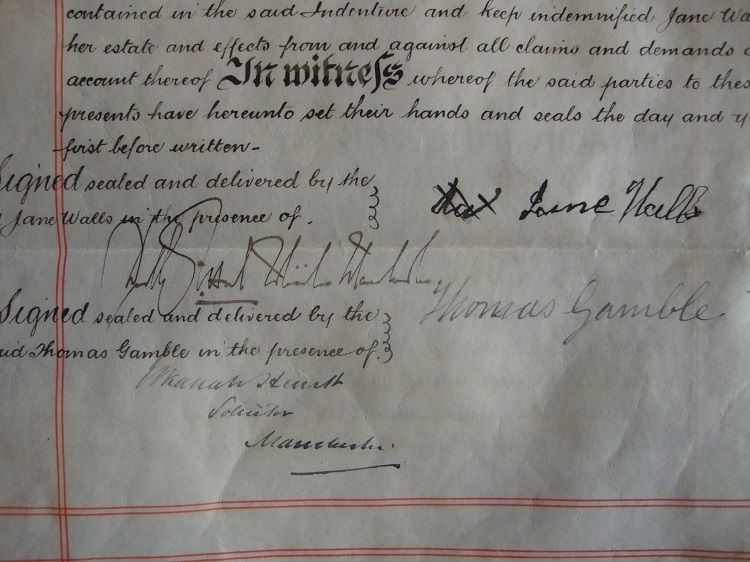
These are the signatures of the parties involved.  Whenever I come across a document such as this, I can't help but wonder about the people who lived so many years before me.  What were the relationships of those involved?  Did the devisee keep the land that was devised to them or did they immediately sell it?  Did the land hold sentimental value to the deceased person and the one to whom it was given and did that factor in to their decision to either hold onto it or, alternatively, sell it?  (I have two original books that were written after the sinking of the Titanic.  One of the books is inscribed with a signature written in pencil.  Was that the original owner of the book?  How did that person come to be in possession of it?)  And then there is the land that is the subject of this deed.  At the time of the conveyance, was there a dwelling on it?  What did it look like?  Does it still stand today and, if not, what stands on it now, if anything?  Where, exactly, is this land located?  
I've articulated only a few of the questions I have regarding this document, and I'm well aware that some of these questions will go unanswered.  But, as someone who is interested in historical documents, I can say that sometimes the speculation surrounding the issues related to such documents is part of the enjoyment of owning one.       


Monday, April 14, 2014

The Sinking of the Titanic - 102nd Anniversary


I will give a moment of silence to not only those who perished on this day 102 years ago, but also to those who were forced to live with the impact of that awful night – the loss of a loved one and the unbearable grief, denial, and sadness that comes with it; a life turned upside down and the questions, confusion, and uncertainty that come with rebuilding one’s life when so much that is important has been lost; the survivor’s guilt; the anger; the loneliness; the inevitable questioning of what once was an unwavering faith in God; and the growing knowledge that they would have to somehow, someway, explain to their children why the one they looked up to, loved, and trusted would not be embarking from the Carpathia with them. 


On this day I would also like to thank the people who have come into my life as a result of my interest in the beautiful transatlantic liners of the early to mid 1900s.  I’ll be spending the evening as I do most years with them in an online chat.  Their honesty, integrity, and compassion are above reproach and I’m blessed to have them in my life.  As do interests and hobbies, people come and go in one’s life, but just as my interest in the transatlantic liners of the early to mid 1900s, my interest in their lives be it their accomplishments, disappointments, milestones, failings, or everyday life occurrences will never waver.  


There appears to be some debate as to whom to attribute this writing, but from what I’ve read, Henry Van Dyke, American clergyman, author, and educator appears to be the likely source.  Titled “A Parable of Immortality,” this piece is often read at funerals.  It seems appropriate given the circumstances.  A family member of a friend of mine who died many years ago sent it to me and it has remained with me ever since.  In this case, I’d like to think the “other voices” are the family and friends of those who perished in the sinking, and who have passed before them.   


A Parable of Immortality 


I am standing on the seashore.  A ship at my side spreads her white sails to the morning breeze and starts for the blue ocean.  She is an object of beauty and strength, and I stand and watch her until at length she hangs like a speck of white cloud just where the sea and sky come down to mingle with each other.  Then someone at my side says:  “There, she’s gone.”  Gone where?  Gone from my sight, that is all.  She is just as large in mast and hull and spars as when she left my side, and just as able to bear her load of living freight to their place of destination.  Her diminished size is in me, not in her.  And just at the moment when someone at my side says:  “There, she’s gone,” there are other eyes that are watching her coming and other voices ready to take up the glad shout, “There she comes!” – and that is dying.  
 

Sunday, April 6, 2014

Lowell Observatory - Flagstaff, Arizona

In the almost twelve years since I moved to this beautiful state of Arizona (has it really been that long?!!???!!!?!) I had yet to visit the Lowell Observatory in Flagstaff.  Recently, Dad was here for about 2 – 2 ½ weeks in February and we finally made it up there, a place we had both been meaning to visit for quite some time.  It seems whenever I’m in Flagstaff there was always something else I was doing or I was there with a group of friends.  


When I first moved here Dad was coming to Phoenix quite a lot which was one of the main reasons I moved here.  He came here so often that he had a little place in Mesa because it was more convenient than renting hotel rooms.  He came here quite often to ride motorcycles with people that he knew who lived both here in Arizona and North Dakota (snowbirds).  My aunt and uncle, who have now both passed away, also owned a home here at one time.  He doesn’t ride cycles here anymore but he still comes here fairly often to visit.

When he comes to visit I usually drag him all over Arizona but this time, in addition to spending time with me, he wanted to visit with some old friends that live here.  I remember some of them from when I was a child.  I was also just getting over a nasty cold/sore throat/earache and was busy with some work-related issues.  But we were still able to spend some time together.  We spent some time in Sedona and Flagstaff as well as Scottsdale when we went walking around Old Town Scottsdale before heading to downtown Phoenix so that Dad could see the new World War II Memorial at Wesley Bolin Memorial Plaza.

The day we went to the Lowell Observatory we had headed up to Sedona to just kind of wander around and go where the wind took us, so to say.  We had someone else with us who had not seen Chapel of the Holy Cross so we went there first. 

We then went to the Open Range Grill and Tavern for lunch followed by, of course, a trip to the gourmet ice cream shop.  While sitting there, Dad mentioned that he’d like to head up to the Lowell Observatory so we called to get the usual information and received a message informing us of the hours of the tours among other information.  Because of the time, we knew we had missed any of the tours but decided to head up there regardless.  We took the scenic route and ended up there around sunset.  One thing I was a bit disappointed about is that we missed the tour of the Pluto Telescope Dome which houses the telescope used to discover Pluto in 1930 as the Pluto Telescope Dome is open for daytime guided tours.  I plan to go back sometime to see this. 

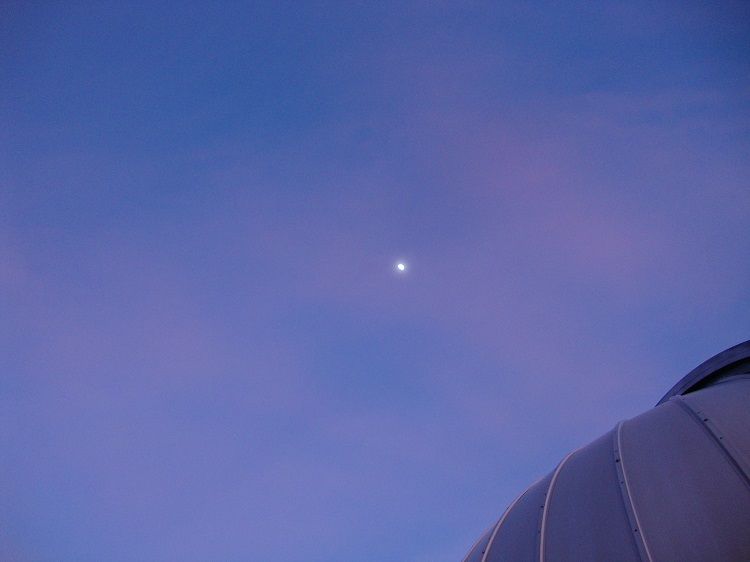
Because I hadn’t researched the Lowell Observatory before I went, I wasn’t really sure what to expect.  I guess I thought there would be one big, modern building with a number of telescopes through which one could observe the night sky.  It was anything but that, but I was pleasantly surprised.  It's a beautiful and interesting place and we ended up seeing the Moon, Jupiter (along with its four largest moons Io, Europa, Ganymede, and Callisto) the Andromeda Galaxy, and the Orion Nebula.  Fascinating!  The staff and volunteers were also very knowledgeable and receptive to questions.  For anyone who is even remotely interested in astronomy, I would highly recommend a visit to the Lowell Observatory.
 
  
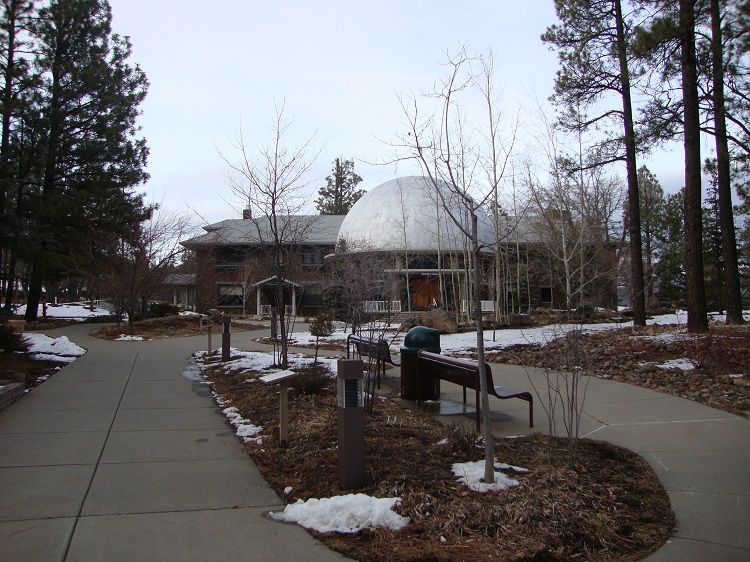
This is the first building we saw after parking.  When we first entered, we were told that they couldn't guarantee what we would see in the night sky and that it was dependent upon the weather/cloud cover.  Of course, given that we had taken the time to drive there, we took our chances and paid the small entrance fee.  The building you see in this picture is called the Steele Visitor Center.  From the brochure: 

"The Steele Visitor Center opened in 1994 and is the public's gateway to the Lowell Observatory campus, programs, telescopes, exhibits, and gift shop.  Here you can also learn about the Discovery Channel Telescope.  The Steele Visitor Center is open to the public 361 days and 248 nights per year."


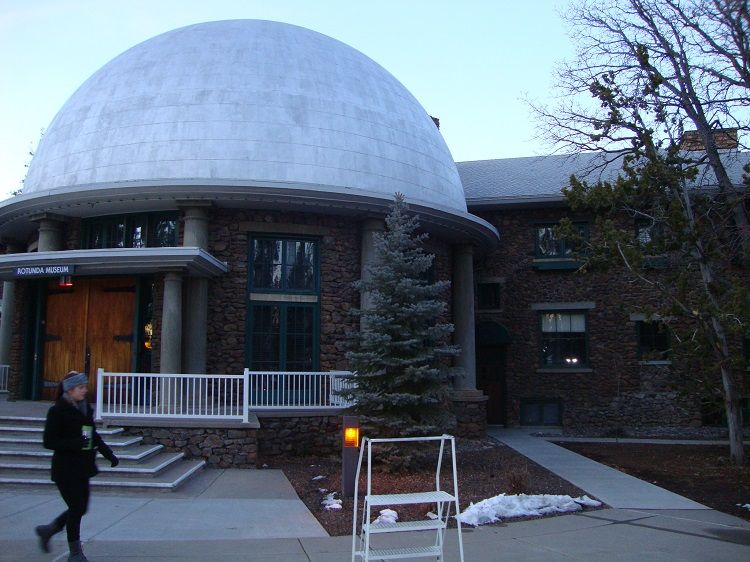
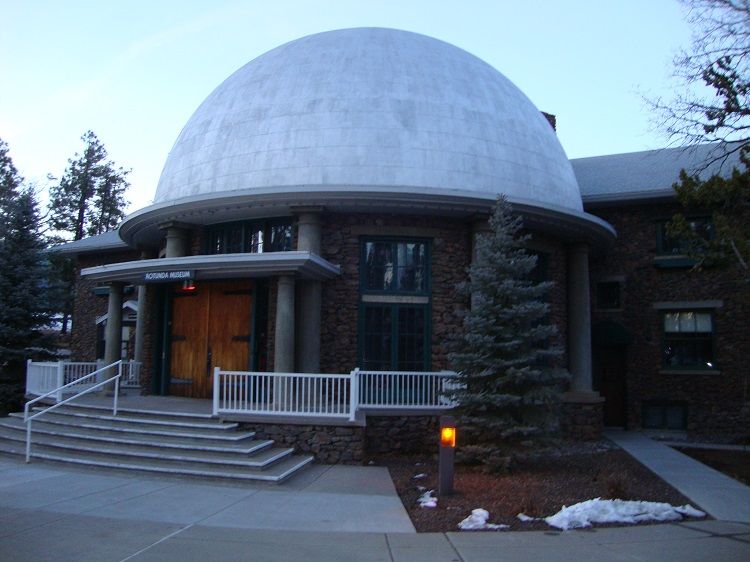
While waiting for nightfall, we attended a program in the Rotunda Museum.  From the brochure:

"The Rotunda Museum originally contained the Observatory's science library and today features exhibits.  The Rotunda is open for daytime guided tours.  The rest of the building is closed to the public."


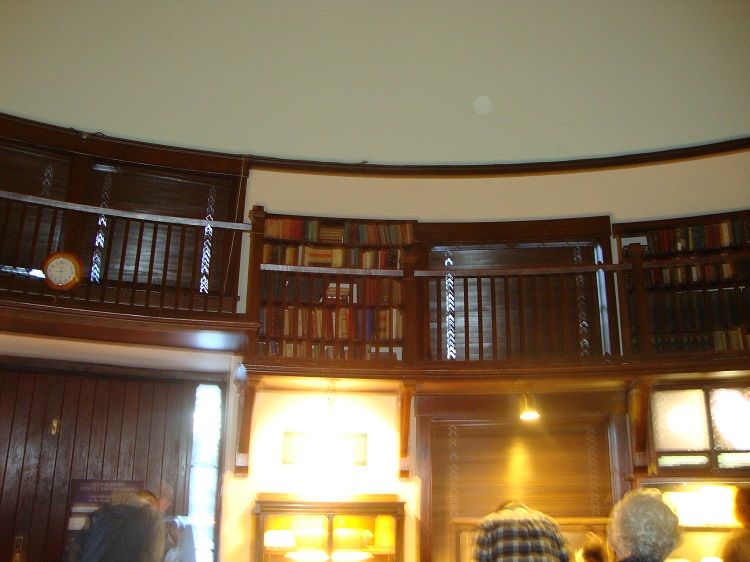
This is the main room inside the Rotunda Museum.  This is really an interesting building.  There is a warm, cozy, and comforting feeling about it.  In this picture, you can see a spiral staircase that leads up to a collection of old books.  There is another spiral staircase directly across from it on the other side of the room that leads up to another collection of old books.  Due to the curvature of the ceiling, the closer one gets to the center of the room the "stranger" their voice sounds.  I say strange because it isn't really an echo, but more of a "tinny" sound.   


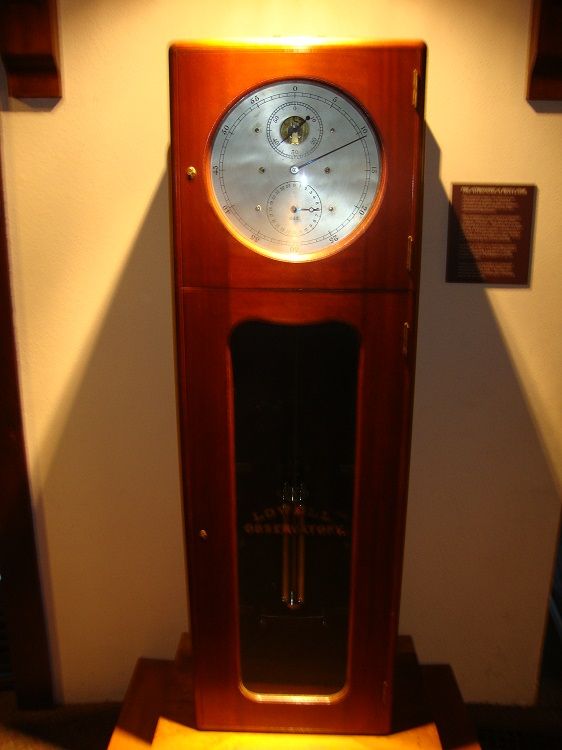
The sign next to this reads: 

"THE ASTRONOMICAL REGULATOR

This precision clock, also known as an astronomical regulator, was used for accurately timing photographic exposures and measuring star positions and other astronomical phenomena.

This instrument was purchased in 1904 from the E. Howard Clock Company of Boston.  Originally set up in the library of Percival Lowell’s residence on Mars Hill, the 400-pound regulator was moved on January 1, 1917, into the new “main building,” today known as the Slipher Building.  It was used here for the next several decades. 

Each day at 10:00 a.m. local time (noon in Washington D.C.), a Lowell staff member would calibrate the regulator by calling Western Union in Washington to get the 12:00 p.m. tick.

A battery-powered switch was connected with wires strung from tree trunks to the 24-inch Clark Telescope.  This allowed astronomers an accurate means of keeping time at the telescope."


This is the Clark Dome Weather Station.  We took a peek inside and were able to see the massive telescope.  The sign outside reads: 

"CLARK DOME WEATHER STATION

Understanding and predicting local weather patterns helps astronomers plan successful observing runs.  Because of this, observatories such as Lowell typically maintain weather stations to monitor the conditions.  One such station was set up at the Clark Telescope dome when it was permanently placed at this site in 1897. 

Instruments for the station were enclosed in an instrument shelter, which shielded thermometers, hygrometers (to monitor humidity), and other devices from the Sun, precipitation, and other sources of heat and light that could produce inaccurate readings.  This type of shelter features downward-pointing louvers that allow for air flow while shielding the instruments from heat and light. 

This weather station was removed in the latter part of the 20th century, but a modern station is now mounted on top of the Clark Telescope dome.  Can you see it?  Look for the anemometer (for detecting wind speed), whose wind cups may be spinning." 

From the brochure: 

"Built in 1896, the Clark Refracting Telescope is the centerpiece of any visit to Mars Hill.  With this telescope in 1912, V.M. Slipher discovered the first evidence of the expanding universe.  The dome is the oldest standing building at the Observatory and was constructed by local bicycle repairmen Godfrey and Stanley Sykes.  Since the 1970s the Clark Telescope has been used exclusively for public education.  The dome is open for daytime guided tours and evening telescope viewing."  (Note - We were unable to go inside and, at the time of our visit, the telescope appeared to be taken apart.)  


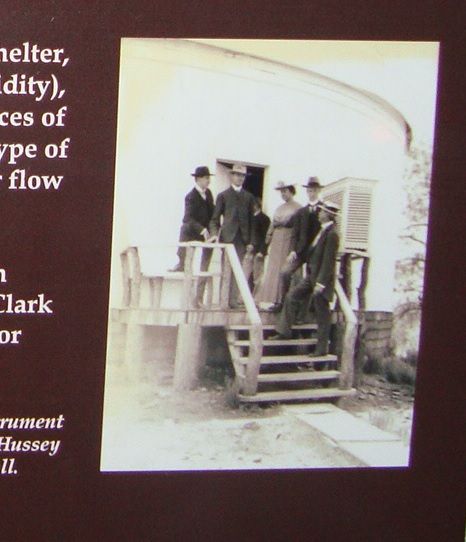
This picture was a part of the sign outside the Clark Telescope Dome.  Pictured from left to right are the staff at the entrance of the Clark Telescope Dome: 

John Duncan, V.M. Slipher, Harry Hussey (partially hidden from view), Wrexie Leonard, Carl Lampland, and Percival Lowell.


On the way to the McAllister Telescope through which we would view the moon and, later, the Orion Nebula, we passed by Percival Lowell's Mausoleum.  From the brochure: 

"Constance Lowell designed the mausoleum after Percival's untimely death in 1916.  The base consists of New England granite and the dome of inset cobalt blue glass tiles.  Please feel free to walk down the steps and view the mausoleum from the small yard below." 


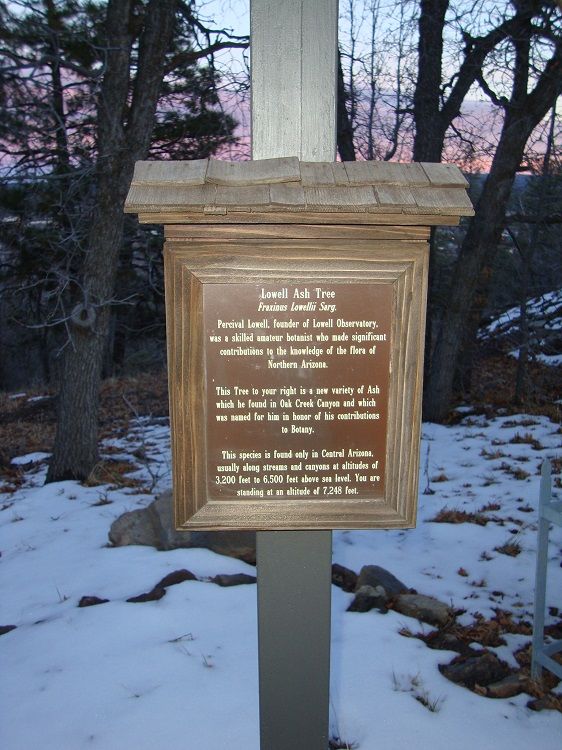
This sign reads:

"LOWELL ASH TREE
Fraxinus Lowellii Sarg.

Percival Lowell, founder of the Lowell Observatory, 
was a skilled amateur botanist who made significant 
contributions to the knowledge of the flora of 
Northern Arizona.
This tree to your right is a new variety of Ash 
which he found in Oak Creek Canyon and which 
was named for him in honor of his contributions 
to Botany.

This species is found only in Central Arizona, 
usually along streams and canyons at altitudes of 
3,200 feet to 6,500 feet above sea level.  You are 
standing at an altitude of 7,248 feet."


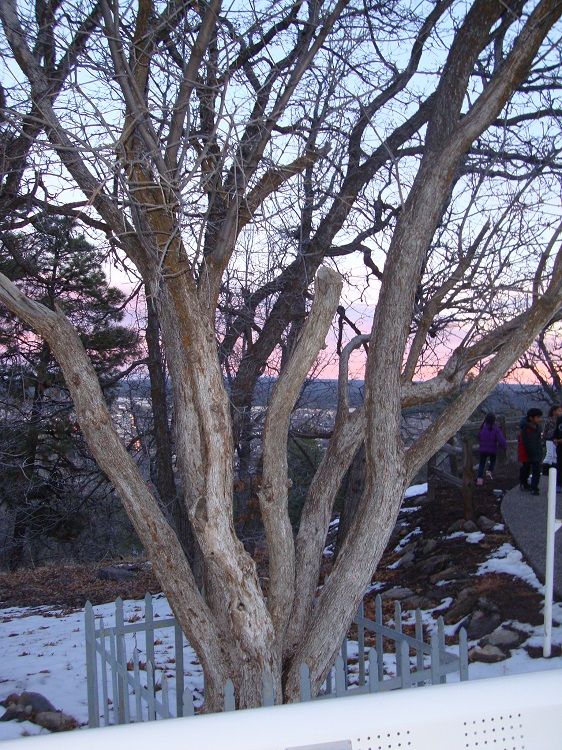
The Ash tree.


Overlooking Flagstaff, Arizona.


The sign on this building reads:

"Soda Acid Fire Extinguisher

For years, the only way to fight fire at the Observatory was with a soda acid fire extinguisher.  This was a 30-gallon extinguisher on wheels that mixed water, soda and sulfuric acid (for pressure).  It was once used to save V.M. Slipher's house from burning down, and also to fight forest fires.  To keep the extinguisher from freezing in the winter, the room was insulated with sawdust and warmed with a 200-300 watt bulb.  The thick door also helped hold in heat.  

To see the soda acid extinguisher, press the button to the right while looking through the window.

Stone Water Tank

When Lowell Observatory was founded in 1894, the only way to get water up the hill was to haul it in 55 gallon drums using horse and wagon.  Around 1901-1902, the Observatory built the circular water tank that is still located on the north side of this building.  Water was pumped up from Flagstaff, and the 12,000-gallon tank held the Observatory's water until 1964, when a new tank was built a few hundred yards north of here, near today's Pluto walk."


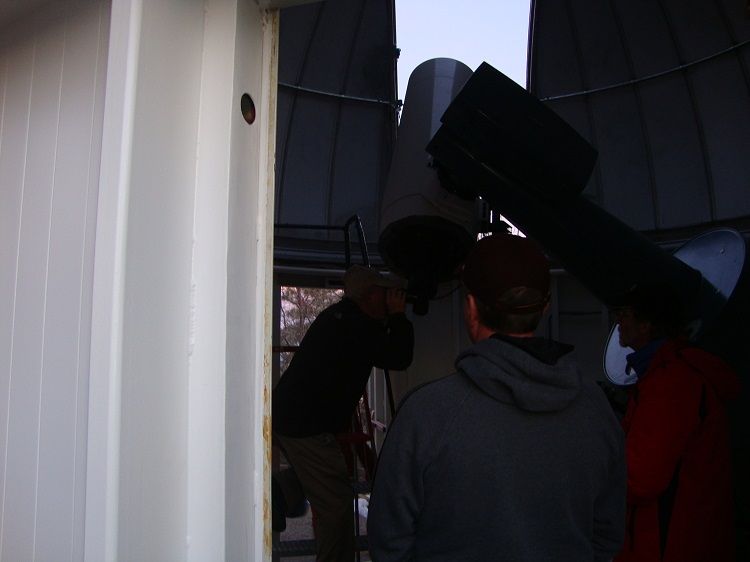
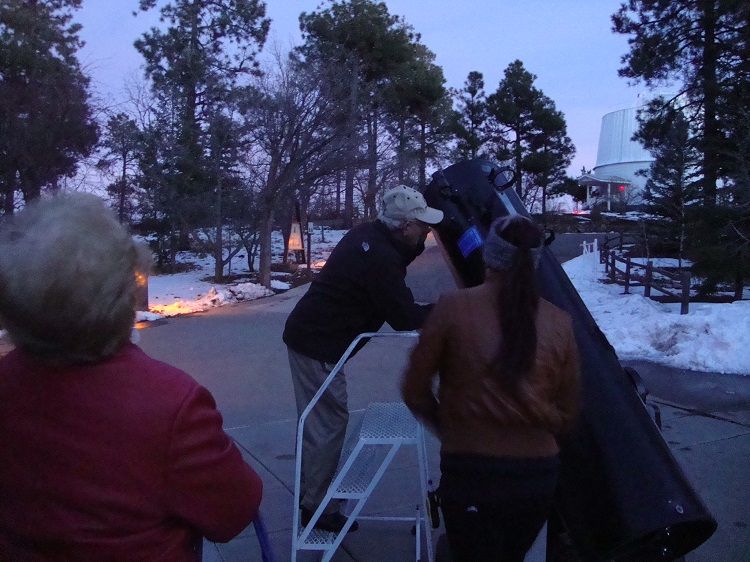
This is Dad looking at the Moon through the McAllister telescope.  We would return later on in the evening to view the Orion Nebula.  From the brochure:

"The McAllister Telescope is a reflecting telescope with a Cassegrain optical system featuring a 16-inch (0.41 meter) primary mirror.  The McAllister Telescope is used exclusively for public education.  The dome is open for evening telescope viewing."


The lighting is a little bit better in this photo.


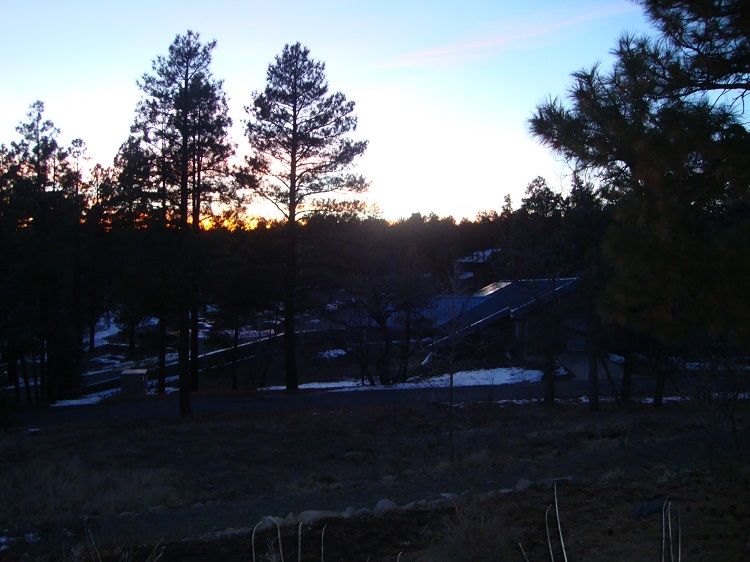
I took this photo of the grounds while standing by the McAllister Telescope.


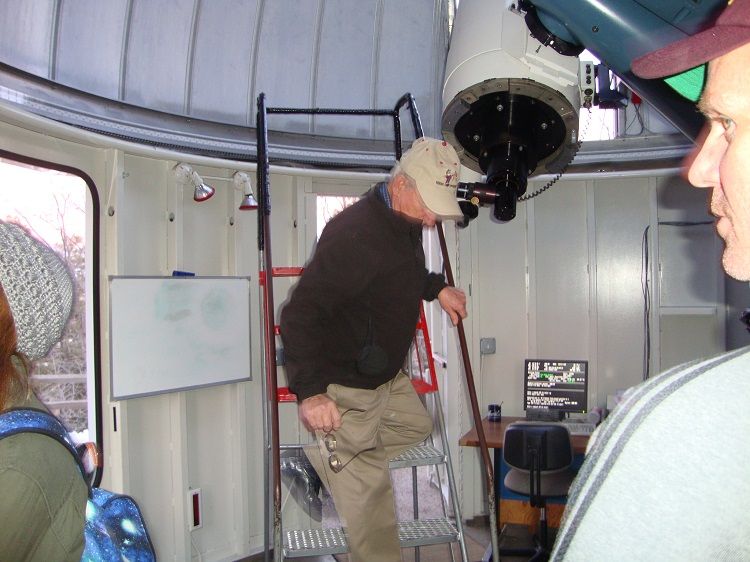
This is a photo of Dad looking at Jupiter and its four largest moons.  We were even able to see the bands on Jupiter.  There was another telescope not far from this one that was pointed toward the Andromeda Galaxy.  While it's true that the galaxy appeared only as a mass of cloudiness/fog, it was still fascinating to me as I was actually looking at another galaxy.  


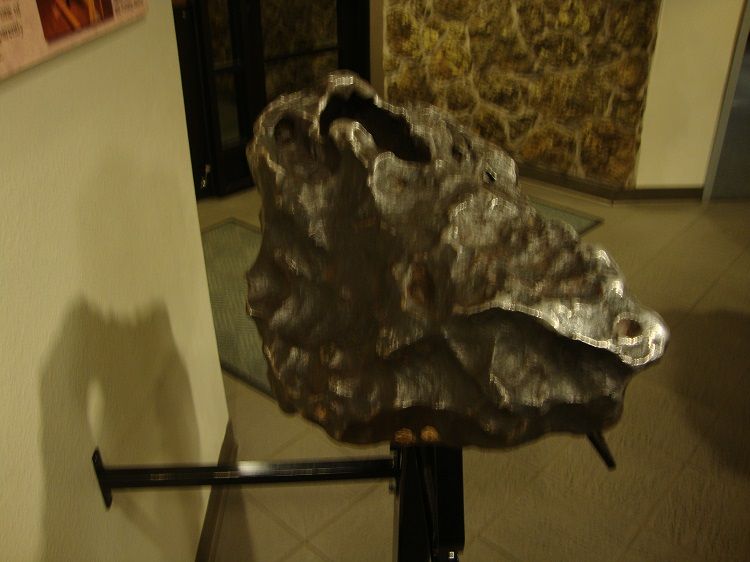
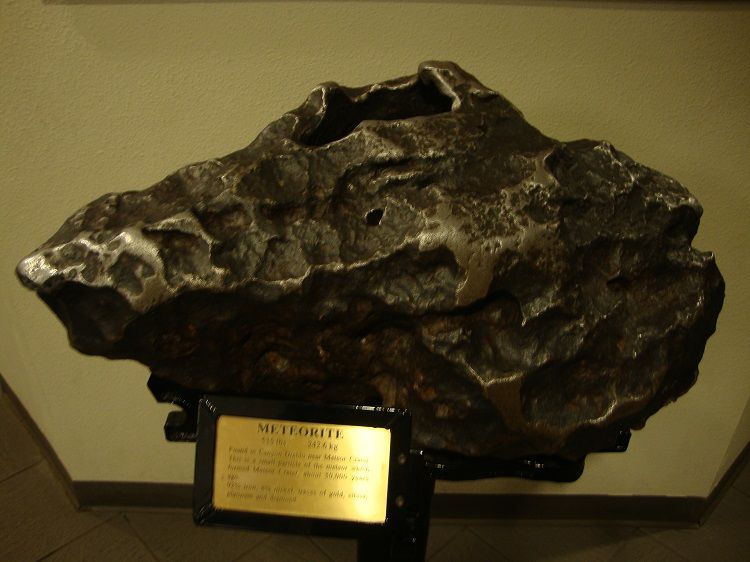
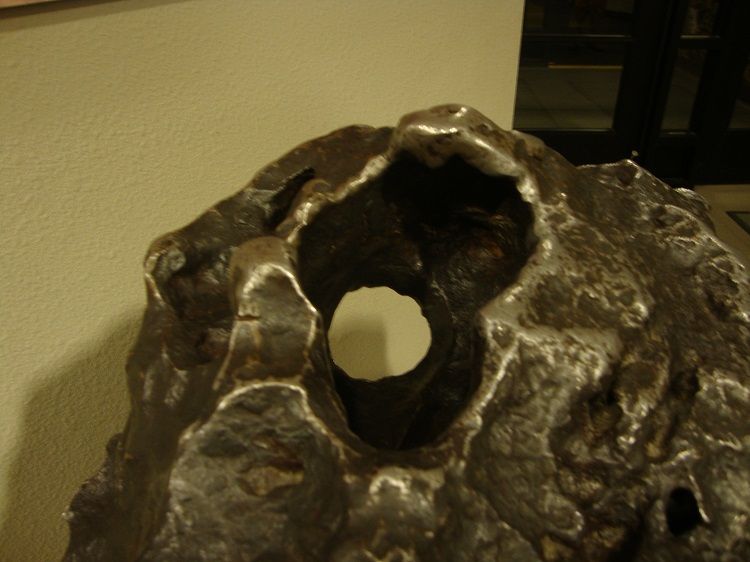
This meteorite is a cool thing to see.  The sign on it reads: 

METEORITE

535 lbs   242.6 kg

Found in Canyon Diablo near Meteor Crater.  This is a small particle of the meteor which formed Meteor Crater, about 50,000 years ago.  92% iron, 8% nickel, traces of gold, silver, platinum, and diamond


Monday, December 23, 2013

Arizona World War II Memorial Dedication - USS Arizona and USS Missouri Gun Barrels


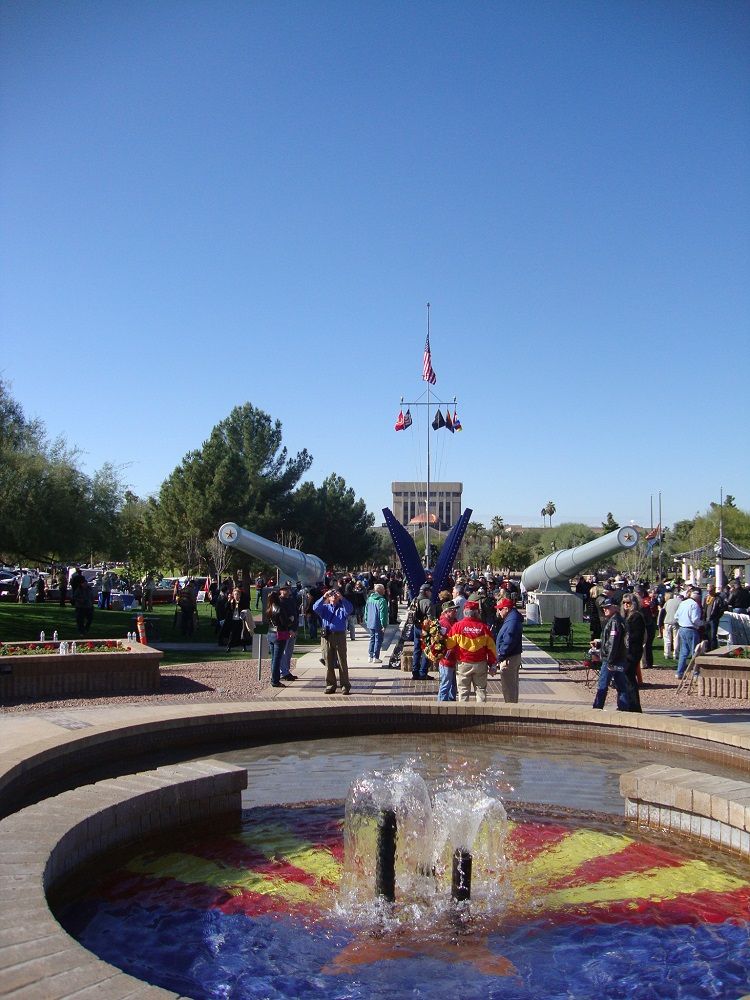
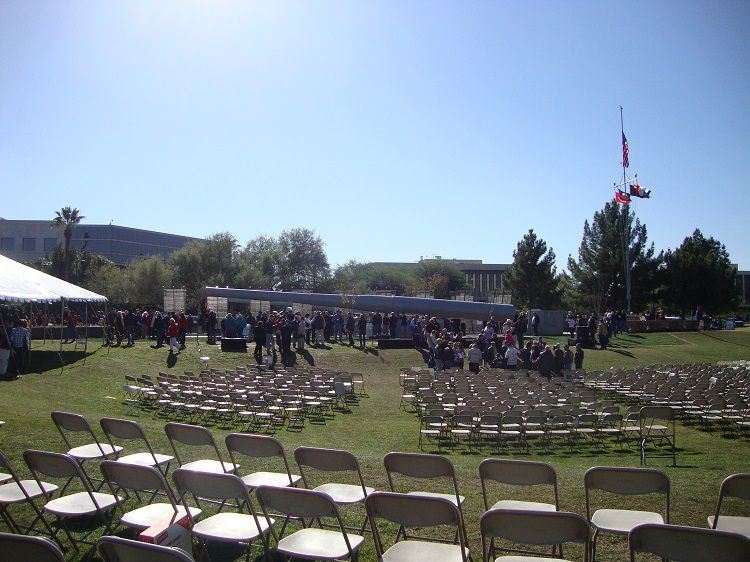
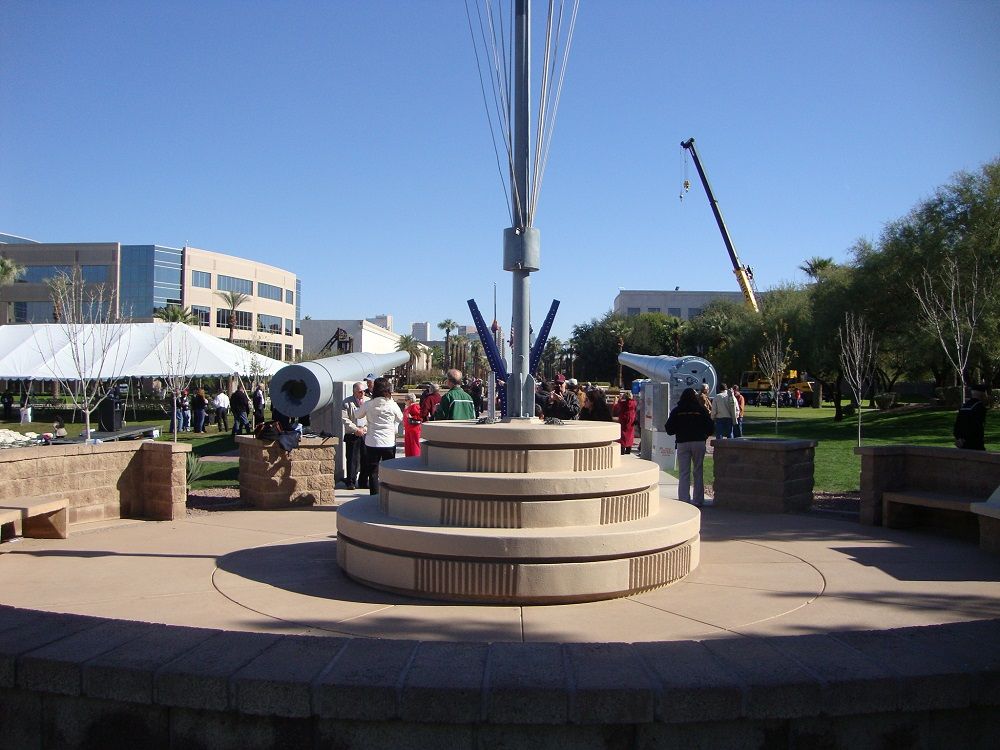
December 7, 2013, was a very proud day for the State of Arizona as the dedication ceremony for the new World War II Memorial, with the gun barrels from the USS Arizona and the USS Missouri as the centerpiece, took place.  The gun barrels serve as "two visible bookends" to World War II as the conflict began for the United States when Pearl Harbor was attacked and the USS Arizona sunk and ended for the United States when the treaty between the United States and Japan was signed on board the USS Missouri.  This project has been three years in the making, and not one dime of taxpayer money was used.   There are only nine survivors left, and three of them were in attendance at the dedication. 

A few facts about the memorial that I have taken from the program:

From the center flagpole east of the anchor, looking west to the first marker (BB-39) is 608 feet.  It represents the length of the USS Arizona from bow to stern.

From the center flagpole east of the anchor, looking west to the second marker (BB-63) is 887 feet 3 inches.  It represents the length of the USS Missouri from bow to stern.
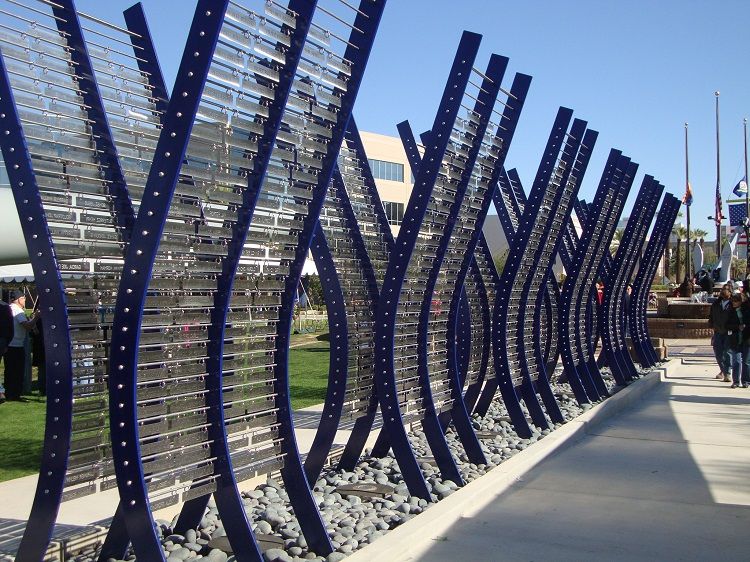
The nine sets of blue steel pillars represent the nine minutes it took for the USS Arizona to sink after being hit by bombs from Japanese aircraft.    


The day began at Phoenix City Hall and the "Pearl Harbor Day Walk:  Parade of Patriots."  Inside City Hall, we were given a pin and the name of a veteran who had died in the attack and for whose memory we would be walking.  I was walking for Nicholas Runiak, who was from New Jersey.  We walked about a mile from Phoenix City Hall to Wesley Bolin Plaza.  This is an annual event that honors the memory of all those who died at Pearl Harbor on December 7, 1941.  This year, all WWII veterans were honored.  
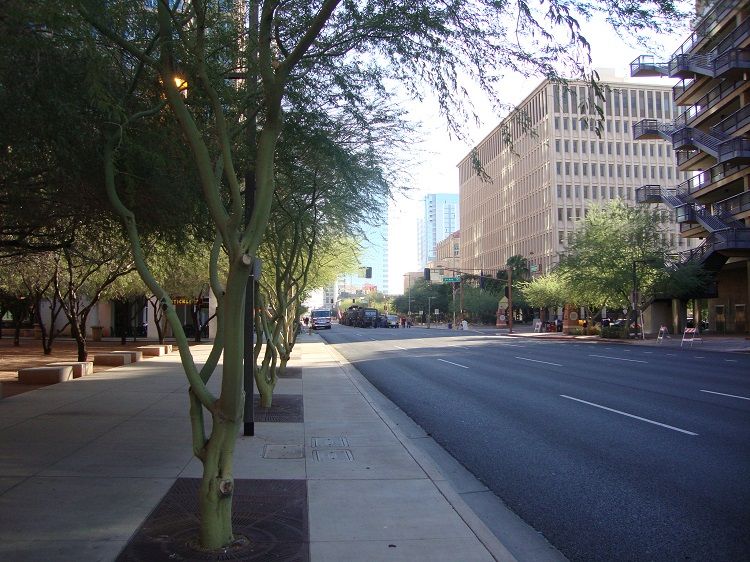
The dedication for the new memorial was scheduled to begin at around 9:45 so I started walking toward Wesley Bolin Plaza at around 9:30.  This picture was taken while I was on Washington Street looking back at where the parade started.  


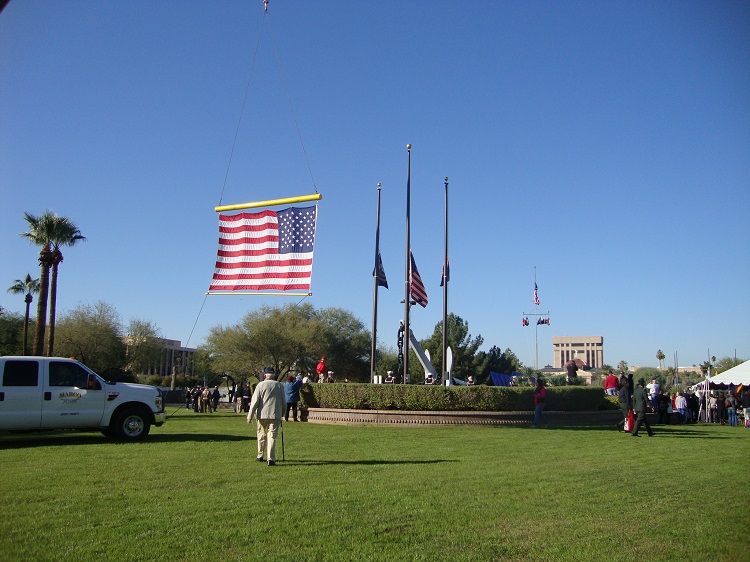
I took this picture as I was approaching Wesley Bolin Plaza.  The large American flag is being held up by a large crane.


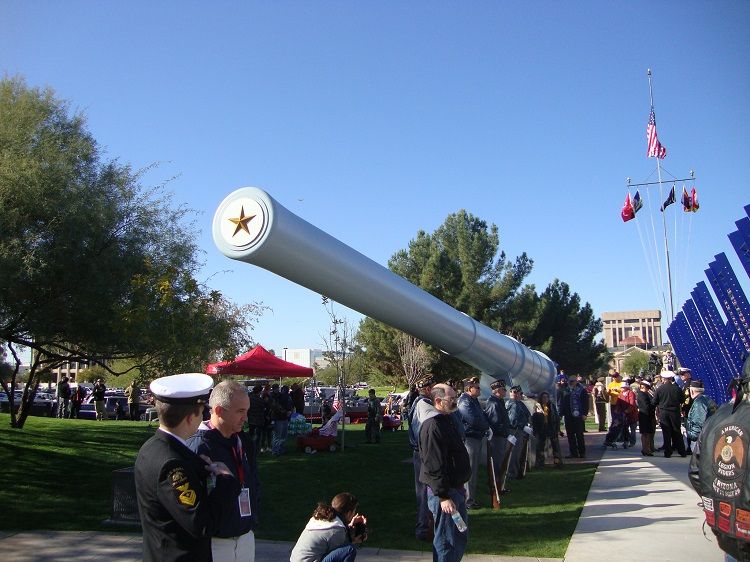
This is my first look at the gun barrel from the USS Missouri. 


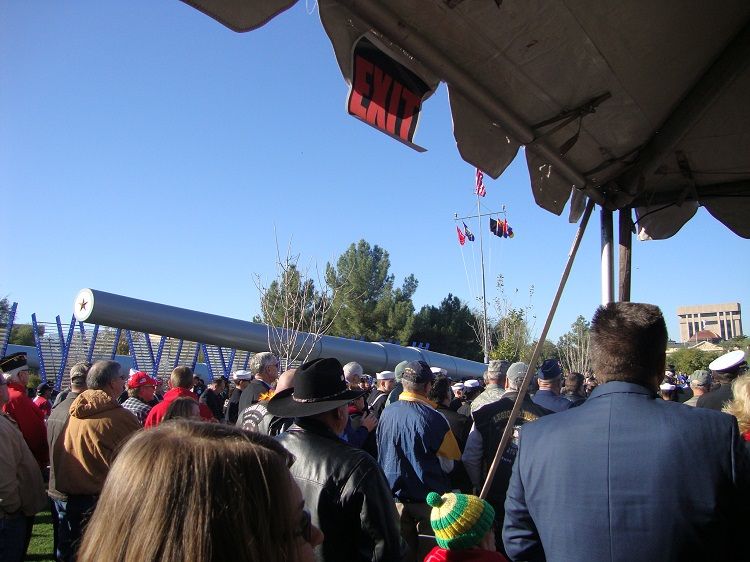
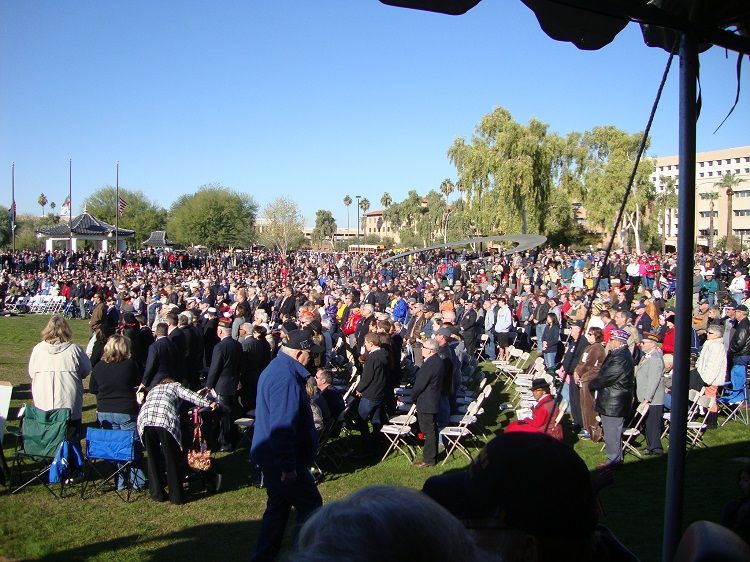
A lot of people came out for the event, including a large number of veterans. 


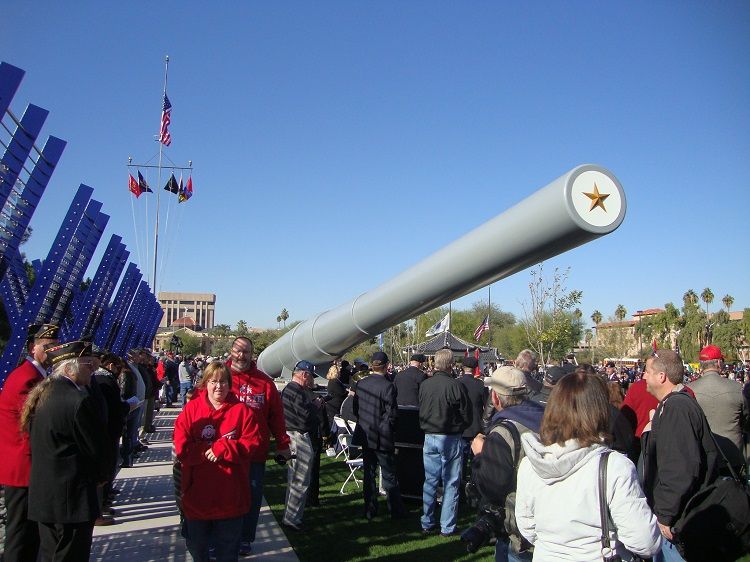
This is the gun barrel from the USS Arizona.  It is barrel #41L3, and was not on the ship at the time of the sinking.  It had been relined before being placed on the USS Nevada.  It participated in D-Day and Operation Dragoon.  A man by the name of John Thomas learned the Navy had one remaining gun barrel from the battleship Arizona located in a storage yard in northern Virginia.  When Mr. Bennett learned of this, he contacted the Navy.  He spoke with the "Director of Inactive Ships" (yes, there is such a title!), Robert Staton, who was in attendance at the dedication, about either loaning or giving the gun barrel to the State of Arizona.  Mr. Staton was reluctant to do so because it was the one remaining gun barrel from the USS Arizona.  He did, however, offer one from the USS Missouri as the Navy was in possession of seven of them.  Mr. Bennett reminded him that he was calling from Arizona (haha) and the thought then occurred to him to ask for both barrels.  He suggested a memorial where the gun barrels would serve as "the bookends of the war."  Mr. Staton replied that he liked big thinking and that he could get behind a project like that.  In his key note speech Mr. Bennett, with all due respect to the federal government, joked about why there is a seventeen trillion dollar national debt - if you asked for one of something, the answer is "no."  But if you ask for two they can do that.  This got a good laugh from the crowd.          

This is the gun barrel from the USS Missouri and was on the ship when attacked.  It is barrel #387 and saw service at Okinawa and Iwo Jima.  There was a veteran who attended the dedication who was not only on the USS Missouri when the treaty was signed on September 2, 1945, but who had actually shot the very gun barrel, a thousand times, that was now on display as part of Arizona's World War II Memorial.  (It looks as if the two people in red tops are posing for the picture, but I really have no idea who they are!)


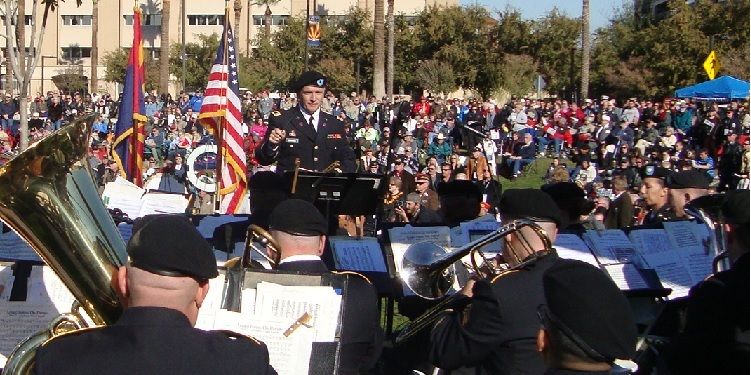
During the dedication, there were a number of people walking around by the anchor and the new memorial.  I took this picture of the 108th Army Band from behind the podium by the new memorial.


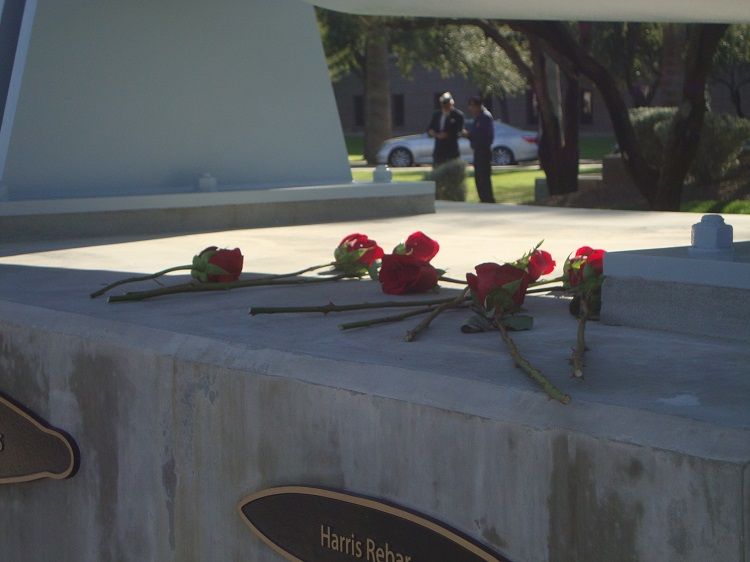
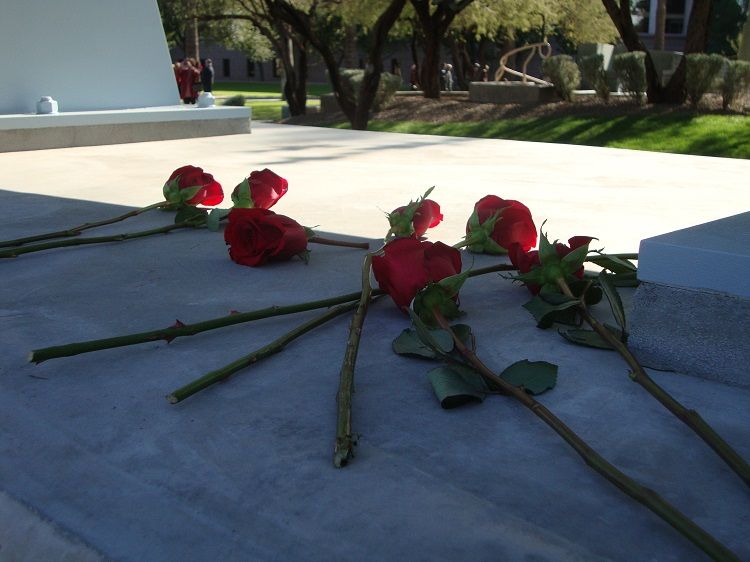
Roses that were left under the gun barrel from the USS Missouri.


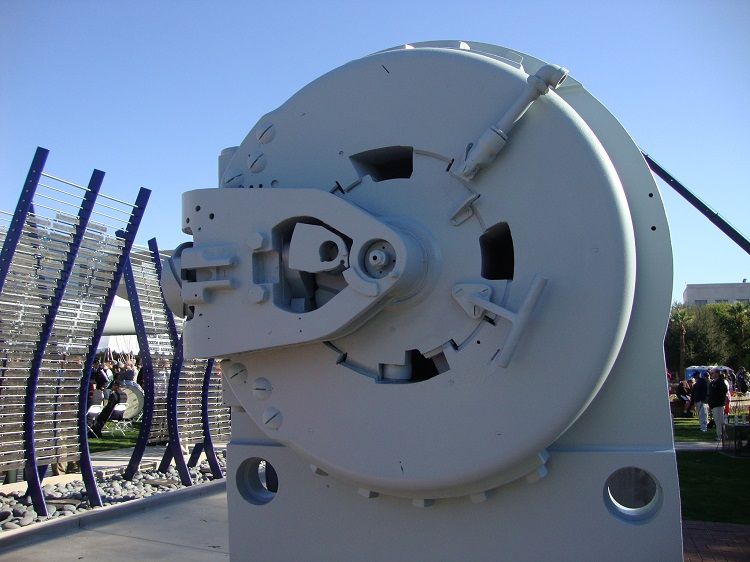
I don't know the correct terminology, but this is a picture of the "back" of the gun barrel from the USS Arizona.


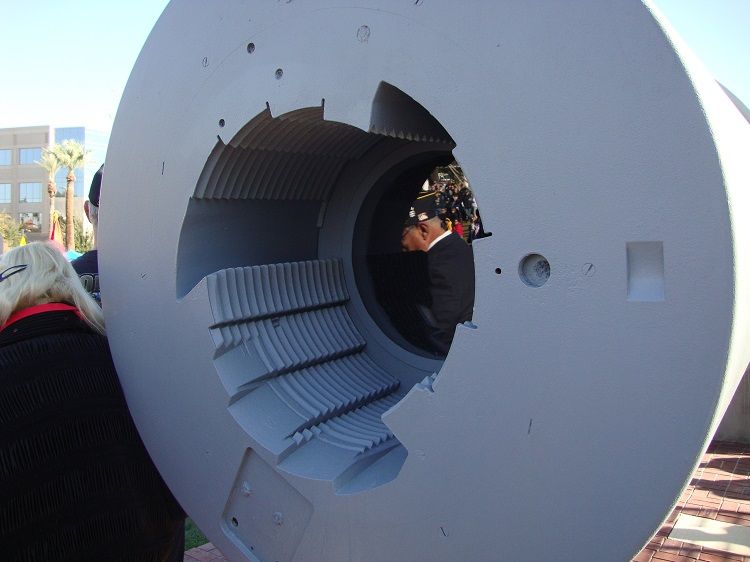
This is a picture of the "back" of the gun barrel from the USS Missouri.


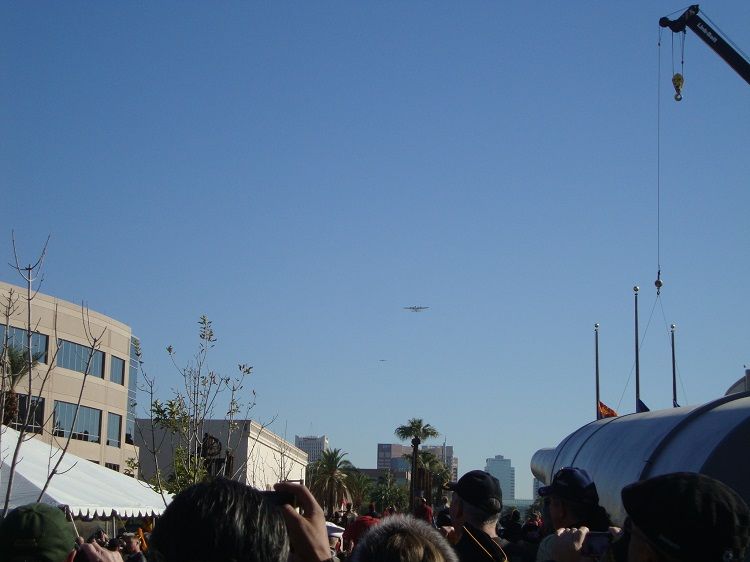
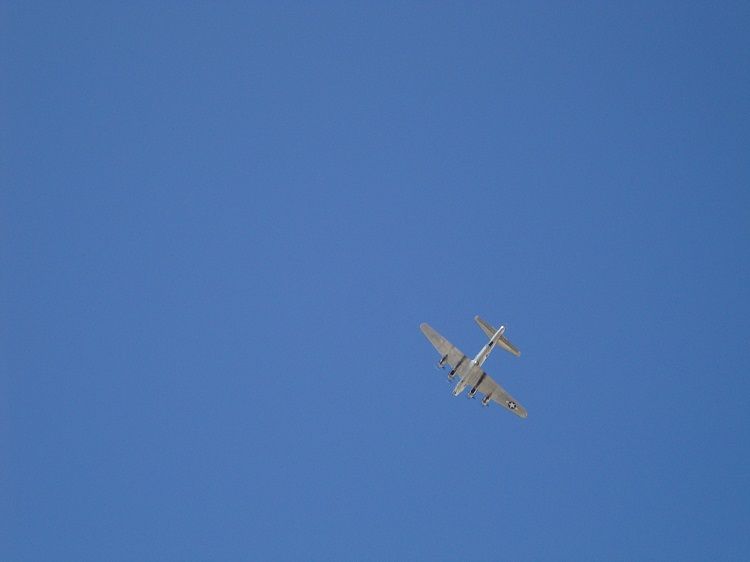
As part of the dedication, a B-17 performed a flyover over the crowd.  Secretary of State Ken Bennett's introduction was interrupted by its arrival - it's a bit difficult to see, but here it comes!  Before he began his remarks, Mr. Bennett waited for the B-17 to complete its second flyover.  The Commemorative Air Force Base from Mesa, Arizona provided the flyover. 


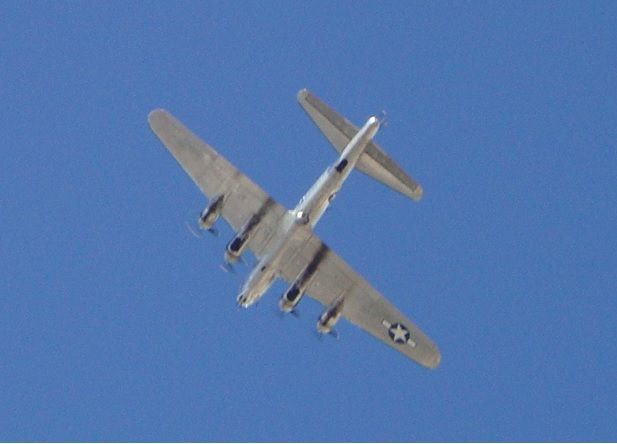
This is a picture I took of the B-17 after it had flown over the cheering and clapping crowd and was turning to come around for another pass.  There was another, smaller plane that was accompanying it but I'm not sure what kind it was and I wasn't able to get it in the picture.


This is the same picture as above.


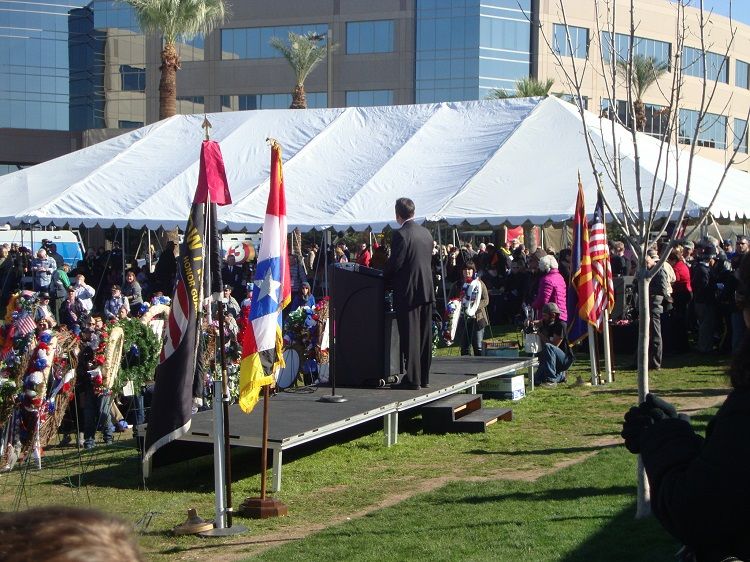
Arizona Secretary of State Ken Bennett delivering the Key Note Address.  In his Keynote Address, Secretary of State Ken Bennett mentioned "The Lone Marine - Staff Sgt. Tim Chambers (Ret.)" who was here today to salute all of our veterans.  Quoting Mr. Bennett:  "One of Tim's goals is to go around the country and give a proper welcome home to our Vietnam veterans.  For all of you Vietnam veterans here today who were not properly welcomed home decades ago - welcome home."   


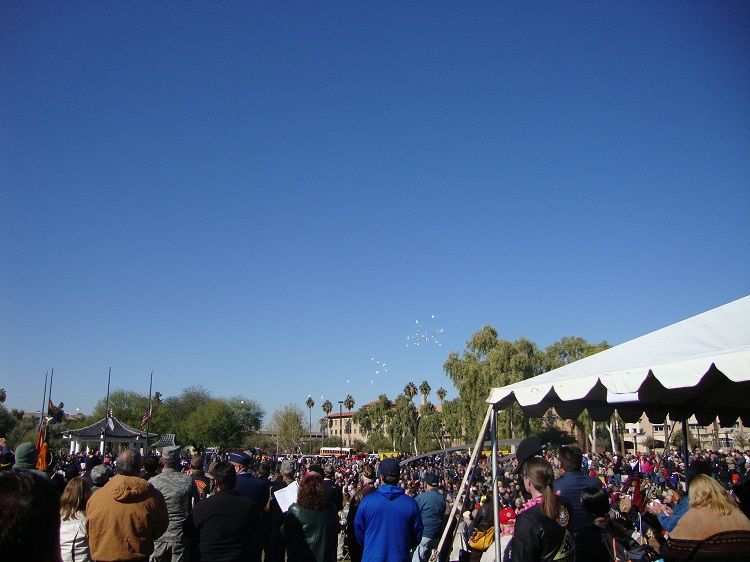
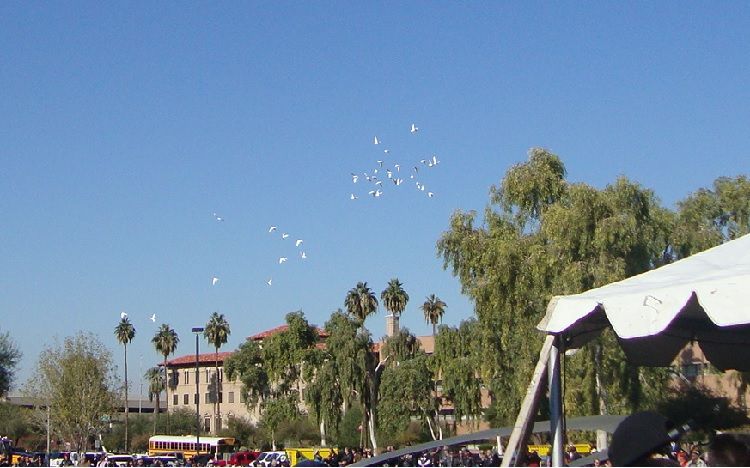
They are a little tough to see in this picture (okay, darn near impossible!), but this is a picture of the release of the white doves.  They were so beautiful as they flew around.


This is the same picture as above zoomed in a little. 


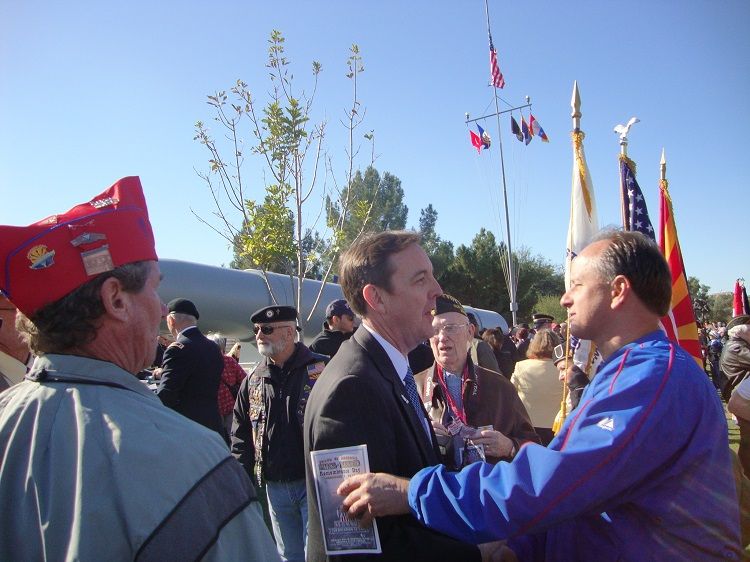
Arizona Secretary of State Ken Bennett greeting attendees of the dedication.


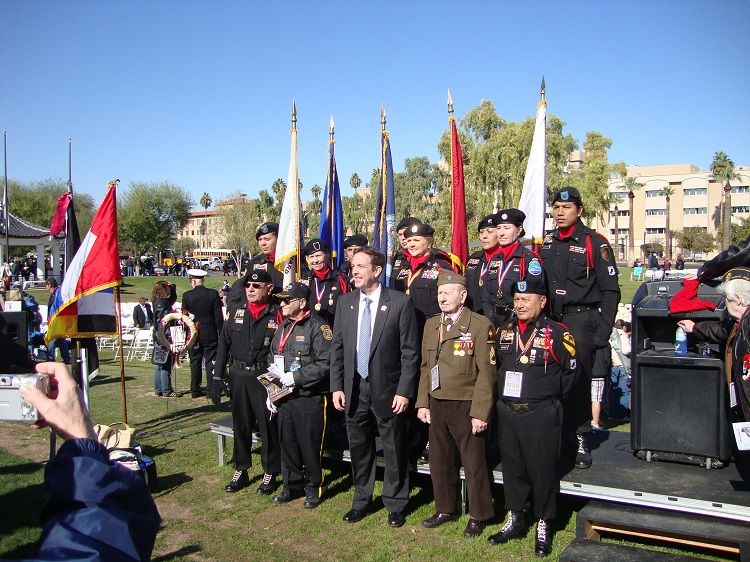
Arizona Secretary of State Ken Bennett with the POW/KIA/MIA Honor Guard.


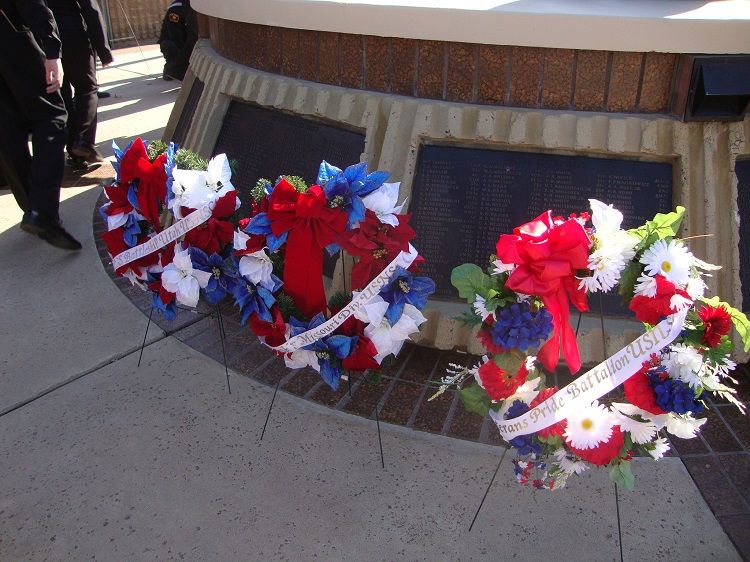
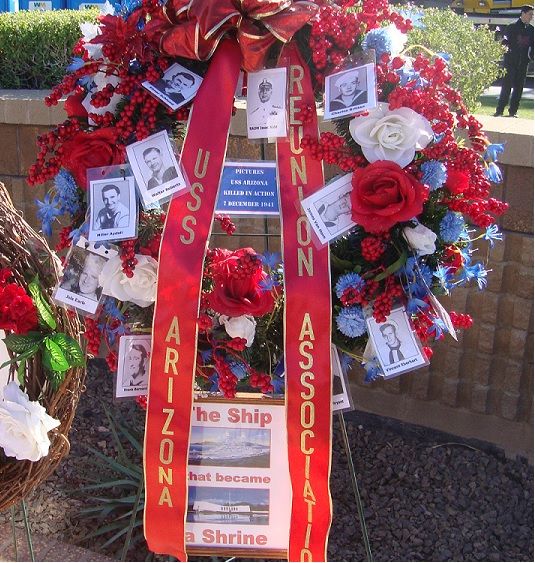
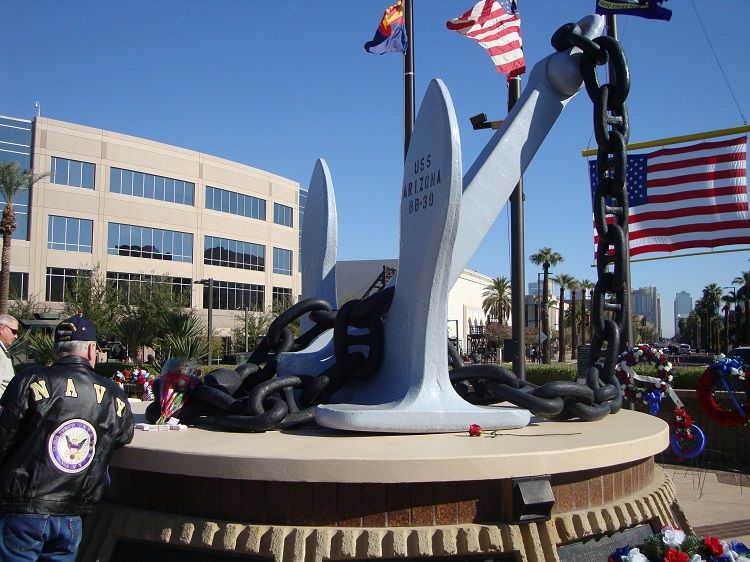
There were a number of wreaths placed around the anchor from the USS Arizona. 


This wreath was also placed in the area around the anchor.  The sign on the bottom reads "The Ship that became a Shrine."


This is the anchor from the USS Arizona. 

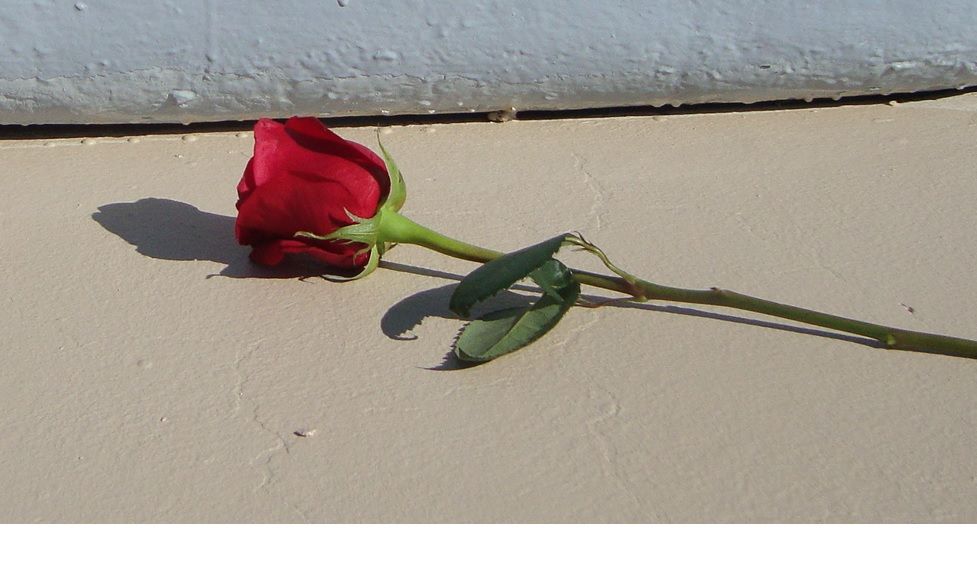
Someone had placed a single red rose at the base of the anchor.


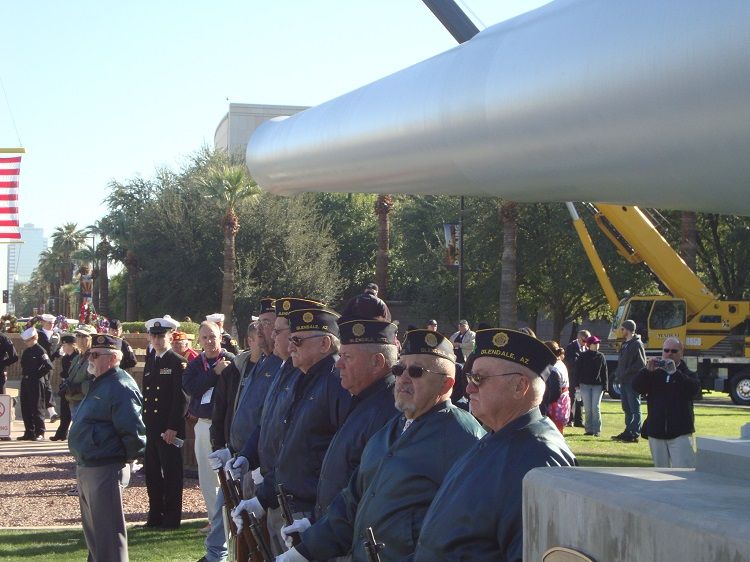
A 21-gun salute was performed by the Firing Party from the American Legion Post 29 as part of the dedication ceremony.


More roses - these were placed under the gun barrel of the USS Arizona.


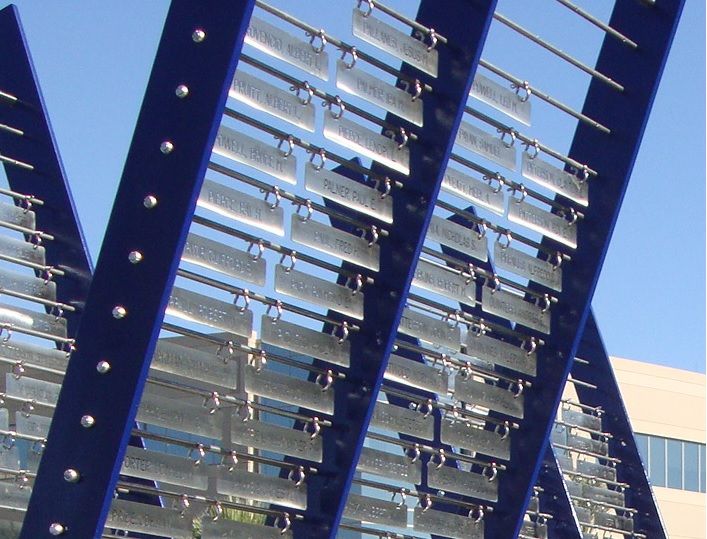
This is the middle portion of the memorial.  They are steel pillars in the shape of a battleship hull and honor the 1,902 Arizona men and women from various branches of the military who died in World War II. 


This is a close up of the name tags on the middle portion of the memorial.  They are free hanging and are designed to look like water rippling when the breeze is gently blowing.  So beautiful. 


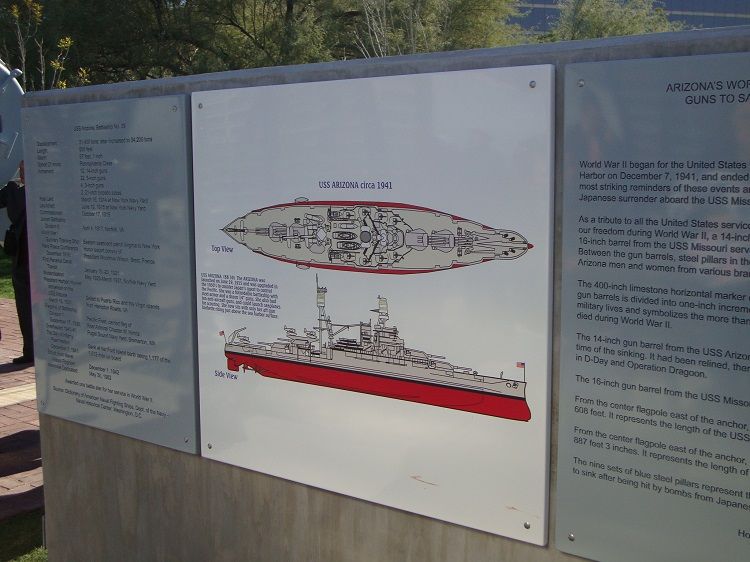
Information on the USS Arizona.


I took this picture after the crowd had (obviously!) left the area in front of the podium.  From this angle, one can see just how big/long the gun barrels are.


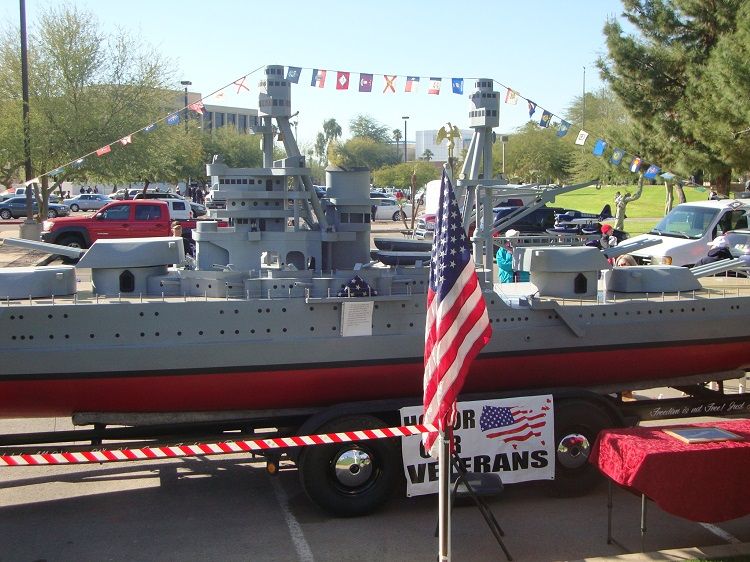
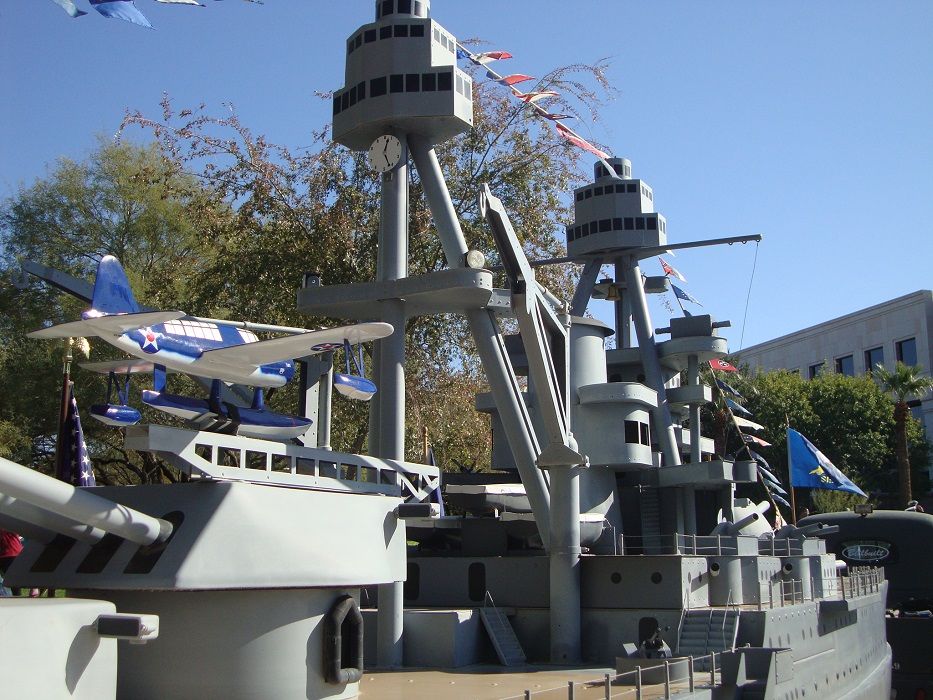
I'm not sure who sponsors this impressive model of the USS Arizona, but it was sitting on a fishing boat in one of the parking lots at Wesley Bolin Plaza. 


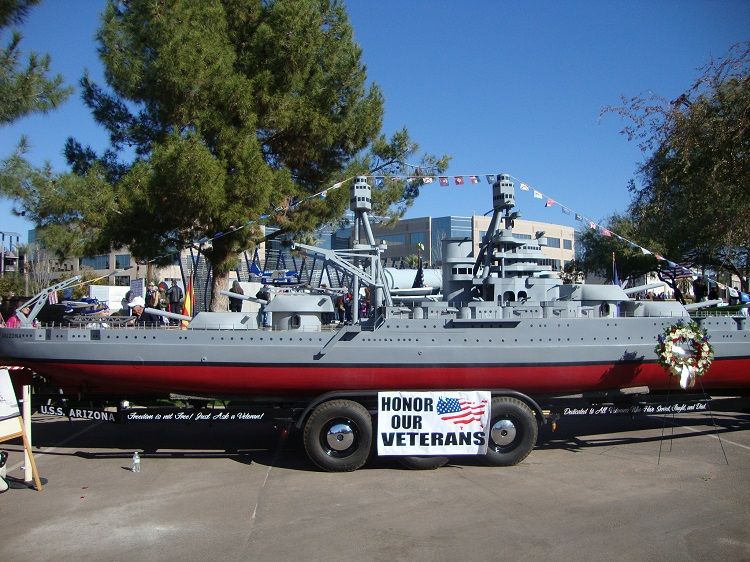
This is the other side of the model.


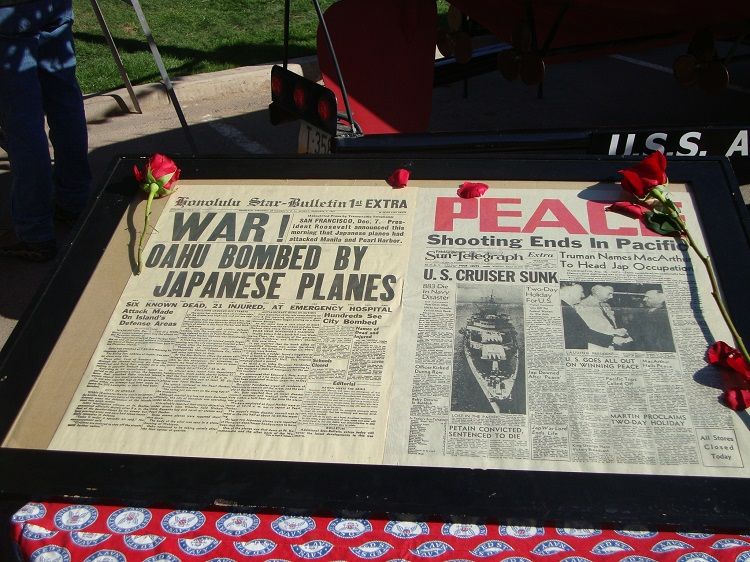
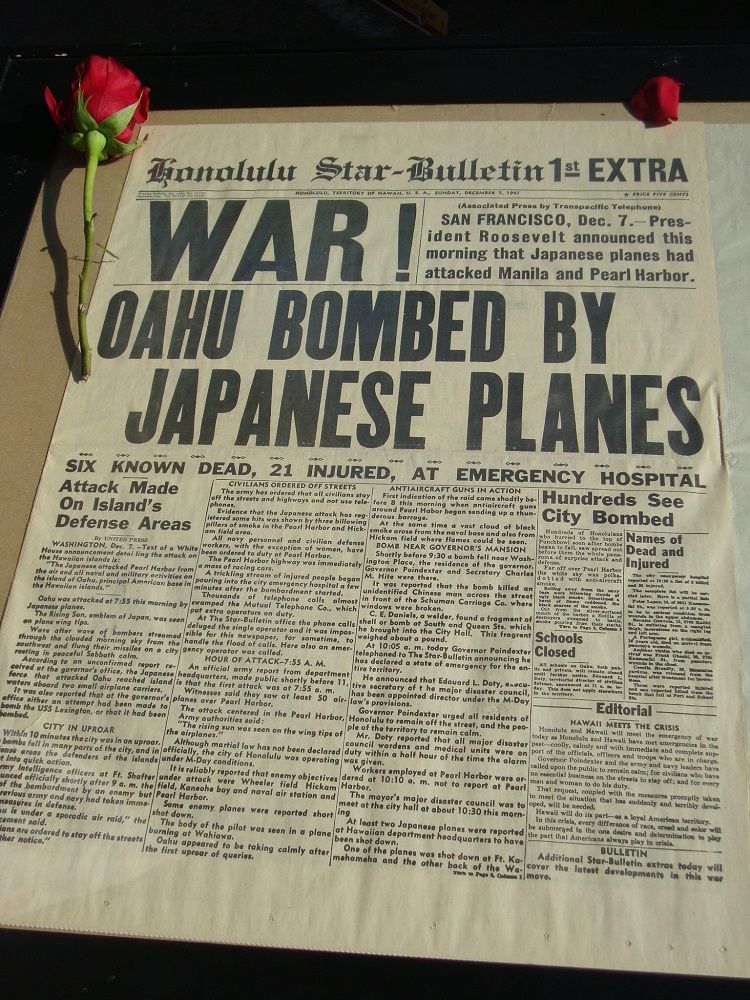
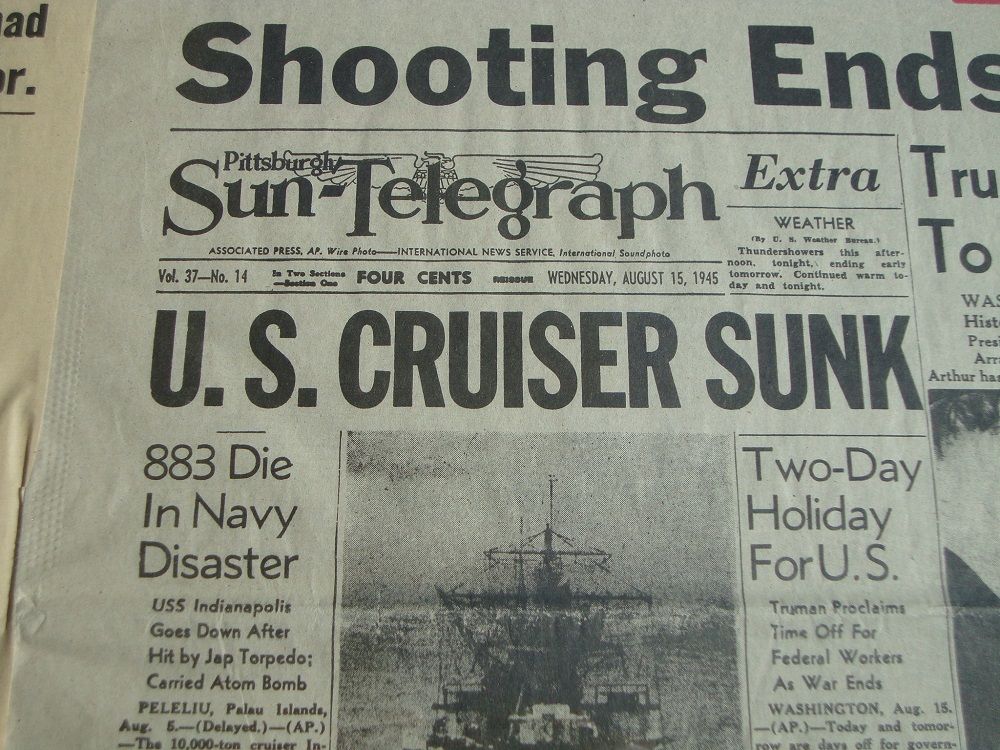
This is a picture of the front pages of two newspapers.  On the left is the Honolulu Star-Bulletin dated Sunday, December 7, 1941, and on the right is the Pittsburgh Sun-Telegraph dated Wednesday, August 15, 1945. 


The Honolulu Star-Bulletin.


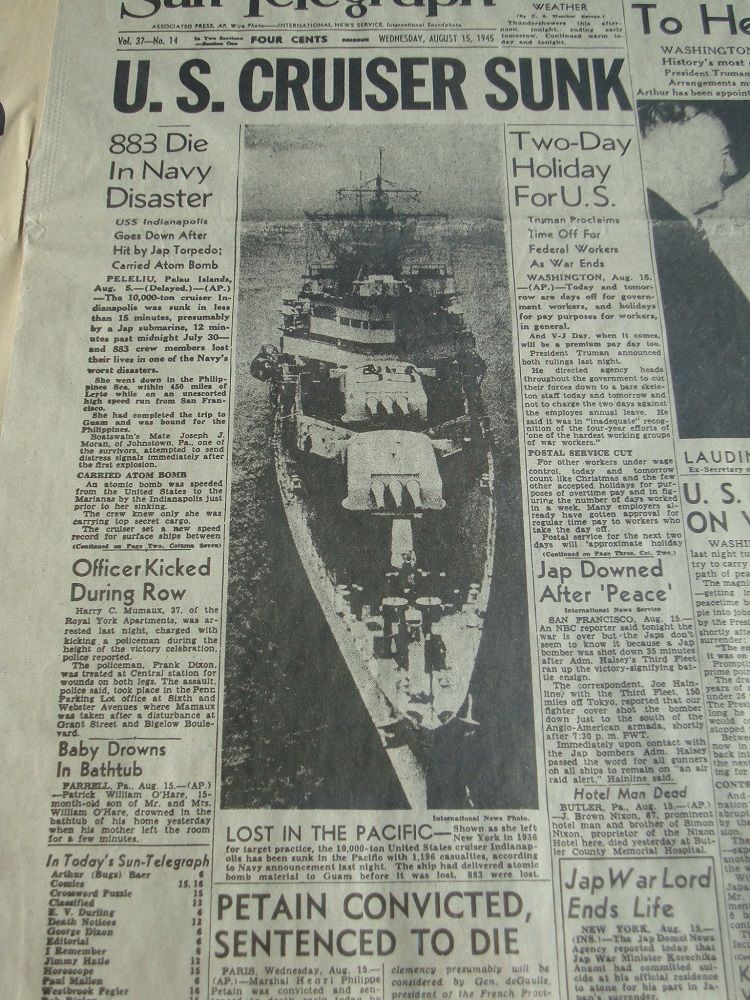
The Pittsburgh Sun-Telegraph.  What caught my eye about this display was the story on the U.S. Cruiser, the USS Indianapolis, that was sunk after being hit by a Japanese torpedo.  I read a book about this a number of years ago and what the men on that ship went through was both heartbreaking and horrifying.   


This is a picture of the same article.


This is another shot of the model of the USS Arizona.


This is the "back" of the World War II Memorial looking toward Phoenix.


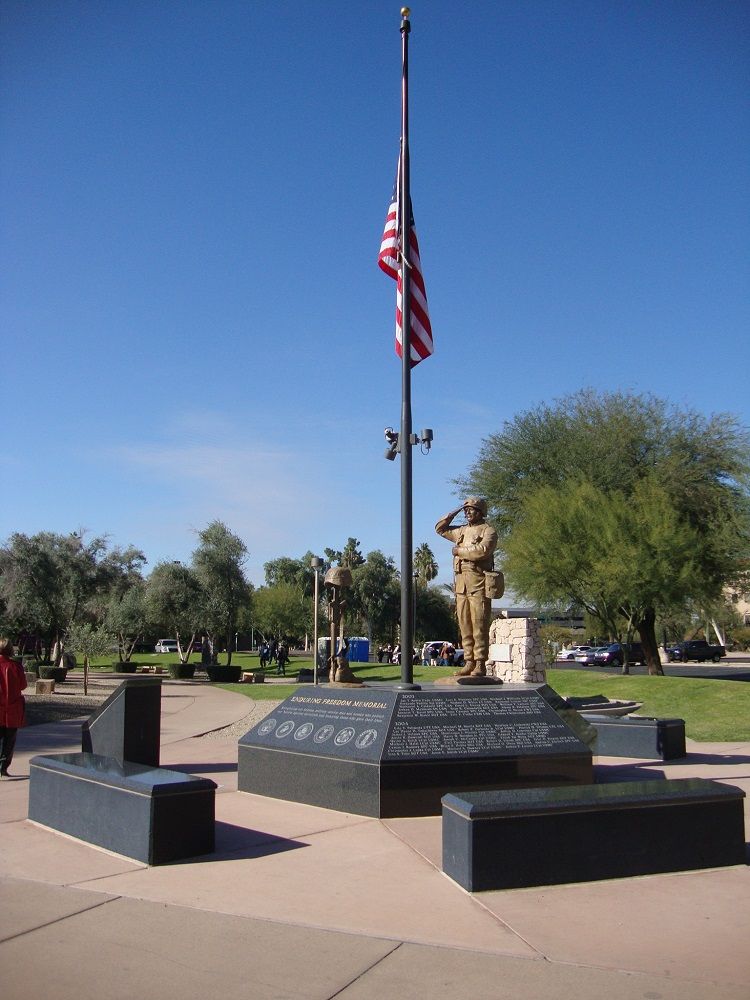
The Enduring Freedom Memorial.