Friday, May 2, 2014

Titanic Bible on Display in Pigeon Forge, Tennessee

These types of items that show up so many years after the sinking are always of interest to me.  Photo and story credit - WBIR.com.


wbir.com


Bible That Survived Titanic Sinking Now on Display in Pigeon Forge
 
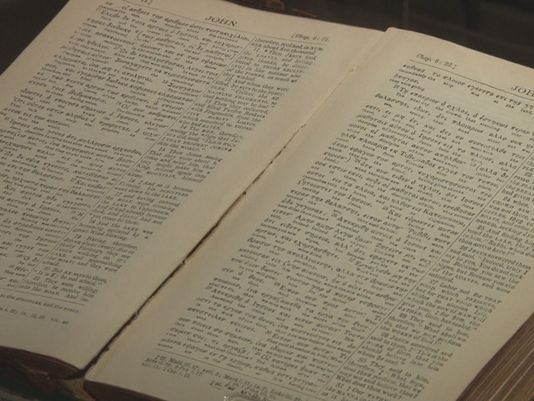
A Bible that survived the sinking of the Titanic is now on display in East Tennessee, and it has ties to our area.

You can see the book for a limited time at the Titanic Musuem Attraction in Pigeon Forge.

The Bible's owner was Reverend Robert J. Bateman. He was born in Bristol, England, in 1860. He came to Knoxville in the 1890's, where he founded the People's Tabernacle Church on Clinch Avenue.

After living in Knoxville, he moved to Florida.

Then in 1912, Bateman was back in England for a couple of months. He booked his passage back to America on the Titanic.

"Bateman on the night the ship sank handed the Bible over to his sister-in-law, Ada Ball, who he placed on a life boat and then she returned it to her sister, his wife Emily. On her death bed she gave it to Dr. Harry Upperman from the Baxter Seminary here in Baxter, Tennessee," said Bob Thone, the actor portraying Rev. Robert Bateman at the Titanic Museum.

The Upper Room Museum in Nashville now owns the Bible. It's on display in Pigeon Forge through the end of the year.


Saturday, April 26, 2014

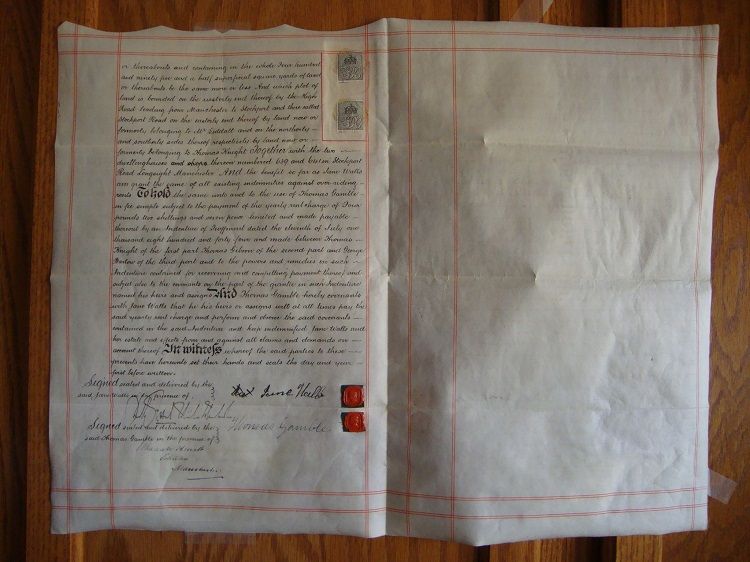
Original Deed from England - Dated May 8, 1899

My Dad has, on occasion, traveled to England to engage in metal detecting.  On one of his trips, he acquired an original deed dated May 8, 1899.  Due to his knowledge of my interest in history, and my occupation as an attorney who works with these types of documents, he sent it to me.  I don't know much about it, but it will be an interesting research project as, I began to review the document, a number of questions were raised.  When I first saw it, my immediate thoughts were of the process of recording deeds in England and how it has evolved over time.   As of May 8th of this year, this document will be one hundred and fifteen years old, and I'm surprised how well it has stood the test of time.  I find it quite interesting and it has become one of my prized possessions. 


It appears the land that is subject to this deed was given to Mr. Thomas Gamble under the terms of a will executed by Mr. Thomas Walls.


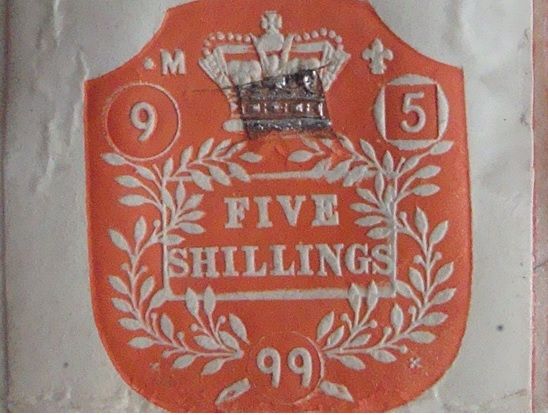
Given the reference to "Pounds" and "Schillings," I have to reasonably conclude this was the fee to record a document such as this in England in 1899.  I could be wrong but, if that is indeed the case, it will be interesting to learn what the fee is now to record such a document.


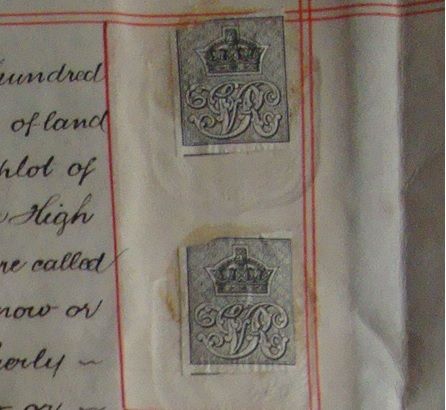
 I have no idea the significance of these stamps, but I'm looking forward to learning of it.

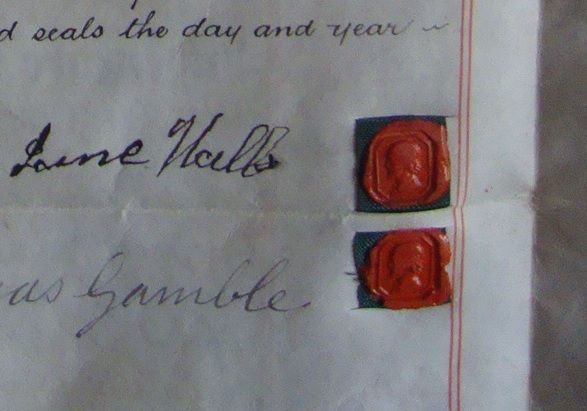
I was surprised to see the notary stamps have remained intact.  For some reason, I was always of the impression they were made of wax, but they clearly aren't as, whatever substance was used is quite hard, unlike wax.  It makes sense, as wax wouldn't have likely held up over time.  Today, a simple stamp is used to notarize documents.  I wonder what type of instrument was used to create the stamp.  It would be interesting to see what it looks like.  And then there's the process itself or, more specifically, how one was granted the authority to notarize documents in England one-hundred and fifteen years ago.  In Arizona, the Secretary of State is the government entity that grants one the authority to notarize documents and, pursuant to statute, there are some fairly strict requirements one must follow.  So I can't help but wonder what government entity in England granted one with that authority one-hundred and fifteen years ago and is it the same one today?  Did the notaries charge a fee back then?  If so, how much?  What do notaries in England customarily charge today to notarize documents?  Were they required to adhere to, pursuant to law, strict requirements and, if so, how have those laws evolved over time? 

Who is the person depicted on the stamp?  More questions!
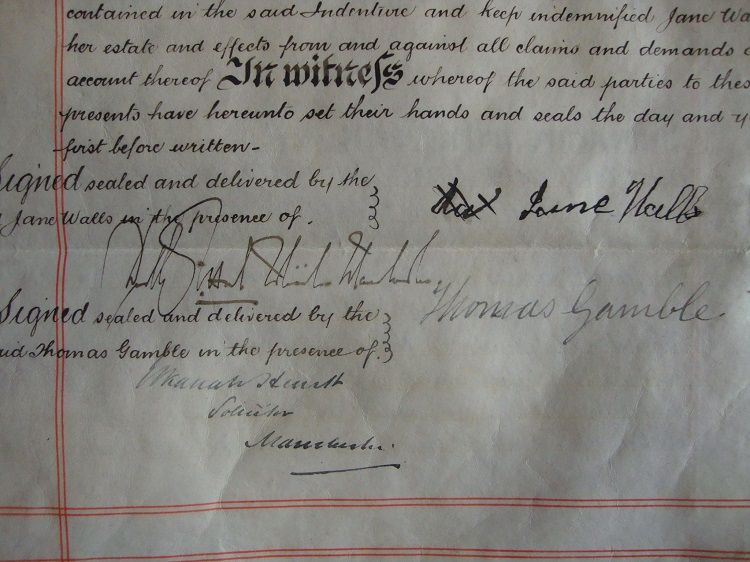
These are the signatures of the parties involved.  Whenever I come across a document such as this, I can't help but wonder about the people who lived so many years before me.  What were the relationships of those involved?  Did the devisee keep the land that was devised to them or did they immediately sell it?  Did the land hold sentimental value to the deceased person and the one to whom it was given and did that factor in to their decision to either hold onto it or, alternatively, sell it?  (I have two original books that were written after the sinking of the Titanic.  One of the books is inscribed with a signature written in pencil.  Was that the original owner of the book?  How did that person come to be in possession of it?)  And then there is the land that is the subject of this deed.  At the time of the conveyance, was there a dwelling on it?  What did it look like?  Does it still stand today and, if not, what stands on it now, if anything?  Where, exactly, is this land located?  
I've articulated only a few of the questions I have regarding this document, and I'm well aware that some of these questions will go unanswered.  But, as someone who is interested in historical documents, I can say that sometimes the speculation surrounding the issues related to such documents is part of the enjoyment of owning one.       


Sunday, April 20, 2014

German Soup - Asparagus-Rice Soup (Spargel-Reis Suppe)


I got this recipe out of a book someone gave me a number of years ago titled “The New German Cookbook” by Jean Anderson and Hedy Wurz.  It contains more than 230 recipes, both contemporary and traditional.  Paired with some fresh pineapple, this very nutritious soup made a nice lunch yesterday. 


1 pound tender young asparagus (preferably white)
3 ¼ cups cold water
1/3 cup long-grain white rice
1 tablespoon unsalted butter or margarine
2 tablespoons minced fresh chervil, or 1 tablespoon each
   minced fresh tarragon and flat-leaf parsley
2 ½ cups rich chicken broth (preferably homemade)
½ teaspoon salt
1/8 teaspoon freshly ground black pepper
Pinch of freshly grated nutmeg
2 teaspoons freshly squeezed lemon juice


Wash the asparagus well, snap off the tough stem ends, and place in a heavy medium-size saucepan.  Cut the asparagus tips off, drop into a small bowl, and set aside.  Using a swivel-bladed vegetable peeler, peel the tender asparagus stalks over the saucepan, letting the parings fall in.  Cut the stalks into 1-inch lengths and add to the bowl with the tips.  Add 2 ½ cups of water to the pan, set uncovered over moderate heat, and bring to a boil.  Adjust the heat so the water bubbles gently, then simmer, uncovered, for 15 minutes.


Meanwhile, bring the remaining ¾ cup water to a boil in an uncovered small saucepan over moderate heat.  Add the rice, return to the boil, adjust the heat so the water simmers slowly, and cook, uncovered, for 12 to 15 minutes, until the rice is al dente and all water has been absorbed.  Rinse the rice under cool running water, drain well, and reserve.  Strain the asparagus cooking liquid, discarding all solids, and set aside.  Quickly rinse out the pan.  

Melt the butter in the pan over moderate heat, add the chervil, and mellow 2 minutes to release the flavor.  Add the chicken broth, reserved asparagus liquid, and asparagus stalks and tips and bring to a boil.  Cook, uncovered, for 3 minutes.  Add the rice, salt, pepper, and nutmeg and bring just to a simmer.  Stir in the lemon juice, taste for salt and pepper, and adjust as needed.  Ladle into soup plates and serve at once.